

クリスと私はガーデニングの大ファンです。私たちは花、ハーブ、果物、ベリー、野菜を自分たちで栽培しています。 すべてを提供することはできません 私たちのニーズに応えますが、私たちはできる限りのことを行います。過去 2 年間、私はこれがもしお金を節約するための優れた方法であると主張してきました。 あなたには時間とスペースがあります。しかし、本当にそうでしょうか?
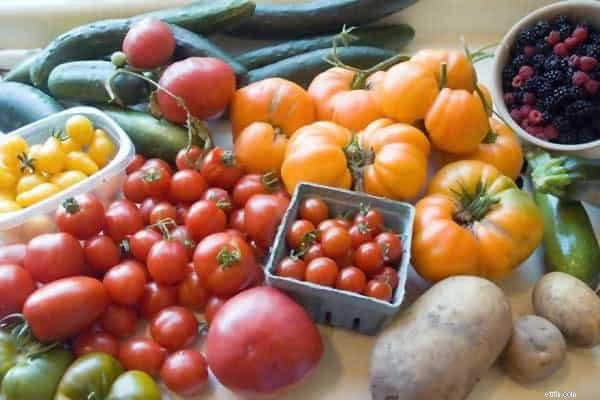
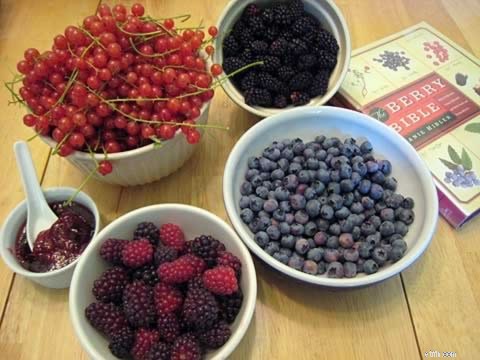
2006 年 8 月の実際の週末の収穫。
来年、クリスと私は庭でのすべての仕事と支出を追跡する予定です。月桂樹やツゲの木の剪定にどれくらいの時間がかかるかを表にするつもりはありませんが、次のことを追跡してみます。
たとえば、クリスが来週か 2 週間以内に種子を注文するとき、トマトの種子 1 袋にいくらかかるかをメモします。私は、彼女がどのくらい栽培用ライトを使用しているか(私の便利なキル・ア・ワット電気使用量モニターを使用して)、私たちが消費する水と肥料の量、収穫したトマトの数、そしてそれによって店でどれくらいの費用がかかるかを記録します。
大量のデータを収集するつもりです。
毎月最終土曜日に進捗状況をお知らせできればと思っております。年末には、貯蓄額と、その貯蓄にどれくらいの費用がかかったかがわかります。これは正確な実験にはなりません。関係する変数が多すぎます。しかし、私たちの結果は、私たちのガーデニング趣味がどれほど価値があるかを教えてくれるはずです。
ガーデニングに関する過去のエントリは次のとおりです。
私たちの第一歩?種子カタログを閲覧して、今年何を育てたいかを決定します!
1月は庭にとっていつも閑散とした月ですが、期待に満ちた月でもあります。今年最初の雑用の時間です!
1月初め、クリスと私は庭で果樹の支柱を立て直して15分間一緒に過ごしました。リンゴが 2 つ、梨が 1 つ、プルーンが 1 つあります。少し曲がって成長する傾向があるので、毎年春になると、支柱にしっかりと固定されていることを確認します。これも毎年秋にやれば良さそうです。コスト:$0。時間:0.5 作業時間。
先週末、ブドウとケーンベリーの剪定をしました。これはいつも少し怖いことです。自分が何をしているのか正確にはわかりません。しかし、一度始めてしまえば、それを偽造することはできます。ブラックベリーやラズベリーを見ると、昨年のサトウキビが枯れているのは明らかです。ブドウの場合は、各拍車に数個の芽を残して、ブドウの木をワイヤーに戻して剪定するだけです。これは私にとって楽しい仕事です。私は剪定するのが大好きです。コスト:$0。時間:0.75 作業時間。
月中旬に、クリスは種子を注文しました。いつものように、彼女は数人の庭師仲間とアイデアを交換し、リソースを出し合った。種子のパックには必要以上の量が含まれているため、友人と費用を共有できるのは嬉しいことです。クリスは3月までは何も植えないと言っていますが、1日か2日晴れるとすぐに仕事に行きたくてうずうずするでしょう。以下は彼女のスプレッドシートの一部です。
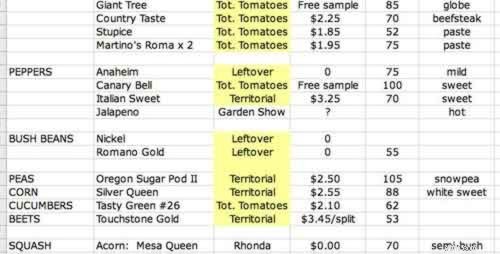
「種子を注文してからどれくらいかかりましたか?」この記事を書き始めたときに、私はクリスに尋ねました。
「分かりません」と彼女は言いました。 「3時間くらいかな。」
「3時間 !?!?!?!」私はびっくりしました。
「大変な仕事というわけではないんです」と彼女は言った。 「私はただカタログを持ってそこに座って、夢を見ているだけです。」それは私の妻です。種の夢を見ています。私たちの目的のために、そして最後にきちんとした概数を得るために、彼女は種子の選択と注文に 2.75 時間を費やしたとします。彼女の費用は 27.30 ドルでした。
(更新: そのフルーツには Totally Tomatoes を使用し、その他のほとんどすべてには Territorial Seed を使用します。)
1月は静かでした。果樹園と野菜園の作業に 4.0 時間を費やし、合計 27.30 ドルを費やしました。 2月はさらにアクションが増えるでしょう。特定の植物に肥料を与え、屋内の植栽材料を準備し、果樹を剪定する必要があります。何よりも、エンドウ豆を植えることができます。ただし、3 月まではそれほど時間がかかりません。 (そうですね、他にも庭仕事はたくさんあります。食べ物に関係しないだけです。)
先月と同様、2月もやることはほとんどありません。月初めはまだかなり寒かったですが、バレンタインデーまでにオレゴン州の厳しい冬は和らぎました。素晴らしい晴れた日があり、最高気温は15度近くでした。これは、私たちが初めて本格的な庭仕事をする合図でした。
私たちは2月に庭で約15時間を過ごし、主に60本以上のバラの茂みを切り倒し、ツゲの木を剪定し、冬の残骸を拾いました。しかし、私たちは食料生産工場にも取り組む時間を見つけました。
まず、イチゴの苗を埋めていた樫の葉を拾いました。バラ園ではイチゴを自由に走らせることができ、ランナーをあちこちに送り届けます。 2004 年にこの家に引っ越したとき、友人が 50 本の植物を無料でくれました。今では数え切れないほどたくさんあります。私たちは昨年の秋に果実に肥料を与えました。
また、プラム、ナシ、両方のリンゴの果樹の剪定も行いました。その後、ジャガイモ畑の草取りをしたり、ブルーベリーの周りからツタを引き抜いたりしました。週末の締めくくりに、エンドウ棚を設置し、オレゴン シュガー ポッド II の種を 72 個植えました。 6 月になれば、これらは非常に低コストで美味しいスナックになります。
先週、私たちは時間をかけてブルーベリーの木の周囲の土壌のpHを検査しました。ブルーベリーは酸性土壌を好むので、来週あたりに特別な肥料を与える必要があります。
庭で多くの時間を費やしたにもかかわらず、食料生産工場に費やされた時間はそのうちの 2.5 時間だけでした。 2 月はこのプロジェクトにお金を使いませんでした。
2008 年のこれまでに、私たちは果樹園や野菜畑の手入れに 27.30 ドルと 6.5 時間を費やしました。 3月にはさらなる活動が見られるだろう。特定の植物に肥料を与え、屋内の植栽材料を準備し、菜園を計画する必要があります。そしていつの日か、私たちの最初のエンドウ豆が地面を突き破るのを見ることになるでしょう:
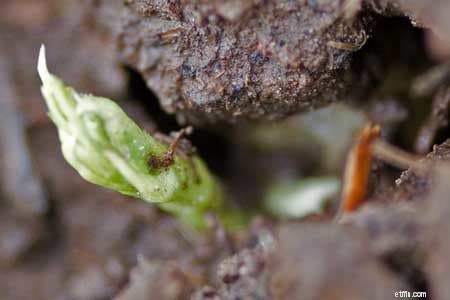
私の中で、3月はガーデニング活動でいっぱいです。結局のところ、それほど多くはありません。 4月も軽くなると思います。
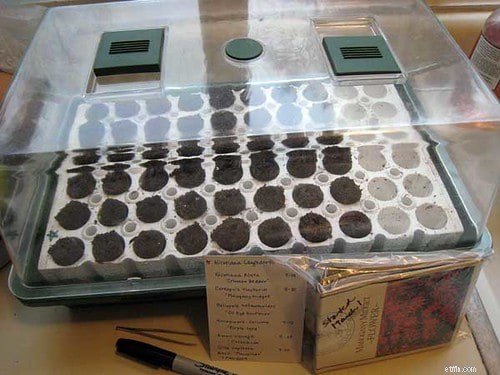
私たちはしませんでしたが 3月に入ってから、 ようやく見ることができました。 植物からの何らかのアクション。 3月1日、クリスはトマトとピーマン(そしていくつかの花)を植えました。彼女は特別なバイオドームに種を蒔くのに90分を費やした。 (「私は通常、ある製品を別の製品よりも支持することはありません」と彼女は言います。「しかし、 私は本当にそう思います」 こういったものです。」)
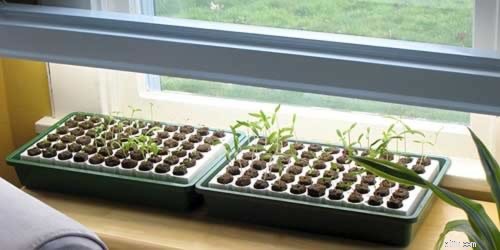
苗が順調に成長した後、クリスは栽培ランプを吊り下げます。
私たちは南向きの出窓に種を入れたトレイを2つ置きました。発芽後、クリスさんは苗木にさらにエネルギーを与えるためにグローライトを設置しました。 (オレゴン州では、3 月は必ずしも晴れているわけではありません。)3 月 24 日、彼女は各品種の最も丈夫な苗を 4 インチのポットに移植しました。
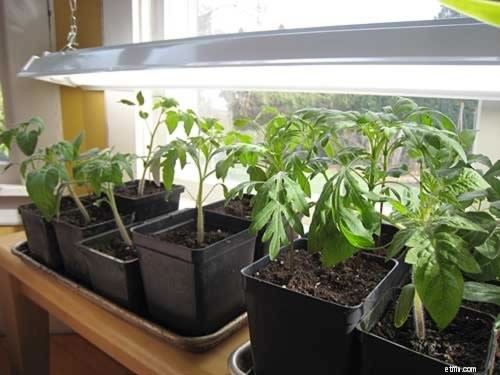
たった 3 週間でこんなに成長したなんて信じられますか?すごいですね!
3月15日、イチゴアライブの施肥を行いました。次の週末、クリスさんは菜園の葉をかき集め(冬の間は覆いとして使っています)、あるエリアに種まきをしました。数週間以内に回転耕耘機を使って土を耕す予定です。
このすべてを通して、私のエンドウ豆はゆっくりと成長してきました。 (とてもかわいいですね!)
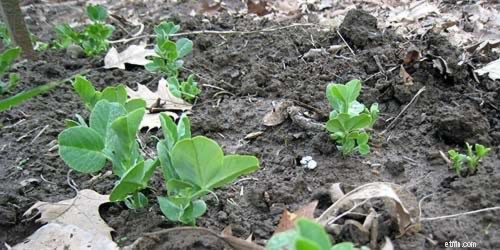
斑点のある発芽が少し心配ですが、きっとたくさん育つと思います。
また今月、完全に機能する直立型冷凍庫 (冷蔵庫と同じフォームファクター) を無料で入手しました。 クリスの同僚の一人から。これはジャックポットです。これにより、食料を保管するためのスペースが大幅に広がります。
3月中、私たちは有機害虫駆除と果物と野菜作物の肥料に113ドルを費やしました。また、培養土と浸しホースを購入するために 16 ドルを費やしました。 Kill-a-Watt を使用して栽培ランプの消費電力を測定しましたが、1 日に消費する電力はわずか数ペニーです。 3 月の支出が 130 ドルになるので、1 か月分を 1 ドルと考えましょう。
「それは最高の時代でもあり、最悪の時代でもありました…」 — チャールズ・ディケンズ、二都市の物語
4 月になってようやく庭で動きが見られましたが、私たちが期待していたようなものではありませんでした。
月のほとんどは静かでした。私たちの野菜はグローライトの下で成長を続けました。月末までにトマトはガロンサイズの鉢に移植され、高さは2フィートを超えました。クリスは彼らを地面に埋めたくてうずうずしていました。
平均的な最後の霜は約4月15日ですが、今年は特に奇妙で、雪が降りました。 4月中旬、ポートランドエリアにて。クリスは夜の最低気温の天気予報をチェックし、リスクを冒す価値があると判断しました。植物をこれ以上屋内に置いておくこともリスクでした。中に放っておくと、実際の光を求めて伸びるにつれて、細長くなってしまいます。
クリスは先週の月曜日に休みを取り、天気は晴れて暖かかったです。彼女は抵抗できなかった。彼女は2時間かけて菜園にトマトを植えました。彼女はそれぞれの植物に深い穴を掘り、少量の肥料を混ぜ、植物をそっと軽くたたき、トマトのケージをその周りに置きました。
火曜日に事態は悪化した。西オレゴン大学でのプレゼンテーションに車で向かう途中、雹が降り始めました。雹はそれほど大きくはありませんでしたが、10分から15分間激しく降りました。激しく冷たい風が庭を襲いました。 「そうだな」と私は思いました。 「クリスのトマトが困っています。」さらに悪いことに、クリスはひどい鼻風邪で体調を崩して帰宅し、火曜日の残りと水曜日は一日中寝ていました。彼女の無防備な植物は風雨に任せられていました。
案の定、植物は細断されていました。ほとんどの枝が折れて地面に垂れ下がっています。ナメクジは自分たちの弱さを察知して、仕事を終わらせるために侵入してきました。クリスさんは、(私たちが受ける予定の)数日間の太陽が植物の成長を助けるだろうという希望をまだ抱いていますが、真実は、新しい芽を買うために現金を支払わなければならないかもしれないということです。そして、もしそうするなら、それらは彼女が苗から育てた家宝の品種ではなくなるでしょう。 (クリスのメモ: 何をするか決める前に、1〜2週間ナースメイドをプレイしています。今日、病気のトマトに葉面肥料を散布して、トマトが復活するかどうかを確認しました。 10本中9本はまだ生長先端がかなり良い状態にありますが、側枝はどれも残念です。悲惨なのは私です! )
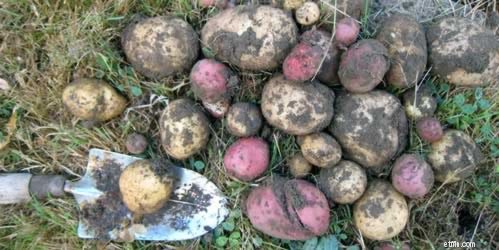
その間、ナメクジは彼女のキュウリの苗も食べてしまいました。クリスは幸せではありません。 (実際、取り乱したという表現の方が適切かもしれません。)ピーマンとドングリかぼちゃは大丈夫のようで、ビーツは順調に発芽しています。昨年の収穫終わりから始めたジャガイモは順調に育っています。皮肉なことに、移植された花のほとんどは、雹や風にうまく対処したように見えます。それでも、トマトはある程度丈夫なものなので、結局はうまくいくかもしれません。
Get Rich Slowly Garden Project にとって素晴らしい月として始まった月は、比較的悲惨な結果に終わりました。それでも、後で実りある収穫を得るために、必要に応じてトマトの苗木に投資するにはまだ十分早いです。
菜園での挫折を除けば、私たちは4月の間、夏に向けて食物を生産する植物の準備をするために庭でもう少し時間を過ごしました。私は果樹に害虫トラップを掛けるのに 30 分を費やし、クリスと二人でベリーの杖を結ぶのに 1 時間かけて作業しました。 (ちなみに、ラズベリーとブラックベリーは凶暴になってしまいました。 彼らは大好きです) 適度に暖かい、とても 雨天が続いています。うわー。)
今月中に私たちはいくつかの小さな買い物をしました。新しいホースに 25.98 ドル、ハーブの種のパック 2 個に 2.53 ドルを費やしました。 (昨日は毎年恒例の植物展示会で 21.50 ドルを費やしましたが、これは 5 月の出費です。今年庭を作りたいと考えているのなら、今がお住まいの地域で植物が販売されているかどうかを確認する時期です。 これらは、高品質の野菜の原料や専門家のアドバイスを見つける優れた方法です。)
我が家のイチゴも咲き始めました。そのうちのいくつかは巨大なものです。わずか 1 か月以内に、最初の農産物を収穫する予定です!
4月中、私たちは庭関連の出費に28.51ドルを費やしました。私たちは作物の栽培に 5 時間半を費やしました。
今後数週間は、食品関連を含む多くの作業が待っています。ブドウの剪定を適切に行っていないことがわかったので、その作業をやり直す必要があります。トウモロコシを植えなければなりません(たぶん今日の午後)。トマトを交換する必要があるかもしれません。運が良ければ、5 月末までに最初のイチゴを収穫できるでしょう。
今日は庭で最初の2つのイチゴを収穫しました。特別美味しいイチゴというわけではありませんでした。最近オレゴンでは雨が多くて、風味があまりありませんでした。しかし、夏の到来を告げるイチゴでした。それらは、庭からの 5 か月間の食料収穫の始まりを意味します。
先月の更新で思い出したように、4 月は盛況のうちに終わりました。シーズン後半のひょう嵐により、クリスさんのトマトは被害を受けました。全部壊れてしまったのではないかと心配しましたが、最終的に交換する必要があったのは 2 つだけでした。
5月の最初の週末、私たちはオレゴン・マスター・ガーデナーズの植物セールを訪れました。クリスさんはほとんどの野菜を種から育てていますが、他の選択肢を探して屋台を歩き回るチャンスには抵抗できません。今年、彼女はハラペーニョ、ズッキーニ、バジル、オレガノ、タイムに 21.50 ドルを費やしました。
今月はまた、園芸関連の注文をオンラインで 2 件行いました。私たちはパークシードで来年の物資に23.59ドルを費やしました。 (2007 年に購入して今年使用した材料を補うために、これを 2008 年のコストとして計算します。)
また、さまざまな肥料と Sluggo という製品を購入するために、Spray-N-Grow に 65.80 ドルの注文を出しました。残念ながら、Sluggo は今のところあまりうまく機能していません。
オレゴン州ではナメクジは厄介者だ。 (彼らは私たちの非公式の州動物です!)雨が降ると効果がなくなるため、人気のビールトラップは使用できません。私たちの庭は広すぎるので銅テープを使用することはできません。あまり効果がないようです。毎日雨が降っていると、オーガニックなものは何も効果がないようです。ナメクジはクリスが植えたキュウリを全力でむさぼり食っています。うちのトウモロコシは発芽し始めているけど、ぬるぬるした獣たちがその上でチョップを舐めている。 ( そしてその後 トウモロコシはアオカケスを乗り越えなければなりません。)
今月、クリスと私は二人とも菜園で時間を過ごしましたが、期待していたほどではありませんでした。彼女は約4時間かけて苗を植えたり、葉面肥料を施したりした。トウモロコシを育てるために土を耕すのに 1 時間かけて (今年は回転耕耘機は使用しませんでした)、その後、種自体を植えました。私も30分かけてブドウの草取りをしました。 5 月に果物と野菜の作業に費やした時間は、合わせてわずか 5 時間半です。 (クリスは、雨があまり降らなかったらもっと時間を費やしただろうと言いました!)
私はこのプロジェクトに費やす時間が爆発的に増えるだろうと予想し続けていますが、今のところ爆発していません。ただし、ブルーベリーの季節が来るまで待ってください。それらのものを選ぶのには永遠に時間がかかります…
MSN マネーのサリー ヘリグスタッド氏は、栽培コストが安い 5 つの食品をリストした最近の記事で、私たちの園芸プロジェクトを強調しました。食べ物は?果樹、レタス、ハーブ、蔓性野菜、ピーマン。彼女はまた、専門家に任せるべき5つとしてジャガイモ、ニンジン、セロリ、アスパラガス、小麦を挙げている。私たちのプロジェクトを教えてくれてありがとう、サリー!
クリスと私はまだ庭にあまり力を入れていないかもしれませんが、植物たちは全力を尽くしています。彼らは暖かくて雨の多いオレゴン州の5月を愛していました。ベリーが実り、果樹が結実し、野菜が勢いよく成長しています。
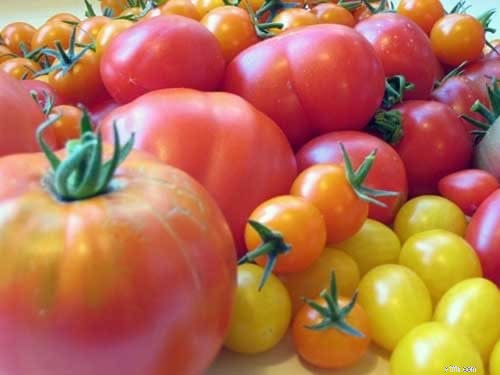
先週、クリスはお気に入りの植物の写真を撮るためにカメラを外に持ち出しました。まずはトマトの 1 つです。
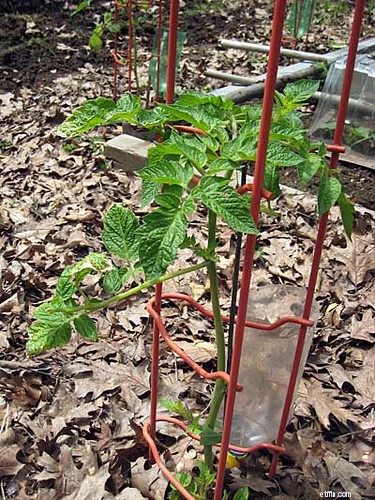
「この写真は悲しいです」とクリスは私に言いました。 「植物がまだ下の葉のほとんどを失っている様子を見てください!」トマトの道具について指摘しておきたいと思います。丈夫なトマトのケージと、その隣に置かれた 2 リットルのボトル (夏の間の水やり用) です。背景には、プラスチック製のクローシュの下にあるドングリかぼちゃが見えます。
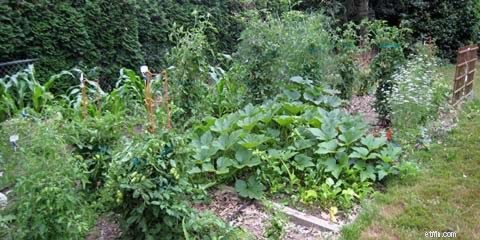
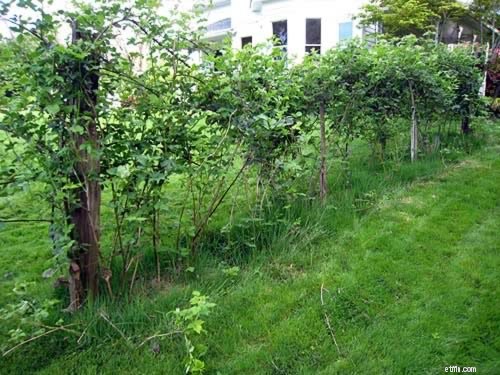
2番目の写真は、私の大好きなケーンベリー、ブラックベリー、ラズベリー、マリオンベリーです。あなたにとって、これはおそらく緑の壁のように見えるでしょう。実際に見てもそう見えます。
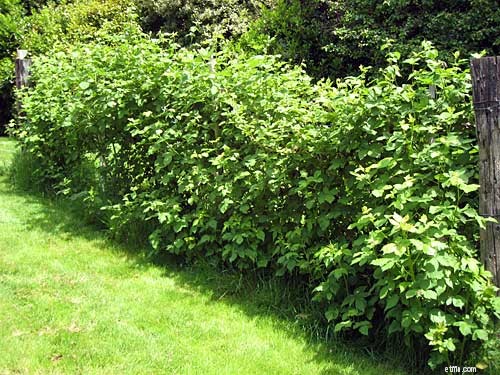
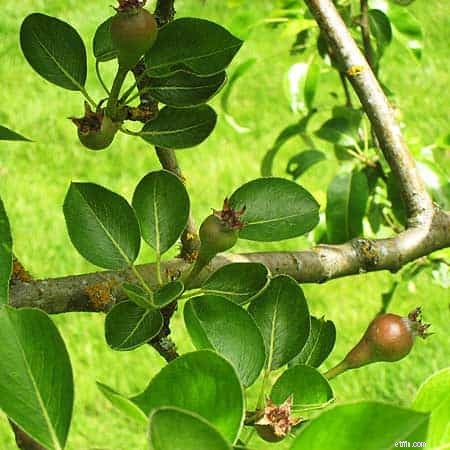
もしその緑の壁を通して見ることができたら、20フィートのブドウの列を覗き見ることができるでしょう。角を曲がったところに、リンゴ 2 つ、梨 1 つ、プルーン 1 つの計 4 つの果樹があります。今年は、かなりの量の果物が収穫できる初めての年になりそうです。
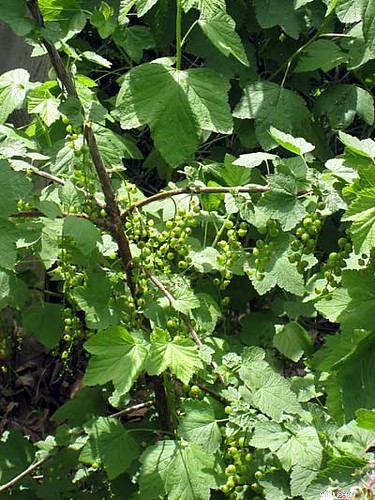
最後に、これはクリスの誇りと喜び、赤スグリの茂みの写真です。もちろん、今の実は緑色です。大丈夫です。待ちましょう。
他にもハーブ、ジャガイモ、エンドウ豆など、紹介できる植物はたくさんあります。そうですね、来月になるかもしれません。
5月中、私たちは庭関連の出費に110.89ドルを費やしました。私たちは作物の栽培に 5 時間半を費やしました。
「分かりません」今夜数字を集計した後、私は言った。 「私たちはすでに庭に 300 ドルを費やしましたが、元が取れるわけがありません。」
「しかし、金銭的支出のほとんどはすでに完了しています」とクリスは言いました。 「あとは植物の世話だけです。これからは収穫です。きっと驚かれると思います。」
そう願っています。これまでに、私たちは 21 時間と 296.70 ドルを庭に費やしましたが、そのために見せなければならないのは、水っぽいイチゴ 2 個だけです。
オレゴン州北西部の庭師にとっては悲惨な6月だった。最初の 2 週間は、雨が多かっただけではなく、私たちはそれに慣れていましたが、寒さもありました。地元メディアはこの月を「6月の月」と呼んだ。住民はこの言葉をすぐに受け入れた。涼しい天候により、多くの作物の収穫が遅れた。イチゴ農家は憤慨した。ブルーベリーとラズベリーは 3 週間遅れています。
しかし今、太陽がやって来ました。今月ずっとイチゴとエンドウ豆を収穫してきましたが、今朝初めてブルーベリーを収穫しました。 (あまり良くありませんでした。完全に熟していませんでした。)ラズベリーはあと 1 週間ほどで実るはずです。たくさんの花が咲いていることから判断すると、豊作になるでしょう。その間、ナシ、プラム、リンゴの木がたくさんの実を結びました。 7 月末までには野菜も手に入るかもしれません。
つまり、今月は遅いスタートとなりましたが、近いうちに農産物を投入できるはずです。
私たちのガーデニングの仕事は、より日常的なものになりました。すべての作物が植えられたので、私たちがすることは次のとおりです。
ここだけの話、クリスと私は今月、これらのタスクを実行するのに約 7 時間を費やしました。クリスが草取りと肥料を担当していることは認めます。私たちは二人で収穫するのですが、それは私にとって楽しい家事です。イチゴの間を移動するのは禅のようなものがあります。 (そして、ブルーベリーを摘むまで待ってください。これは非常に瞑想的だと思います。)
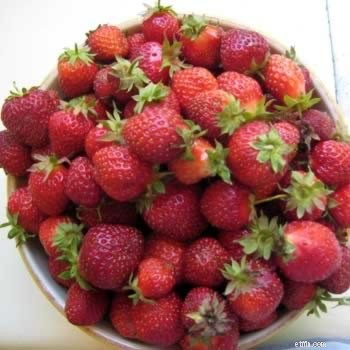
5月31日に最初のイチゴを収穫しましたが、それは6月の合計にカウントされます。 (同様に、今日初めてスグリを収穫しましたが、7 月に数えます。) 過去数週間の収穫内容は次のとおりです。
これは、ある人にとっては恵みのように思えるかもしれませんし、他の人にとってはわずかなことのように思えるかもしれませんが、それが私たちの庭園が生み出すものなのです。そのために私たちにはスペースがあるのです。実際、今年は天候のせいでどちらの作柄も大幅に減ったように思います。エンドウ豆も苦戦しました。 (エンドウ豆はポートランドでは通常苦労しません。)
地元の食料品店でのサヤエンドウは今月を通じて 1 ポンドあたり 5.99 ドルだったので、私たちの収穫は 14.08 ドルの価値がありました。イチゴは値段をつけるのが難しいです。 Safeway から 2 ポンドまたは 4 ポンドの容器で購入すると、1 ポンドあたり 2.50 ドルで購入できます。クリスさんは地元の農場で12ポンドを1ポンド当たり85セントで収穫した。ただし、収穫はおよそ 1 ポンド単位で行われたため、食料品店の 1 ポンドの価格 ($3.99) を使用することにします。これはさらに 46.84 ドル相当の食べ物になります。 (ちなみに、この方法論に関するアドバイスや議論は歓迎します。価格を比較する最適な方法は実際にはわかりません。)
今月、庭から合計 60.92 ドルの食料を収穫しました。
6月中、私たちは庭に79セントを費やしました(ウィンコのレタスの種のパック1個分)。私たちは作物の栽培に 7 時間を費やしました。
先月、私は庭代を回収できるかどうか疑問だと書きました。今月はエンドウ豆とイチゴが少量しか収穫できなかったが、菜園のおかげでお金が節約できるのは間違いないようだ。トマトだけで 300 ドルは収穫できるでしょう!
6 か月後、このプロジェクトの穴は 236.57 ドルになりました。
先ほど、クリスが地元の農場で12ポンドのイチゴを摘んだと言いました。 自分の庭を持っていない場合は、U-Pick 農産物が非常にお買い得です。 ベリー狩りの家族旅行は子供たちにとって素晴らしい外出となり、おいしいジャムやシロップが得られるかもしれません。
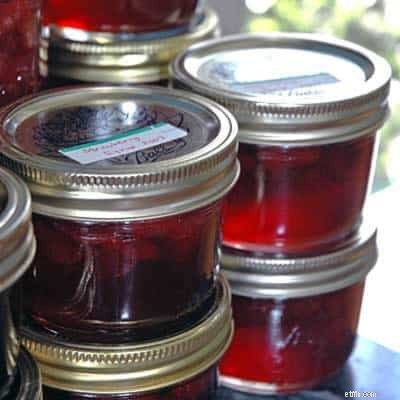
ロジングス・パーク(私たちは幸せな半エーカーと呼んでいます)では、とても充実した月でした。憂鬱な6月は記憶の彼方に消え、太陽が顔を出し、果実が熟しました。この時期は、庭でやることはほとんどなく、植物に水をやり、作物を収穫する時期です。 保存すべき作業はたくさんあります ただし、食品は缶詰、冷凍、乾燥です。
7月の初めに、ラズベリーがないことに気づきました。例年、私たちは熱心すぎる杖から数ポンドの体重を得ることができますが、今年は数ポンドしか摂取できませんでした。量る価値すらありませんでした。
何が問題だったのかはまだわかりませんが、ラズベリーの惨事の最も可能性の高い原因は、私の剪定が不十分だったことです。私たちの推測では、杖を強く剪定しすぎたか、あるいは剪定が遅すぎた可能性があります。秋の作物(おそらく良いもの)が見られると期待していますが、夏のラズベリーの作物は実現しませんでした。
このプロジェクトが興味深いのは、特定のコストと「利益」をどのように分類するかを決定する必要があるからです。たとえば、実際に私たちは敷地内でサクランボを栽培していませんが、近所の人が 12.5 ポンド (5.649 kg) の果物を収穫させてくれています。それを合計に含めるべきでしょうか? 1 ポンドあたり約 2.99 ドルということは、チェリー 37.38 ドルに相当します。
代わりに、他の方法で受け取った農産物については別の集計を保持することにしました。確かにコスト削減にはつながりますが、実際に自分たちでコストを増やしたわけではありません。
その一方で、私たちはニンジンやレタスを栽培できないことを補いながら、過剰なベリー類に対処する方法を見つけました。私たちはベリーとクリスの同僚の一人が栽培した野菜を交換しています。これは双方にとって大きな取引です。ただし、会計上の理由から、この取引は無視されます。ベリーを収穫して重さを量ったら、その後何が起こるかは問題ではありません。
今月の庭の生産の完全な集計は次のとおりです。
このプロジェクトでは、「ベストマッチ」価格設定を使用しています。 GRS 読者の提案に基づいて、地元のファーマーズ マーケットから一般的な価格を取得しています。場合によっては、地元の有機農産物直売所の価格を使用します。いずれの場合も、私たちは公平であるよう努めていますが、これは科学というよりも芸術に近いものです。
7 月の総収穫量は 123.68 ドルで、これには 31 パイントのベリーが含まれます。
今月、クリスさんは毎週末約 1 時間をかけて肥料をやり、庭の様子を観察しました。今月は一緒にトマトを縛ったり、マルチを敷いたり、その他の雑務を1時間かけて行いました。しかし、私たちの時間のほとんどはベリーを摘むことに費やされました。私たちは約6時間かけて農作物を収穫しました。今月、私たちは作物の作業に合計 11 時間を費やしました。
7月中、私たちはブルーベリーの根元に植える土を3袋買うために庭に20.94ドルを費やしました。 (ブルーベリーの根元は盛り上がっており、土壌が侵食されて根が露出する傾向があります。)
7月が終わりに近づくにつれて、トマトの木はケージの一番上に達し、緑色の実をたくさんつけています。サンゴールドチェリートマトが最初に熟し(すでにいくつか食べました)、次にステュピスが熟します。キュウリとズッキーニは定期的に実り始め、トウモロコシも生い茂っています。ハーブ畑では、エルダーベリーが色濃く輝いて成長しており、近くの果樹はそれぞれ、夏の終わりに楽しめる実りを実らせています。
クリスは、サヤエンドウとすりおろしたズッキーニを冷凍庫に保管し、冷凍ジャム (私のお気に入り) をいくつか入れました。彼女はまた、数種類の調理済みのジャムやゼリー、ライトシロップ漬けのチェリーの缶詰、ディル、ニンニク、生姜を添えたインゲンのピクルス、そして将来使用するためにドライチェリー、ブルーベリー、カラントも用意しています。 (彼女の同僚の一人が水曜日に豆の漬け方を習いにやって来ました。)雨の長い冬の間に、この夏の恵みをいただけると嬉しいです。
ベリーの収穫は今月も、ポートランドの南にある私たちの幸せな半エーカーのロージングス・パークで続けられました。ブラックベリーの時期が一年で一番好きな時期です。 8 月は私にとって暑すぎることが多いですが、缶詰の季節が始まることを知っているので、私は暑さに耐えるつもりです。案の定、クリスはサルサとアップルソース、あらゆる種類のピクルスとジャムを用意してくれました。 うーん。
また、クリスにとって嬉しいことに、予定より丸々 1 ヶ月遅れながら、今週ついにトマトを収穫することができました。 .
これがガーデニングの悲しい秘密の 1 つです。真夏はイライラすることがあります。物事を常に把握しておかないと、庭があなたから遠ざかってしまう可能性があります。これは今月中旬にクリスからもらった実際の言葉です。私が次の嘆きの言葉を書き写したとき、私たちはソファでオリンピックの飛び込みを観戦していました。
ブルーベリーは採れませんでした。豆を生産し続けるためには、豆を収穫する必要があります。キュウリが出てきています。今週は暑くなりそうなので水やりが必要です。余ったズッキーニを近所の人に届けなければなりません。パトリスのリンゴも拾わなかった。彼女は私に 3 回オファーしてくれましたが、私は忙しすぎたので、もう終わりました。
覚えておいてください:私たちには質素な庭があります。私たちは趣味で食べ物を育てています。このプロジェクトでは、コスト面でのメリットがあるかどうかも判断されます。しかし、控えめな庭でもたくさんの収穫を得ることができます。 食べ物の。母が入院し、クリスの両親が街にいたため、8月の最初の2週間はガーデニングの時間がほとんどありませんでした。一時はコントロールを失う危険がありましたが、なんとか持ちこたえました!
今月は自分の時間以外は何も庭に費やしませんでした。私たちはベリーや野菜を摘むのに約8時間を費やしました。 (クリスも月初めに少し肥料をやりました。)
ただし、私たちはさまざまな方法で収穫を補いました。
私たちは今後も他の人々と農作物を交換し、余ったものを寄付したり、他の庭園の恵みを楽しんだりしていきます。約1か月後には、通りの向かいのご近所さんからコンコードグレープが収穫できるようになる予定です。このジュースは素晴らしいです。
今月の庭の生産の完全な集計は次のとおりです。
Our total harvest in August yielded $123.94 in produce, mostly from berries and tomatoes. Note that for grins and giggles, we’re tracking the yield (in pounds) of each tomato plant. I’ve been dying to know how much a single tomato plant can produce in a year.
注: For the purposes of this project, we’re using “best match” pricing. Based on GRS reader suggestions, we’re obtaining typical pricing from our local farmers market. In some cases, we use pricing from a local organic produce stand. In all cases, we’re trying to be fair, but this is more art than science.
We spent no money on the garden this month! We’re now within $20 of our expenses for the year. By the middle of this week, we’ll be clearing “profit”. We’ll be able to begin computing how much our labor is valued at. (Though we do this because we love it, not just to save money.)
This month, we didn’t keep track of the apples and cherries and other produce we obtained through other methods than our own garden.
As the summer wends its course, food production will remain high, especially among tomatoes. We’ll also begin harvesting fruit before long:pears, plums, grapes, and apples. As usual, we won’t have copious amounts of any of these (except tomatoes), but just enough to relish the pleasures of gardening.
September generally brings the largest harvests for our garden. That was true again this year, but not by as much as we hoped. The bad weather at the beginning of the season means that things just aren’t ripe yet. Kris has been encouraging her tomatoes for weeks. I’m dying for the grapes to be ready. (They’re almost there!)
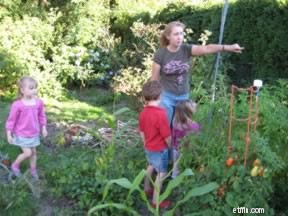
Kris gives orders to her garden elves. Photo by Lisa.
We did harvest a lot last month, the bulk of which was tomatoes and tree fruit. We had so many tomatoes, in fact, that Kris was able to enlist the help of five-year-olds Albert and Annika to help harvest. They did an amazing job picking cherry tomatoes.
September’s nice because there’s almost no garden maintenance. All we have to do is stroll out to pick the food we want. During the middle of the month, Kris and I had a mild misunderstanding. I thought she told me to go pick all of the apples from our trees, but she really told me to pick a few for some jam. I came back into the house with 19 pounds of apples, which was far more than she needed. We made a spontaneous batch of applesauce.
Actually, Kris did a lot of canning this month:marinara sauce, applesauce, salsa, pickled plums, and more. As usual, we supplemented our own harvest with free food from friends and neighbors (25 pound of pears here, 15 pounds of plums there), as well as things like onions and garlic from the produce stand.
Now, as the rains begin and the harvest draws to a close, our pantry and freezer are both packed full. When we make a blackberry cobbler in February, take pickled “dilly beans” to a potluck or pop open a jar of spicy salsa on a chilly afternoon, we’ll be extending the benefits of our garden year-round. Our home-canned goods will help defray food costs over the next eight months until we can expect another strawberry crop to kick off 2009’s garden bounty.
Our total harvest in September yielded $152.75 in produce, largely from tomatoes. Here’s the complete tally for this month’s garden production.
注: For the purposes of this project, we’re using “best match” pricing. Based on GRS reader suggestions, we’re obtaining typical pricing from our local farmers market. In some cases, we use pricing from a local organic produce stand. In all cases, we’re trying to be fair, but this is more art than science.
正直に言います。 I’m a little disappointed. Once it became clear that this garden was going to “make money”, I wanted it to kick ass. It hasn’t done that. Don’t get me wrong — we love having fresh produce outside our front door, and we enjoy the work with the plants, but I was hoping for more.
I think there are a few ways we can improve.
This year, we initially made a large financial outlay for two types of organic pest traps for the apple trees. They proved successful; our apples were practically worm-free! As the two trees mature and bear larger crops, the number and value of the apples will increase as the cost of the traps will drop (because some parts are reusable from year-to-year).
I almost want to repeat this entire project next year to see if we can spend less and harvest more! (Maybe we’ll do it behind the scenes, providing totals at the end of the summer.)
We spent nothing on the garden this month, and very little time. It doesn’t take long to harvest 19 pounds of apples or five pounds of tomatoes. September is the closest our garden will ever come to “pure profit”.
There is still food left to harvest. Though the rains have set in, we may have more tomatoes. (There are plenty on the plants, but the cool weather is likely to prevent them from ripening.) There are potatoes left to dig, and the acorn squash is ready to pick and dry for winter storage (to be tallied in October).
Most importantly, we have grapes to pick. We only have 20 feet of young grape vines, so we won’t have many from our yard. But the neighbor has vast swaths of Concords growing wild. I wanted to pick them last weekend, but he insisted they were two weeks away. I plan to pick them next Saturday. I just hope these rains don’t ruin the flavor. (Will rain do that to grapes?) There are few things I love more than fresh Concord grapes. (Especially fresh free Concord grapes.) They make amazing grape juice and Kris wants to put up some grape jelly.
Kris has made notes on her garden plan to help her organize her seed order for next year. Only a few short months until the seed catalogs arrive! And she has begun an experiment to grow a few herbs indoors this winter. Stay tuned on whether that is worthwhile.
October can be something of a relief for gardeners. The bulk of the harvest is finished, and all that remains is to pick the last straggling fruits and vegetables, and to begin cleaning up. While it’s sad that the harvest is winding to a close, it’s comforting to know there’ll be a respite from the work for several months. Plus it’s a chance to start dreaming about next year , all of the changes and improvements to be made.
And, believe it or not, the success of next summer’s garden begins today.
Last weekend, Kris and I received an unexpected windfall of sorts. John, our neighbor across the street, hooked us up with some free shit:He brought us a trailer-load of horse manure.
We had been planning to use some sort of soil amendment in the garden next spring, but hadn’t yet worked out the cost or the kind. John knows somebody who boards horses, and when she sweeps their stalls, she’s left with piles of hay and sawdust — and horse manure. Apparently she has so much of this stuff that she’s just giving it away. (We offered to pay John for his trouble, but he refused. We’ll bake him some home-made bread instead.)
On Sunday morning, John wheeled in a trailer containing about three cubic yards of this stuff, so Kris and I spent an hour spreading it over the vegetable garden. We’re happy to have finished this task already, especially in such a frugal fashion.
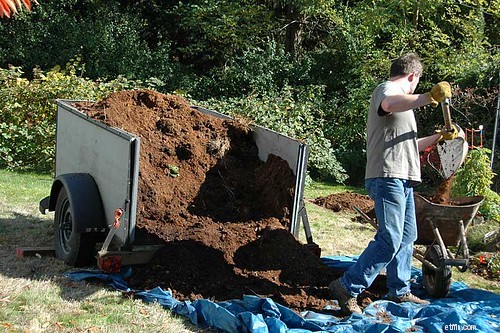
I shoveled while Kris wheeled and spread.
“How big is your garden?” e-mailed one reader during the middle of the month.
“I don’t know,” I said. “But I can find out.” I went outside with a tape measure to discover:
Not counting the fruit trees, that’s a total of 878 square feet (81.61 sq. m.) devoted to gardening. Those of you in the country might think this garden is small; those on city lots (or in apartments) might think it’s huge. For us, it’s just right.
Our total harvest in October yielded $130.77 in produce, most of which was tomatoes and grapes. (Our grape vines are just beginning to mature. The yield from the plants should increase markedly in the future.) Here’s the complete tally for this month’s garden production:
Note that this does not include the 40+ pounds of Concord grapes we picked from one neighbor, nor the 5+ pounds of high-bush cranberries we picked from another.
I should also mention that we had pretty much given up on the corn. The poor weather in the spring stunted its start, and then it was battered by a summer storm. Plus we didn’t plant a lot of it. Ultimately, however, we were able to harvest almost 20 ears total (between September and October), which isn’t a lot, but the stuff was good 。 Instead of giving up, we think we might actually try to grow more of it next year.
注: For the purposes of this project, we’re using “best match” pricing. Based on GRS reader suggestions, we’re obtaining typical pricing from our local farmers market. In some cases, we use pricing from a local organic produce stand. In all cases, we’re trying to be fair, but this is more art than science.
We spent a little more time in the garden this month, but again had no monetary expenses. The numbers for this month’s harvest also include $25 for the fresh herbs that we’ve harvested throughout the year (chives, basil, cilantro, sage, thyme, bay leaves, marjoram, oregano).
All that’s left now, really, is to perform garden clean-up. We’ll probably have several hours into the garden in November, but I doubt we’ll have much time in December at all. That’ll give me a chance to write a summary of the lessons we’ve learned, and to provide some tips for others who would like to try this!
Though we’ll spend more time in the garden this year, we’re unlikely to spend more money, and we’re unlikely to harvest anything else. We’re fairly certain that the numbers above are close to the final numbers for the year. We’ve spent $318.43 on our food and harvested $606.97 worth of produce. Roughly, we doubled our financial investment in this project.
Kris has already started one project for next year:She’s begun to grow herbs from seed to have a winter indoor garden (with grow light). The basil, cilantro, dwarf dill, thyme and oregano are off to a good start. Herbs are some of the most cost-effective plants to grow in a home garden. Even if you have limited space, a window-box herb garden can be an easy and economical way to dabble in the hobby.
This month’s garden update is small. As winter approaches, there’s less for us to do, and all that we harvest are herbs (and those only occasionally). Our major garden task this month was raking leaves. For most people, this is simply yardwork, but for us it’s a chance to work on the vegetable garden.
Last year, we bought a used chipper-shredder. We use it to grind up the many twigs and branches that fall on our property, but in mid-November, we also use it to shred the fallen leaves. With just a few hours work, we were able to create a thick layer of mulch for the vegetable garden, which we placed atop the horse manure our neighbor gave us last month. In late April, I will till all of this stuff into the earth just before we plant.
Speaking of next year, Kris and I have decided that we will do this project again in 2009 , continuing to provide monthly updates. We enjoyed it more than we had expected, and believe a second year of data would be instructive.
But I’m getting ahead of myself. First, here are the final totals for our garden harvest this year.
Berries ($225.74)
We don’t have a lot of berry plants, but those that we do have are good producers. They’re low maintenance and provide a lot of fruit for the space they occupy. I’m actually tempted to remove the 25-year-old blueberries to replace them with younger plants of a different variety.
Vegetables ($294.59)
Our vegetable crop was stunted this year by the lousy weather in Oregon’s Willamette Valley. We’re not the only ones who suffered. Nearly every gardener we know moaned about the poor yields, especially with tomatoes and peppers.
Fruits ($66.63)
Our fruit trees are young. We planted them four years ago, and they’re only just beginning to produce substantial crops. This was also the first year that the grapes produced a harvest. I’m tempted to pull out some of the grape vines to replace them with Concords, which I love. But as long as our neighbor across the street will let us pick his fruit, I don’t need to do this.
We also harvested at least $25 worth from our herb garden during the year.
And so we come to winter, that time of year when gardeners sit forlorn, gazing at the cold, frozen ground. Only the lingonberries remain to harvest. This year, Kris has started herbs from seed indoors, which gives her some sense of gardening. She’s talking about adding an Asian Pear tree to our small orchard. But mostly, now is a time to leaf through seed catalogs and think about the crops we’d like to grow next summer. Our dreams of August’s bounty pull us through the dark rainy days ahead.
2008 garden summary:
Month Time Cost Harvest January4.0 hours$27.30—February2.5 hours——March3.5 hours$130.00—April5.5 hours$28.51—May5.5 hours$110.89—June7.0 hours$0.79$50.83July11.0 hours$20.94$123.68August8.0 hours—$123.94September2.0 hours—$152.75October5.0 hours—$155.77November6.0 hours——December———Totals 60.0 hours $318.43 $606.97Next year our costs will be lower, as one type of pest-trap for the apple trees can be reused.
Even with the other stuff going on in our lives, Kris and I found time to begin planning our summer garden this month. Soon the winter days will warm, teasing us with thoughts of working in the yard. But true gardening weather won’t arrive for about three months.
There may not be much gardening to do during the winter, but we still eat plenty of food we’ve grown ourselves. Last week, Kris made several fruit smoothies and a fantastic berry cobbler from blackberries she froze in August. (Just thinking about this cobbler again makes me drool!) We’ve also been consuming canned pasta sauce and salsa, cream of tomato soup, pickles and applesauce.
Meanwhile, we’ve also made use of the herb garden we’re growing indoors this winter. We have a container filled with basil, cilantro, dill, and oregano. This is an easy (and cheap!) way to add a touch of freshness to our cooking.
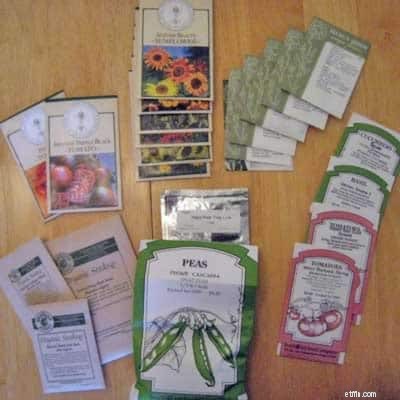
The real highlight of the month, of course, is placing the orders for seeds and supplies. Based on GRS reader suggestions, we’re trying Seed Savers Exchange for the first time this year, along with our other normal sources.
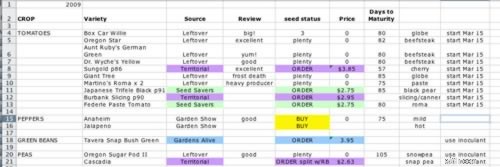
As in 2008, Kris created a spreadsheet to track her purchases (and the seeds she saved from last year). Our seeds have arrived, and now must wait patiently for the beginning of March. That’s when many of them will be started under our grow-lights.
January was an expensive month for our garden. We spent $25.75 on vegetable seeds (and 25 strawberry starts). Kris spent $42 on flower seeds (which we do not track for this project). And, finally, we spent $105.40 for fruit trees and supplies (such as lures for pests).
After some debate, Kris and I have decided to add three more fruit trees to our yard. Our happy half acre already contains two apples, a pear, and a plum. Next week, we’ll drive out to One Green World (a fantastic source for fruit trees — they ship everywhere) to pick up two different varieties of Asian pear and a self-fertile semi-dwarf sweet cherry (as opposed to a pie cherry).
To us, cherry trees are problematic. We love the fruit, but the trees are a hassle for a couple of reasons:
<オル>Kris and I have also discussed expanding our vegetable garden by tearing out more of the lawn. I don’t think we’ll do that this year, but it’s an option for the future. Our unusual extended snowstorm may have done damage to our crops, so we’ll keep a close eye on how the berry bushes, asparagus, and perennial herbs emerge this Spring.
One of our goals for 2009 was to try to reduce costs, but it’s possible we’ll end up spending more than in 2008. Already, we’ve spent nearly half what we spent last year. We’re okay with that. Our $66 expenditure on three fruit trees is a one-time thing. Once these trees are established, they’ll cost almost nothing to maintain, and they’ll produce fruit for decades.
We spent a lot of time in our garden this month, which was unusual considering that it’s February. In fact, the twelve hours we spent working on our food crops was the most we’ve worked in a month since I began tracking the numbers in January of 2008. We don’t mind. A little effort now will pay off big in the months and years ahead.
Much of our time was spent prepping for and planting three new trees. A small fruit tree can be an excellent addition to the suburban yard. A mature fruit tree is an attractive piece of landscaping that can offer a summertime bounty with minimal effort. (The downside is that they can be messy.)
The cost of a fruit tree is mostly up front. A sapling generally runs about $20 and takes a little work to plant. Young trees produce no fruit for the first few years, but eventually patience and effort are rewarded. Our existing fruit trees — two apples, a pear, and a plum — are entering their fifth year, and will yield fine crops this summer.
On Valentine’s weekend, we planted three new trees. We added two Asian pears (chojuro and ya li ) in the “orchard” area of our property, which was originally a filbert orchard, became an expanse of grass, and now has six fruit trees. We planted a cherry (lapins ) near the road. (Cherries can be invasive; we reasoned that by putting the tree near the street, it would be less of a hassle.)
After planting the young fruit trees, we took time to prune their mature siblings, and to prune the berry vines and the grapes. Pruning the berries is labor-intensive. For one thing, they’re thorny. For another, they’re a twisted mess. Kris’ sister helped us untangle the brambles, cut out the old wood, and tie the good branches to our berry trellis.
We also began our vegetable garden this month. Two weekends ago, I double-dug (double-digged?) a bed for the sweet peas. (When you double-dig, you’re essentially loosening two layers of soil, which helps the plants to grow.) We installed three pea trellises, and we’ve been planting one batch of peas each weekend. I’ll put in the last batch tomorrow. I may have to re-plant some of the earlier peas, though, because the blue jays have discovered they make a tasty snack.
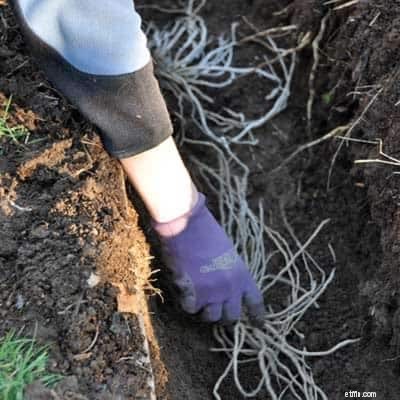
You may recall that Kris is unhappy with the current performance of our four-year-old asparagus plants. Last weekend I double-dug a second area of the vegetable patch to act as a new asparagus bed. This spot should have better drainage. Here we planted 15 crowns of asparagus (Jersey knight and Mary Washington jumbo ) and several dozen red onion sets. We won’t be able to harvest the asparagus for a couple of years (the plants need time to develop), but we’ll use the onions in salsa this summer.
In the herb garden, Kris pruned the rosemary and the lavender. She’s quite pleased because her chives are peeking up. Very soon now, she will begin her vegetable seeds indoors. Many people have requested that Kris document the process, so I think we plan to have a mid-month update on how to start plants from seed.乞うご期待!
“Our expenditures in time and money are way up this year,” I told Kris after I finished compiling this month’s numbers. I was Very Concerned. But all Kris said was, “Yay!”
To her, more time and money spent on the garden now means bigger harvests in the future. I’m not convinced. Still, Kris assures me that we won’t have many other garden expenditures until May. (Which would bring our costs back in line with last year’s pace.)
Note that this month we harvested and used some of the herbs that Kris has been growing indoors all winter. In fact, we just had a mess of basil in our baked ziti last night!
In Oregon, the month of March is unpredictable. Every gardener is itching to get outside, but it’s wet and cold with a few precious — and fleeting — moments of sunshine. In those sunny moments, you can bet you’ll hear a lawnmower going!
I’ve spent a lot of semi-productive time in the flower beds this month, checking on the progress of my perennial flowers, most of which seem to have come through our extremely cold December just fine. While they’re just peeking up from winter, it’s a good time for me to assess which plants are getting invasive and where the bare patches are that will be filled by the plants I have started from seed indoors.
On March 1st, I started seeds for basil and eight types of flowers. Four weeks later, some of them are ready to be moved into 4″ pots. I also started some mesclun salad mix in our indoor herb container, and harvested the end of the winter’s basil and dill (leaving the oregano, which looks great).
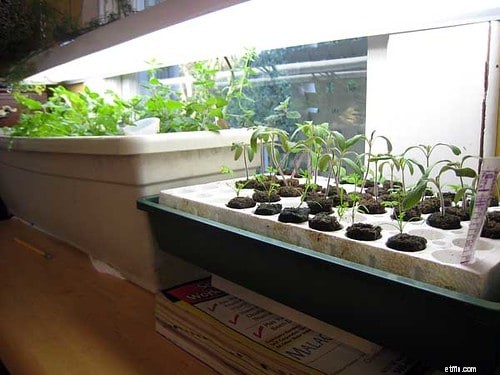
On March 15th, the day arrived that I look forward to all winter:tomato planting day! I plan to have twelve tomato plants this year (nine varieties in all). By the last day in March, each seedling was happily growing under fluorescent lights in the windowsill. Just a few days ago, I began seeds for two types of squash and some cosmos flowers.
The peas and onions we planted in February have sprouted. Mid-month, into the vegetable patch went seeds for three kinds of beets and more salad greens, and among the roses I planted an additional 25 strawberry plants. Neither the beets or the lettuce have sprouted (it’s been cold!) but I am confident that they’re on their way.
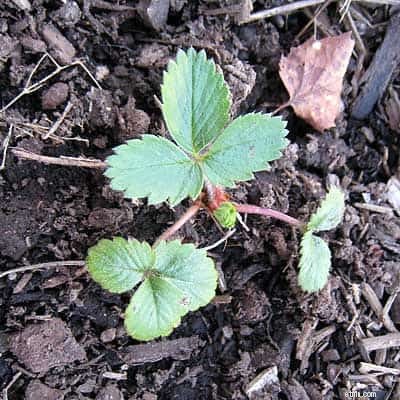
When J.D. writes about our gardening endeavors, he typically concentrates on the herbs, fruits, and vegetables. He loves to eat! But much of my time is devoted to the flower garden. The expansive flowerbeds on our property were filled with 125 rose bushes when we arrived. After giving many away, relocating others and accidentally killing a few, we’re down to about 60. In their place, I have gradually added perennials, bulbs and self-sowing annuals.
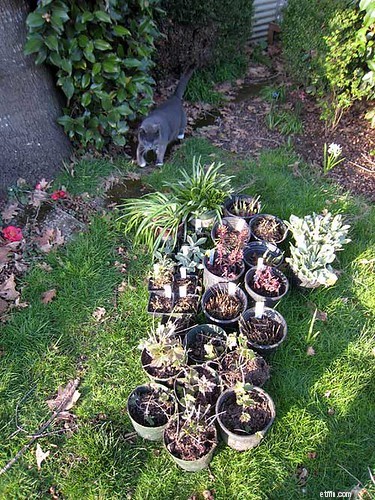 Now that many of these established plants have been growing for several years, they are ready for clump division or have provided volunteer offspring that can be moved elsewhere.
In April, my friend Rhonda is hosting a plant swap. Each participant will bring plants dug from her own garden, and take home others. A few guests are coming empty-handed because they are in new homes without gardens, but I am sure there will be plenty to share.
This month, I spent a couple of hours digging and dividing, and now have about 30 pots to swap. This is a fun way to frugally multiply your landscaping! Since most of the plants that people bring to swap are “vigorous growers”, you can bet that it will only be a few years before they’re ready to be swapped again with someone new.
The edibles garden took little time this month — about 4 hours — especially if you don’t count the many trips I took outside just to squat and peer at the soil where I had planted seeds.
Based on last year’s tests, we estimate that we spent just $1 in March to run two fluorescent shop lights. We anticipate an inexpensive April as well. J.D. had a minor freak-out when he saw our February expenditures, but looking back at last year’s totals, by now we’ve only spent $10 more, gotten $15-worth of herbs from the winter window box and planted three new fruit trees. That’s a bargain!
April was a slow month for our garden. We didn’t do much. Part of this is because we’ve become more efficient. But another part is because we did some of our chores earlier this year.
Kris has been antsy to get plants in the ground. I always tell her that May 1st is our target date, but she’d plant out on the first of April if she could. Last year she put her tomato starts out a few days early, and that was a mistake. They were pummeled by a freak hailstorm and never did produce much. This year, she decided to wait.
She did, however, do a little bit of work. She planted beets, radishes, and lettuce. She transplanted her tomatoes into bigger pots. And she produced a garden map that outlines where she intends to plant things.
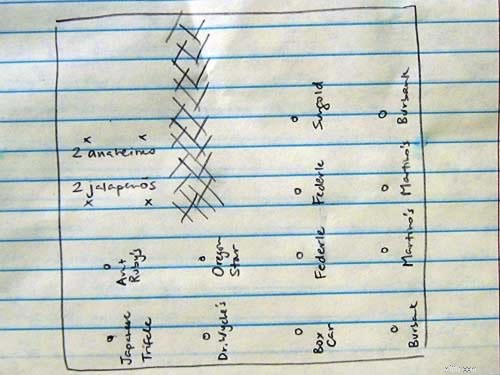
Kris has mapped out where she’ll plant tomatoes and chili peppers
My only garden work was a frustrating hour spent rototilling the compost and leaves and horse manure into the soil. It was frustrating because we have a large, willful rototiller that seems to have a mind of its own. Our actual garden isn’t very large, and we currently have created a sort of maze around the asparagus and onions. That makes it difficult to maneuver. I did manage to get the ground worked up, but it didn’t happen without cursing!
Speaking of cursing:Last year, our gooseberries were mauled by a sawfly infestation. This year, the sawfly larvae are back, and they’re not only devouring the gooseberries, but the currants as well. The gooseberries we can live without, but not the currants. Kris is researching organic pest controls.
We may not have much to share about our garden this month, but we do have some photos. The last few days have been sunny, so we’ve had a chance to photograph our garden in its early stages. Here, for example, is the (mostly) blank canvas:
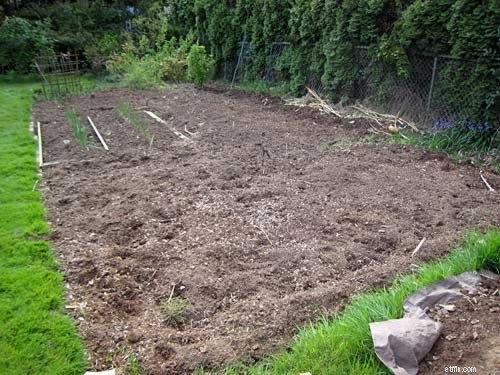
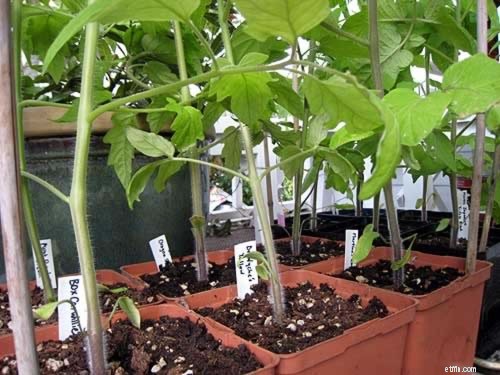
As a reminder, the area of our vegetable garden space is roughly 15 ft by 34 ft (4.57 m x 10.37 m), or 510 square feet (47.4 sq. m.). This actually isn’t very big, and we’ve considered enlarging it. As I mentioned before, Kris planted out her tomatoes yesterday, so this space is no longer empty. Before she planted them, however, Kris set her tomatoes outside to “harden off”. I know this photo doesn’t really show it, but these things are enormous after only six weeks of growth:
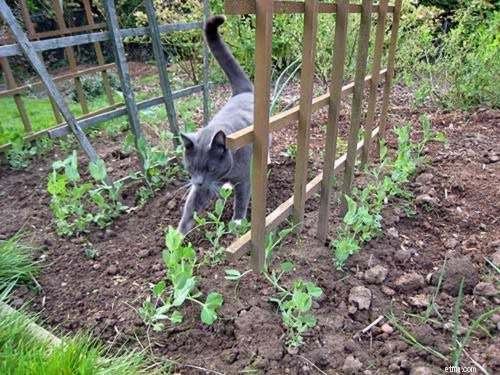
Meanwhile, we do have some crops up. We’ve recruited help to maintain them. Meatball has been tasked with patrolling the beets, radishes, and peas, and Simon has been given charge of the onions:
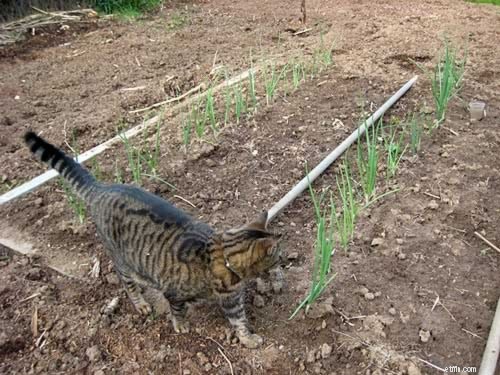
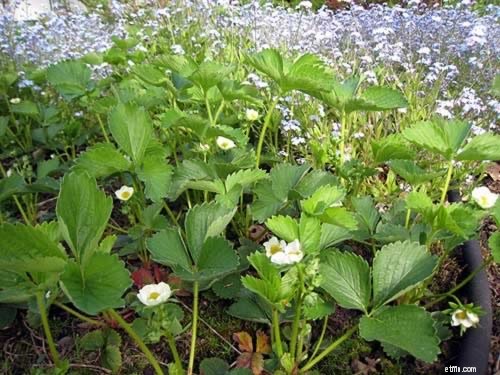
The peas and onions aren’t the only things growing. This is the time of year that berries begin to go berserk. They’re not producing fruit, of course, but they’re beginning to show promise. The blueberries are laden with blossoms (especially the Toro, which are our favorite). So too are the strawberries:
Our caneberries have begun their vigorous growth. No blossoms yet, but lots of new shoots:
Though I don’t have photos, our fruit trees have also begun to bloom. We have two apples, three plums, a cherry, and a pear. We’ve set out pest control in a few of these, and that’s all we’ll really have to do until harvest.
Finally, here’s a salad that we made from herbs and lettuce greens that Kris grew indoors. This is a perfect example of how you can harvest home-grown food in a small amount of space. (You can’t harvest a lot of it, but you an harvest some.)
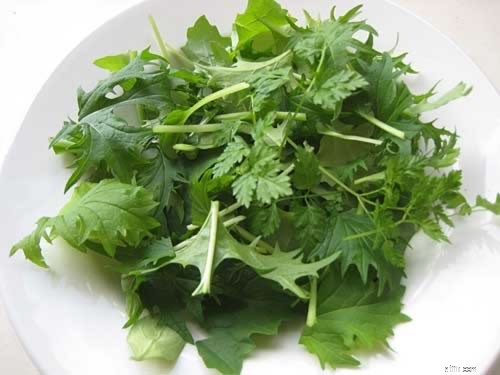
The edibles garden took little time this month — just 3 hours. We didn’t spend a dime. We harvested a single asparagus spear (which Kris consumed raw), but we won’t count that in our totals.
What a difference a year makes! Our fruits, berries, and vegetables had a slow start last year (and then were further slowed by a cold, cold June). This May was warm — very warm. Our food crops loved the weather, and they’ve shown explosive growth.
The sunny weather produced lots of growth. The peas and raspberries and blueberries and fruit trees all look amazing. We’re going to have huge crops. We have a couple of small snow peas on the vine, and the tomatoes are blossoming. But only three crops have yielded fruit through the end of May:
That puts our May harvest at $5.97, which isn’t much, but it is still $5.97 more than we harvested in May last year.
Though our garden is going well this year, we’ve experienced some minor annoyances:
These aren’t major problems, obviously — they’re just minor annoyances. We try to take care of our equipment, but there are a few failures every year. Partly because of this, May was an expensive month. (It was also expensive in 2008.) We spent $98.55 on garden supplies, including herbs and vegetable starts.
I spent zero hours in the garden this month. I did a few quick tasks, but no major work. Kris made up for that. She tells me she spent 15 hours on food-producing activities last month. I’m skeptical. That’s 40% more than our busiest month in 2008 (July). On the other hand, she did do a lot of work out there. (She tells me that just as some GRS readers warned, the horse manure we spread last fall has produced a fine carpet of weeds, which she hoes daily.)
It’s the beginning of summer, and that means our garden is lush and green and growing. It also means there’s nothing exciting to write about. We’ve begun to harvest a couple of things, but mostly our chores have become routine. We weed and fertilize while we wait for the crops to ripen.
One problem we’ve encountered this year is weeds. There are always some weeds to be pulled, but as many GRS readers warned, spreading horse manure on our vegetable garden caused more weeds to sprout 。 Kris is the weed-puller (and plant-fertilizer), so she puts the most hours into the garden. She spent four hours working on food crops this month, while I spent three, all of which were harvest-related.
As our harvests begin, I want to remind you of our methodology. For the purposes of this project, we’re using “best match” pricing. Based on GRS reader suggestions, we’re obtaining typical pricing from our local farmers market. In some cases, we use pricing from a local organic produce stand. In all cases, we’re trying to be fair, but this is more art than science.
Also, last year we established through repeated measurements that a pint of berries weighs roughly 300 grams. I’ll use this approximation frequently throughout the summer.
Those ground rules established, here’s our harvest for the month of June:
Our harvest this month was worth a total of $78.37. In June 2008, we harvested $50.83 worth of food. That’s a 54% increase in the value of our crops!
Despite the correct pruning we gave them this year, our raspberry harvest looks as though it’s going to be pitiful.犯人は? They’re overcome by the monstrous marionberry vine that has taken over the entire trellis. We may relocate the raspberry canes, so will evaluate the yard for a suitable spot and decide later this summer. However, there is a silver lining; we love marionberries (a type of blackberry-boysenberry cross).
And so the profit portion of our project has begun! July, August, September, and October will be even more productive as we begin to pick our caneberries, our tree fruit, and, especially, our tomatoes.
As always, we’ve been supplementing our own produce with food picked elsewhere. Last weekend, our friend Jolie joined us for a trip to the strawberry patch. Kris and I picked 24 pounds of berries (about two flats), for which we paid just over $20.
On Friday, our neighbor came over to let us know that her cherries were ready to harvest. We’ve decided not to preserve any cherries this year, but we picked about 10 pounds just for snacking.
Welcome to Oregon, where for the past week it’s been hot 。 How hot? Here’s the temperature graph from the National Weather Service for Monday, Tuesday, and Wednesday:
The heat hasn’t prevented us from working in the garden. We’ve been watering the thirsty plants, and we’ve begun harvesting their fruit. It’s hard to believe that just three months ago, this was a bare patch of earth. Now it’s grown so lush that it’s difficult to photograph:
But how have our harvests been? Let’s find out.
Remember how last year Kris and I couldn’t find a price for our currants or gooseberries? They’re just not available here in Oregon, so we used the same figures for them as we did for our other berries. But earlier this month we stopped at an Asian supermarket, and they had both gooseberries ($2.99 for 6oz.) and red currants ($3.49 for 6oz.).
So what?
Well, in July we harvested 8.362kg of red currants from our two bushes, which is 18.42 pounds. That’s a lot of currants. Look again at that price in the last paragraph. $3.49 for 6oz. translates to about $9.30 per pound. In other words, we harvested $171.43 worth of red currants this year .
聖なる猫よ!
I have new advice for how to make a garden profitable:Plant red currants — and lots of them!
But what can you do with eighteen pounds of red currants? Kris made two batches of red currant jelly with the most beautiful ruby red color you’ve ever seen. She’s going to enter some in the county fair in mid-August. We also had two friends come glean the extras. Plus there were currants left over to freeze!
While the currants gave us a bumper crop, other plants were less productive. The gooseberries didn’t produce much. And for the second year, they fell victim to the gooseberry sawfly. Kris and I agree:Those things are out of here! I’m going to dig them up and we’ll replace them with more blueberries.
Speaking of blueberries, they weren’t very productive this year either. I’m not sure exactly what the problem is, but we’ve harvested less than half the blueberries we did last year. Our raspberries were pathetic for the second year running; they just can’t compete with the vigorous marionberry canes.
Still, harvest season is in full swing. Here’s the complete tally from our garden in July:
Our harvest totaled $243.10, but most of that was from the red currants. Without those to salvage our stats, we would have finished behind last July. That’s okay, though. The tomatoes are just about to come on, and we’re going to have a lot more of them than we did last year. The fruit trees will also give us bigger crops than last year since they’re a year more mature.
As we often do, we also picked fruit from friends this month. We picked cherries from the neighbor across the street, and on July 3rd we drove out to raid the cherries belonging to our friends Ron and Kara, coming home with thirty pounds of mixed Queen Annes, Bings and sour pie cherries. Yum! We also made use of some early apples for a juicing experiment. This “free” produce isn’t included in the numbers below.
After late July’s blistering heat, August has been relatively cool around Portland. Our fruits and vegetables have been producing excellent crops. Kris is constantly busy in the kitchen, canning and preserving food. We’re eating fresh salsa all the time. And hard as it is to believe, I’m almost sick of blackberries.
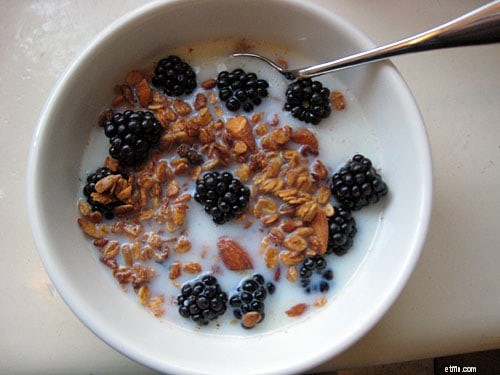
Fresh berries in a bowl of cereal ==a great breakfast! Photo by Kris.
This is actually the best year we’ve had for blackberries. They started producing at the end of July, and there’s been a non-stop flood ever since. Sometimes — in mid-winter — I think I want to plant more blackberries. But during the month of August, I’m reminded that this is a silly idea.
The blackberries aren’t the only prolific producers this year. Our young plum tree is going gangbusters. It yielded its first small crop last summer, but this year it’s really loaded. And Kris’s cucumbers are the most eager growers of all. She has more cucumbers than she knows what to do with and has been taking the excess to share with co-workers.
Also, our tomatoes are doing much better than last year. The cool June in 2008 stunted the crop. We only had 12.88 pounds of tomatoes in August. This year we picked 31.39 pounds of the fruit — and even then we felt this was a little low.
Not everything has produced well, though. July’s heat ended our blueberries early. In fact, we’re unhappy with the blueberry/gooseberry/currant patch, so we’re going to rip out most of the plants and replace them with new ones. Our current blueberry plants are transplants from the neighbors, and they’re 25 years old. They’re weak producers. Time to put in something that will produce fruit worth picking.
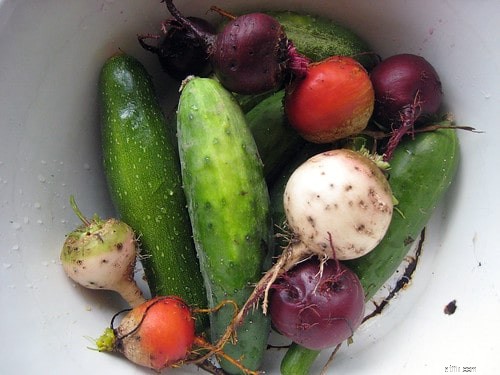
Summer harvests can be beautiful. Photo by Kris.
Still, harvest season is in full swing. Here’s the complete tally from our garden in August:
Our harvest this month totaled $186.33 worth of produce — and that’s without some freak crop blowing the lid off the values. (Last month, we discovered that our red currants are worth quite a bit, which distorted the totals for July.)
This year, for the first time ever, Kris entered some of her produce at the county fair. Her dilly beans took first prize (out of ten entrants). When I picked them up after the fair was over, the woman who returned them to me raved about the beans. “They were so good,” she said. “I had to copy down the recipe.”
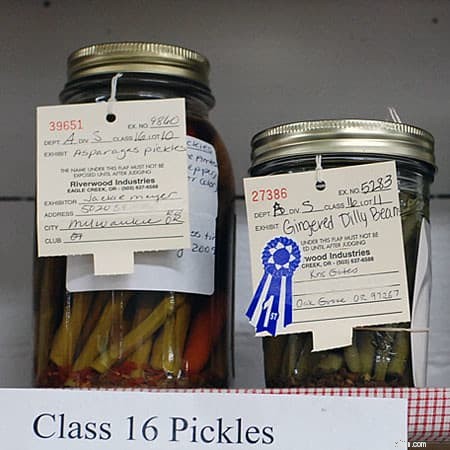
Kris’s prize-winning dilly beans. Photo by Amy Jo.
We continue to receive “free” produce from here-and-there. Friends and neighbors share their surplus, just as we share our surplus with them. Last weekend, for example, the old couple next door brought over a wheelbarrow load of pears. The seventy pounds of fruit they gave us kept Kris canning all day Saturday, and yielded 16 quarts of sliced pears in syrup, 7-1/2 quarts of pear sauce, and 5 quarts of dried pears.
Things are looking good! Better weather in 2009 combined with more effective efforts on our part has created a far more profitable garden project. And again, that’s even though we’re not particularly frugal gardeners.
After a long productive summer, our September in the garden was kind of anticlimactic. Sure, we continued to harvest our home-grown food, but neither of us was particularly “in” to the garden this month. It was a chore instead of an obsession. September can be that way sometimes.
Still, there’s always something happening with our home food production. This month:
Now we’re just waiting for the grapes to ripen (soon, very soon) and the harvest season is done. Kris and I are both disappointed that, for us, this has been the Summer of No Corn. We didn’t grow any ourselves, and we didn’t have another convenient source. When people did give us corn, it was terrible. Ah well — there’s always next year.
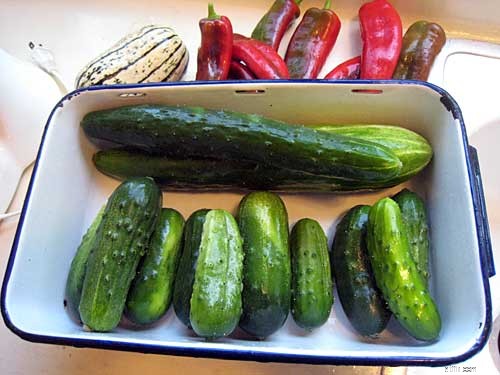
But what you really want to know is how much we “earned” from our garden in September, right? Here’s this month’s tally:
As always, we also enjoyed some of the harvest from our friends and neighbors. We obtained 28 pounds of plums from other folks, a bunch of onions from my cousin, and about 30 pounds of fresh-caught salmon and halibut from the millionaire next door when he returned from Alaska. (And Tina offered us as much corn as we wanted, but we weren’t able to pick it.)
I’m a little worried about October. Last year, we harvested over $150 in produce because the tomato season lingered. This year, though, tomatoes are essentially over. Kris and I don’t expect to harvest much more than we already have. Who knows, though…maybe we’ll be surprised. Still, our harvest total for the year is already greater than our total for all of 2008, so we’ve made improvements!
As those of you who follow me on Twitter already know, it’s been a l-o-n-g Saturday filled with all sorts of misadventures. Murphy’s Law has been in full effect this Halloween. I’d meant to post this month-end garden summary around noon, but now will have to do. In fact, there wouldn’t be a summary at all except that my wife sat down and wrote it for me 。 Here’s what Kris has to say about the month of October…
October arrived with the typical cold and damp, bringing Portland’s garden season to a close. During the fall and winter we’ll enjoy the hearty foods we’ve packed away from this year’s crops, until by early spring we’re ready to begin anew.We’ve been eating fresh fruit and vegetables from our garden patches since May’s first strawberries. Not bad!
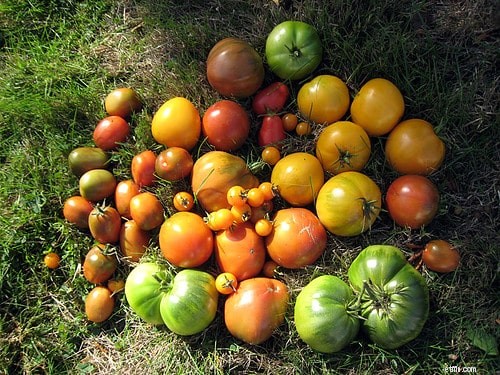
We harvested the last of the garden produce this month.Rain and wind don’t mix well with ripening tomatoes, so I picked 15 pounds of semi-ripened tomatoes to take inside. Stored in a cool place between layers of newspaper, some of these will turn out to be fairly delicious.The rest will rot.
The cucumber plants coughed up enough for another month’s worth of salads, and the beets were ready for roasting. (In fact, I’m roasting some in the oven even as I write this.) In addition, I tore out the jalapeno plants and dried the peppers in slices in the dehydrator.Some went to our neighbor who loves spicy foods; the rest will go into winter cornbread and soups.
Usually I collect the fallen English walnuts in our front yard, but the squirrels have been especially voracious this year!And my volunteer vine turned out to be a birdhouse gourd that gave me two mature gourds for fall decorating.
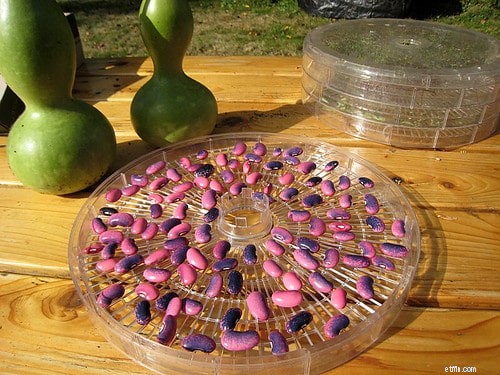
I spent time in the mud ripping out cucumber and squash vines, then the beans and tomato plants, and tidying up the apple trees. We also dug out the beleaguered gooseberry plants and three poorly-producing 25-year-old blueberries.We invested $84 in five new blueberry bushes of various types and sizes.(We’re trying to stagger the berry harvest so it lasts as long as possible.)As we rake leaves in our yard, we’ll spread them onto the garden bed to mulch the asparagus and keep down the weeds over the winter.
In the waning hours of sunshine, early October in our neighborhood smells of Concord grapes.We wait until the scent tells us they’re ready, then head over to the generous neighbor’s yard to pick all we can use. Our own young vines produced a good crop as well. This year, J.D. gathered about 30 gallons of mixed purple and green Concords.I made juice (22 quarts) and grape jelly.It’s a long day but so worth it every time we open a jar.We also made another batch of applesauce from twenty pounds of fruit brought back from an orchard by a friend and fellow canner.
This summer’s total for canned food:140 quarts of assorted pickles, apple/pear sauce, juices, jams &jellies, salsa and fruit.My pantry is full to bursting!I love being able to eat this local bounty during our winter, rather than buying produce that’s been shipped from far away.
In addition to the canned food, the freezer is stacked with berries and assorted sauces, and dried fruits and herbs are stored in a dark and dry place. All this “free food” keeps my grocery spending in check even when we’re not eating directly from the garden.
The fall is when I tally the herbs for the year.Our herb garden provides me with sprigs and snips all year.The annual herbs are finished (basil, stevia, cilantro) and others die back until spring (lemon balm, oregano, mint, lavender) but the perennials will keep going for our winter kitchen use (rosemary, chives, bay leaf, sage &thyme).Throughout the summer, I’ve dried lavender flowers, mint and lemon balm, stevia and raspberry leaves for making tea infusions. Altogether, I estimate that the herb garden has produced at least $50 of harvest.
Here’s the tally for October’s harvest:
Spring is around the corner.私は思う。 After spending three weeks basking in sunny skies and temperatures of 20-30 degrees (yes, I’ve taught myself to think in centigrade!), it’s something of a shock to return to Oregon’s five degrees and rain. Still, I know warmer weather is just around the corner — and that means it’s time to garden.
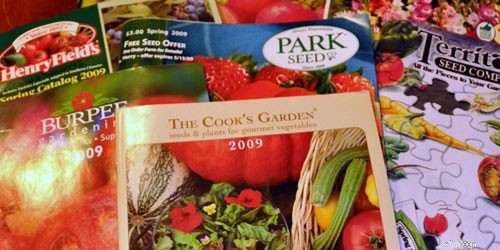
Kris has already started to think of the garden, of course. Her mind makes the leap just after Christmas, when the first of the seed catalogs starts to arrive.
In January, she went through her seed supply — her leftover seeds and seeds saved from last year’s crops — to determine what she needed to order. In the end, she chose:
She spent a total of $24.15 on seeds, ordering mostly from Territorial Seed Company, which sells seeds specifically targeted at “the maritime Pacific Northwest”. (If you can buy your seeds from a regional company, do so. You’ll get plants better suited for your growing conditions.)
Kris has a system for buying seeds. If it’s a new variety she’s trying, she buys the smallest package possible. If it’s a kind she knows she likes, she buys enough to plant for the next two to four years. She saves the extra seeds in the fridge (in an air-tight container).
We’ll plant more in the garden, of course. As usual, we’ll pick up tomatoes, basil, and peppers at the Master Gardener sale at the end of April. These plants will have a good head start, and will let us try a few new varieties.
Kris estimates the seed-buying process took about two hours.
While Kris was buying seeds, I spent some time getting the garden ready. With the help of the boy we hired for a weekend, I tore out some of the old plants, weeded some patches, and — gasp! — cut our blackberry canes to the ground. (This won’t kill them. It’s like pressing the reset switch. They were out of control, and this will give us a chance to guide their growth. But it does mean we won’t get many berries this year.) We spent maybe two hours total doing this. (Meaning, I spent two hours on this, and I paid Ian $20 to help.)
This weekend, Kris intends to plant the peas — if the weather cooperates. The ground is very wet, and there seems to be more rain on the way. (What is this? Oregon?). She’ll also start seeds indoors for her flower garden (nicotiana, zinnia, cosmos, marigolds, and so on). The flowers are mostly from seeds saved in previous years, though the flower-garden costs aren’t included in this project. (Flower gardening is one of Kris’ favorite hobbies.)
Next month, Kris will start seeds indoors for food crops:cucumbers, pumpkin, and zucchini. She times when she plants the seeds based on when she intends to plant them outside (which is May 1st), and counting backwards to get the weeks needed according to the seed-packet instructions.
At the end of April, we’ll attend a “garden exchange”. This is the third year our friend Rhonda has organized a plant swap. Everyone brings their extra plants and seeds, sets them out for others to see, and then takes home what they want or need. In anticipation of this event, Kris will plant extra flowers and vegetables for trading. (She’ll also dig out some perennials to share.)
A garden exchange is a fantastic, frugal way to share plants, but now is the time to organize this if you live in a cool climate. Don’t wait until the last minute.
It’ll be a while before we have fresh berries, but we’re still able to enjoy the fruits of last year’s harvest. In fact, Kris has been using our supply of berries in yogurt smoothies. Here’s her recipe:
We don’t grow the bananas or oranges, of course, and we don’t harvest the honey. But we grow the berries, make the jelly, and, thanks to Jolie Guillebeau, we make our own yogurt. And in just a few months, we’ll have fresh berries to use in the smoothies.
With the cold weather and our trip to Africa, the 2011 garden project is off to a slow start. (It’ll pick up over the next few weeks, though.) We’ve spent a total of 4.0 hours and $44.15 on this year’s food-producing garden ($24.15 for seeds and $20 for hired labor).
It’s interesting to note that there’s really no “typical” year so far.
If you had ask me to guess before I started this project, I would have thought that each year would be much like the year before. Apparently, that’s not the case. I’m eager to see how this year’s costs and harvest unfold…
March is usually a time for Kris and me to get back to work in the garden. The weather warms, and we get to watch as our first sprouts poke through the soil.今年?それほど多くはありません。 It was a cool, wet month.
The average temperature in March was about 46 degrees Fahrenheit — which is below normal for this time of year. In fact, Portland just had a record stretch between 60-degree days. The last such day came in early December. We usually get a couple of 60-degree days in February, but if the clouds hadn’t parted on the afternoon of March 31st, this year we wouldn’t have had a warm day until April .
Meanwhile, rainfall was nearly 75% above normal for the month. If that rain had all been concentrated over a few days, we might have done some work in the garden. But it wasn’t. It rained 28 days in March. Twenty of those days saw 1/10th of an inch of rain or more. It was so wet last month that the peas we planted after returning from Africa simply rotted in the ground. And now it’s too late to plant replacements. So, we probably won’t have peas this year. (Which is sad, because I love peas!)

As you’ve probably deduced, between the cool weather and the heavy rainfall, Kris and I did nothing on our garden in March. In fact, we did nothing in the yard. The lawn did get mowed — but not by us. It’s been far too wet for my mower. But we were making dinner last Monday night, when Kris asked, “Is somebody mowing the yard?”
Sure enough. There was the Real Millionaire Next Door on his riding lawnmower. I went outside to chat with him. He just got back from his winter in New Zealand (where it was summer, of course), and he’ll be here a month before heading north to Alaska. He’s like a migrating goose. But he’s a goose who mows our lawn and brings us salmon, so it’s always good to see him.
This garden update is pretty lame, I know. Trust me:There’ll be more to report for April. And May’s installment will be packed!
How’s the weather where you are? How does your garden grow?
After a long vacation in February and a wet, dreary March, Kris and I finally were able to do a little work on our vegetable garden in April.ある意味。 The weather remained chilly and damp throughout the month, so we didn’t get as much yardwork done as we’d like. (The average high temperature for April 2011 was 4.5 degrees below normal. The average low was 2.1 degrees below normal. Rainfall was 5.04 inches, almost twice the average for the month.)
Though we couldn’t really plant anything until the last day of the month, Kris has been itching to get in the garden, so she’s been doing a lot of maintenance and clean-up. She and I put a total of twelve hours into our food-producing gardens in April (though eleven of those hours were hers). Most of these hours were spent pulling weeds, digging out old overgrown herbs, and getting the gardens ready for planting. (We opted against using the rototiller this year, so it took longer to prepare the plots.)
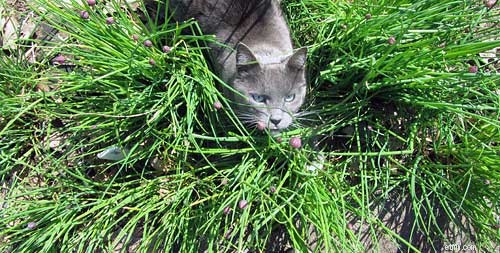
A big, furry weed in the middle of the chives.
In mid-April, we attended the neighborhood plant swap, where we were able to pass along plants we no longer need (or want) while picking up others that might be more useful. Kris brought home parsley, tomatoes, and lovage (a celery-tasting herb). She also scored lots of perennial flowers. (But we don’t track flowers in our garden project, thank goodness. That’s purely for fun.)
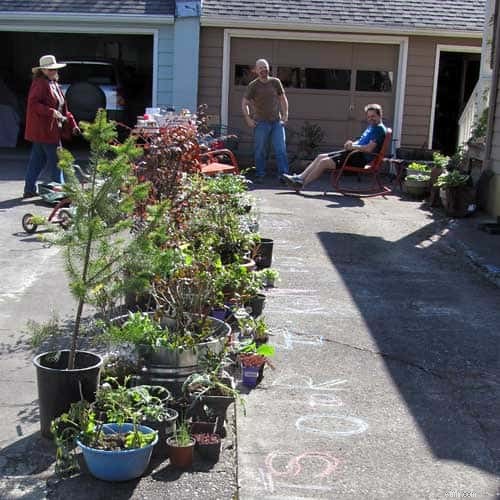
At the plant swap, Mike and J.D. enjoy some fleeting moments of sunshine.
At the plant swap, our friend Craig gave us three kinds of lettuce seeds and some plant-marker stakes made out of old mini blinds. (What an awesome idea!) Though we never have success with lettuce, Kris planted some indoors, and we’re giving it a go. She also has some basil started in a window box.
Meanwhile, most of our fruits and berries have begun to blossom, and our early crops are finally starting to show some life. The apple trees, for instance, are in full bloom, as my allergies can attest:
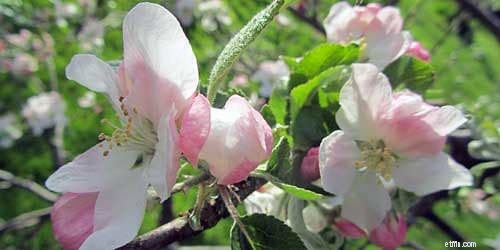
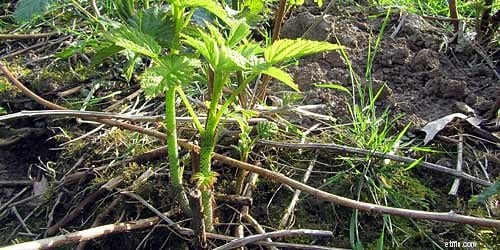
In January, we cut back our blackberries and raspberries hard 。 (“You’re not going to get any fruit on those this year, you know,” my real millionaire next door told me. “I know,” I told him. “It’s a price I’m willing to pay.”) Now, though, the caneberries are sending up lots of new growth.
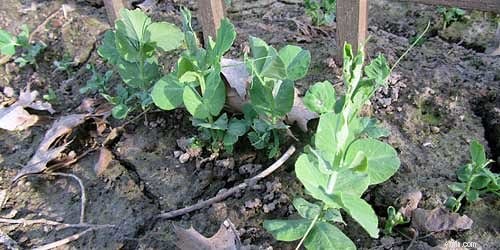
The grapes and blueberries currants are blooming, too. The peas are up, though they’re behind, and we’ve harvested a few spears of asparagus.
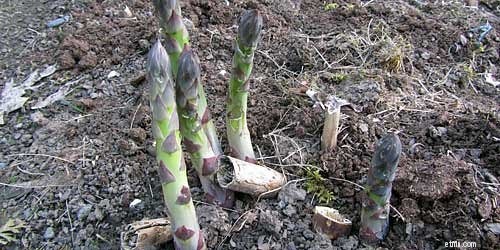
The peppers are in a container this year so that they can have warmer soil than the rest of the garden will get. We’re hoping this will make them more productive.
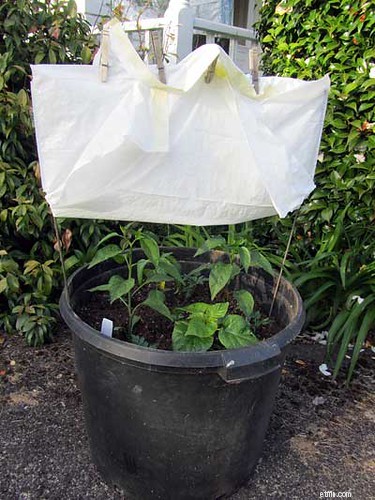
Kris’ frugal greenhouse:A garbage bag over the pepper pot
The tomatoes are currently in Kris’ mini greenhouse. They’ll stay there until the garden soil warms — our night-time temperatures are still in the low forties, about five degrees below normal — or until they get too big, whichever comes first.
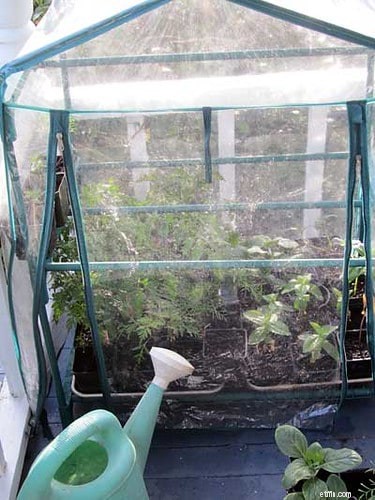
In short, we’re being patient. When the weather turns warm, we’ll be ready to plant things out. If we’re lucky, by the end of June, we’ll be writing about sunny days and sweet, delicious berries.
At the Oregon Master Gardeners plant sale, Kris spent $28.25 on plants for the vegetable garden. She bought:
Kris also bought some herbs. “But they’re decorative herbs,” she tells me. “They’re for the flower garden, not for the herb bed.”
I also spent $15.98 on a bag each of potting soil and compost, bringing our total expenses to $43.23.
All we harvested in April was about 263 grams of asparagus. Asparagus goes for $2.99 a pound at the local natural-food store, which means we’ve reaped about $1.73 in “revenue” from our garden so far this year. We won’t really start getting our money’s worth until June, when the strawberries begin to ripen. (I can hardly wait!)
In my mind, Oregon has mild springs:plenty of rain, sure, but also lots of sunshine and hints of the summer to come. Since we started the garden project, though, that just hasn’t been the case. Our springs have mostly been cool and moist — just like our winters.
May was again — surprise! — cool and moist. There were some sunny days, and our rainfall was around average, but the temperature was much cooler than normal. (Well, long-term normal, not recent normal.) Still, our garden isn’t as stunted as it has been in years past.
Despite the weather, our garden is thriving. As you’ll recall, Kris bought lots of “starts” at the garden show on the last day of April. She set out the tomatoes to harden off (allowing them to become acclimated to the great outdoors), and eventually moved them to the garden. From seed, she planted green beans, cilantro, cucumbers, zucchini, and pumpkins. She also planted nasturtiums — edible flowers — from seed. And sunflowers (though we don’t plan to eat those!)
Indoors, we’ve been growing lettuce, which is rare for us. We’ve tried lettuce (and carrots) before, but for some reason, we never have success. But our friend Craig, who is a fantastic gardener, gave us some lettuce seeds saved from last year’s crop. We planted them indoors and now have quite a crop.
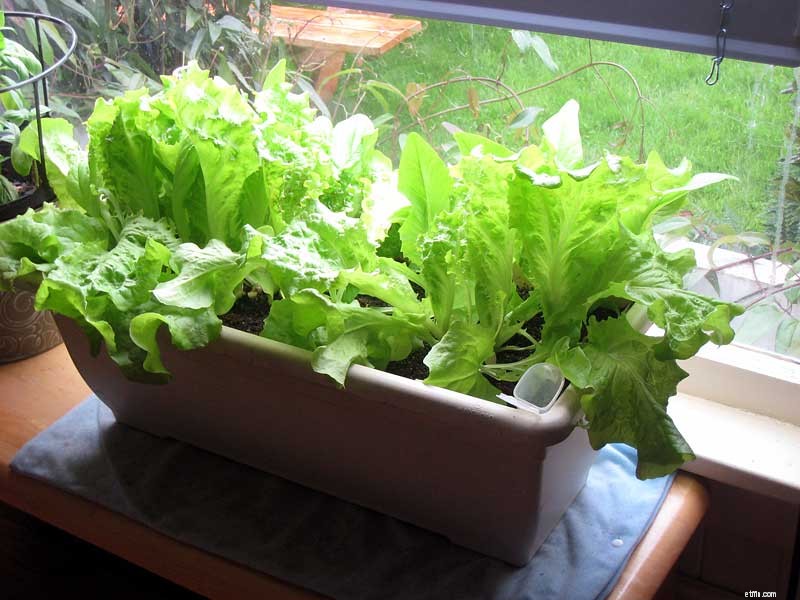
For the first time, we’ve grown lettuce that actually tastes okay. It’s not great, but at least it’s not bitter. Meanwhile, some of the cucumbers are still under cloches (made from two-liter soda bottles) because it’s been too cold.
Kris has been hoeing her garden and performing routine maintenance. I haven’t had time to tend to my berries (the blueberries are overrun with weeds!), though I did find time to trim the tall grass in the caneberries and grapes. And last weekend, Kris and I spent half an hour working together to tie up the blackberry canes.
While working on the berry canes last week, we disturbed a nest of baby spiders. “Holy cats!”私は言いました。 “Look at those guys. There must be a hundred of baby spiders.”
“They’re not really babies,” Kris said. “They’re more like teenagers.”
“I wonder what they eat,” I said. And then I had a thought. I ran inside to grab my camera so that I could shoot the following short video.
I went outside this morning to look at the spiders again, but they were gone — every single one of them. I don’t know enough about spider life to know if they were eaten, washed away by rain, or simply grew up and moved off of their mother’s fencepost.
Our costs in May were relatively low when compared to past years. Kris spent about six hours working on the food crops this month. “I’d love to spend more ,” she tells me, “if the weather would cooperate.” It looks like she’ll get her wish. The forecast for this weekend is sun, sun, sun — and the long-range forecast looks promising, too. I spent about an hour in the garden, giving us a total of seven hours worked this month.
Our only monetary cost was $10 that Kris spent on a large rhubarb plant, which she’s installed in a corner of the garden. (I’ll never know why, though!)
During the month of May, we harvested three things:
June’s harvest will be our first of any size for the year, as we begin to pick the ripening berries. And, of course, July and August will bring us a bounty of fruits, vegetables, berries and herbs!
We’ve spent a lot less on the garden this year than in past years. That’s because we haven’t spent anything on infrastructure. In 2008 and 2009, we had some major expenses for hoses and tomato cages and so on. We’ve had none of those costs this year. In theory, our infrastructure costs should be minimal now that we own most of the things we need to grow our garden.
Summer is finally here in our corner of the Pacific Northwest:The birds are chirping, the insects are humming and the garden is producing.
June started cold and wet but has gradually warmed enough to make Kris think this year’s garden is going to be successful. And she needs a successful summer after two straight years of poor tomato harvests — our pantry needs restocking! But those tomato crops are a long way off. At the moment, we’re enjoying our strawberries, peas (both snow and snap), and the lettuce from the window box we keep inside under a fluorescent shop light.
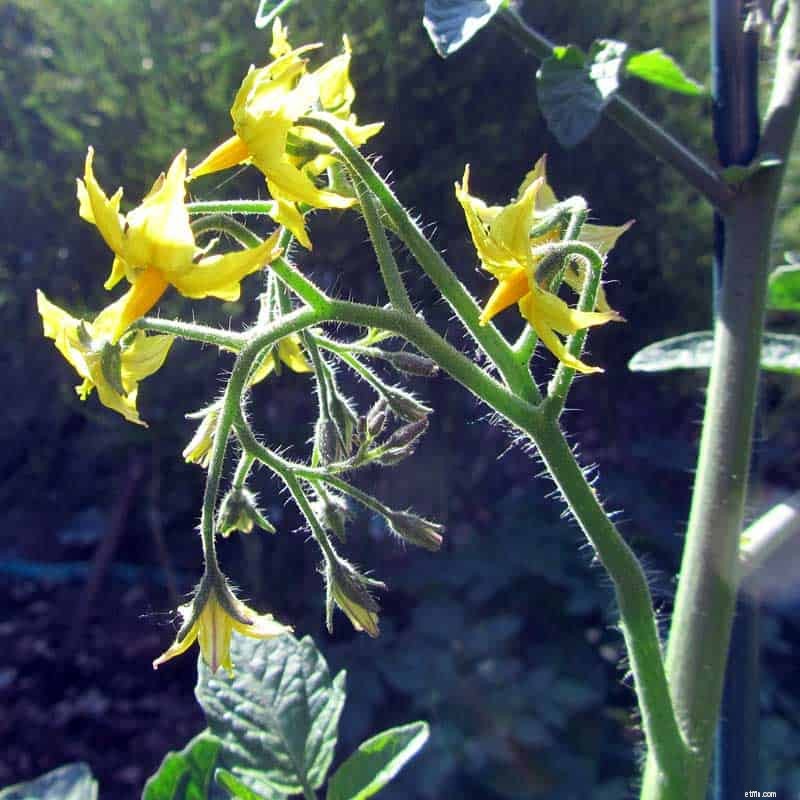
The tomatoes have burst into blossom, promising heavy harvests in late summer
The strawberries have been a morning staple this month (mixed into yogurt with homemade granola), and the peas are delicious straight from the vines or cut for a crispy addition to our salads. But as much as we like these early crops, the best is yet to come. The zucchini are almost big enough to harvest — maybe this weekend — and the currants are ripening to a gorgeous ruby red. The promises inherent in blossoming crops are making our mouths water:cucumbers, tomatoes, potatoes, blackberries, raspberries and elderberries, as well as peppers and pumpkins are all blooming like mad. (Do your job, bumble bees!)
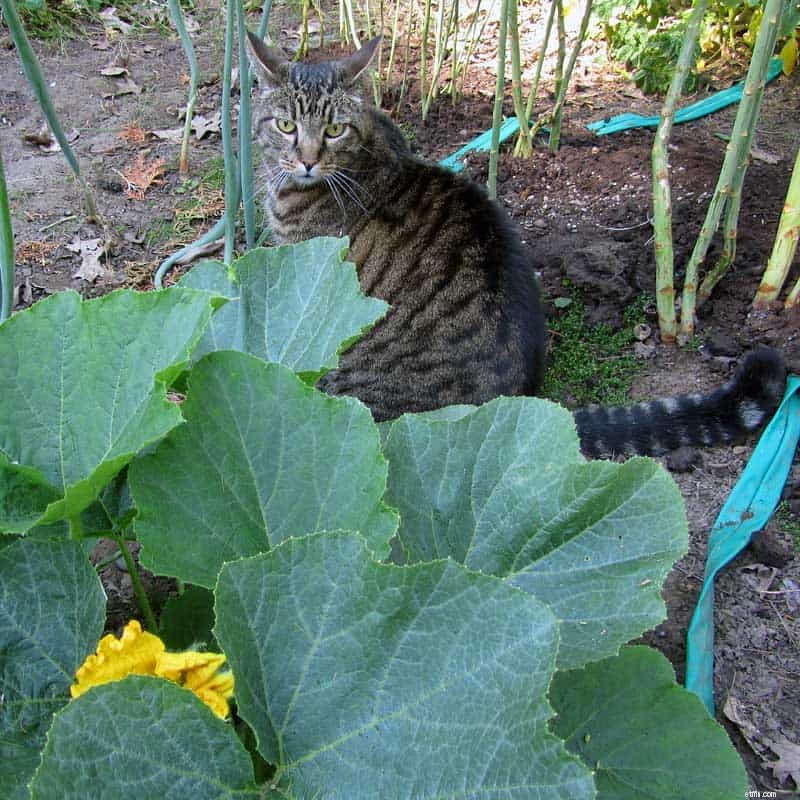
Simon stands guard by the pumpkin plant
From the herb garden, we’re harvesting basil and oregano. The oregano gets dried in the sun, and the basil is added fresh to pasta and pizza. Meanwhile, the apple, pear, and plum trees show potential for sizable crops — if the weather cooperates.
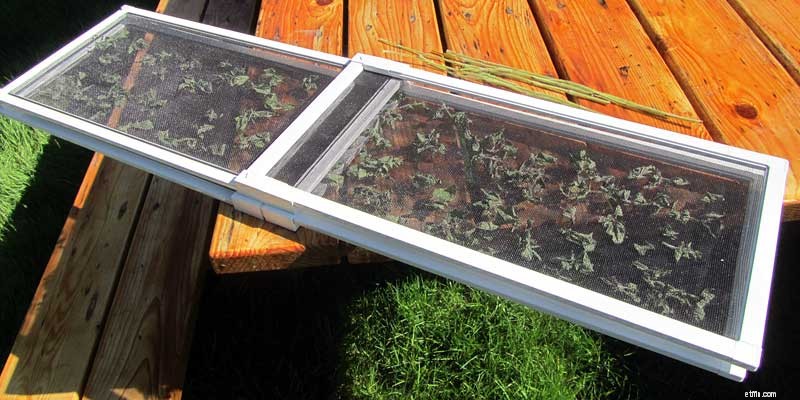
Drying oregano in the sun (between two window screens)
You may remember that we cut the berry canes back hard this year. Well, you’d never know it to look at them! They’re out of control! We’re expecting a small berry crop this year, but I need to get out there and tie up the canes before they take over the neighborhood. And we spent some time this month weeding our patch of young blueberry bushes and adding bark mulch. The mulch was our only garden-related expense for June ($36), but I think we’ll need to actually add another layer in July.
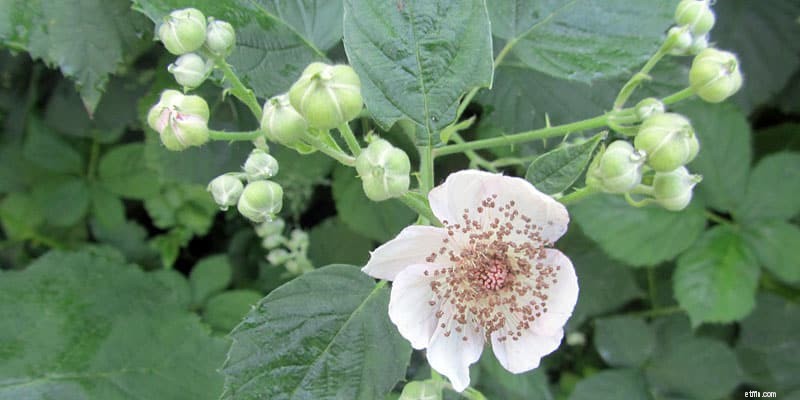
Despite being cut back hard, the blackberries are eager to produce.
Based in part on GRS reader feedback, we’re looking for some help with the yard and shrub maintenance since I’ll be traveling more. That will leave Kris able to focus her energies on the food and flowers as the summer continues. Altogether, she estimates we had about eight hours of garden-related labor this month.
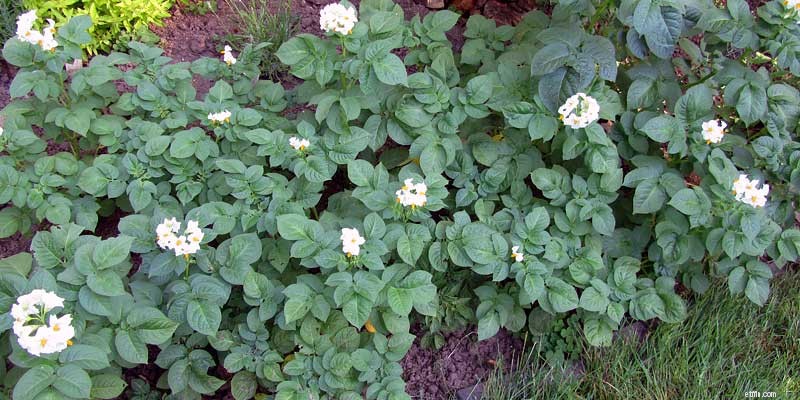
Our potato patch is enthusiastic this year
Our harvest for June included:
That’s a total of $16.06 worth of food harvested from our garden in June, but it’s barely getting started. The next few months should see a bounty of tasty, low-cost food. Yum!
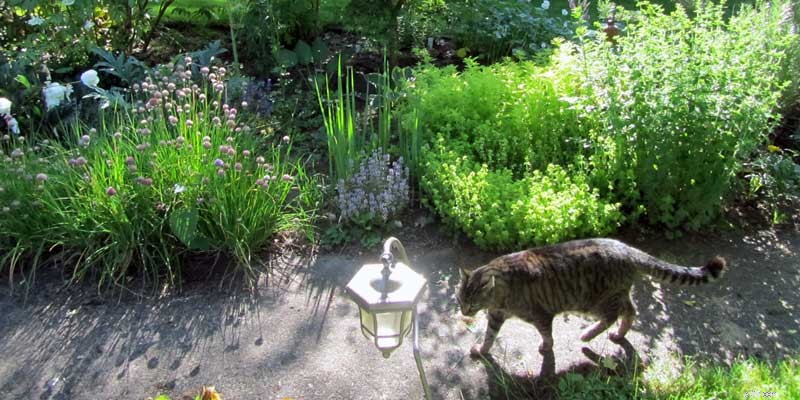
Simon patrols the herb garden to keep it free of squirrels
We had a strange July in our garden. First, the cool weather lingered longer than it ought to have. It wasn’t cold and wet, but the days were cool. Then we were gone for much of the month:Alberta, Colorado, Washington. Finally, our harvest was much smaller than in previous summers.
Part of this was because gave most of our currants to a friend, and our new blueberry plants (we replaced the old ones last year) produced fruit, but it went unharvested. (Translation:I wasn’t around/didn’t remember to pick the fruit, so we got none. This is a dumb way to garden.)
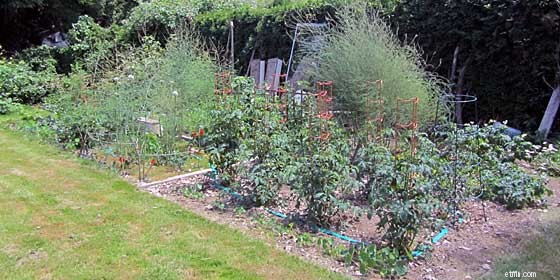
The low production, the donated fruit, and the wasted berries meant our numbers for the month were pretty pitiful. Our harvest for July included:
That’s a total “profit” of just $49.90, which is way behind the previous two years we’ve tracked the numbers. (This total doesn’t include the cherries we picked from neighbors and friends. That 13 pounds of fruit was worth roughly $32.)
We also had some minor expenses in July:
良いニュースは? August has been awesome so far. We’ve harvested a lot of beans, peas, cucumbers, and more. If the sun continues to shine, we’ll have a great tomato harvest. And the fruit treas are loaded! In three weeks, we hope to be sharing some big numbers with you.
This section was written completely by Kris.
I don’t know about your garden, but mine produces way more zucchini than I can ever eat. And although my basil is thriving, it’s put to shame by the zucchini. How happy was I to find a frugal pesto recipe in our local paper that uses plentiful zucchini as an extender in a Zucchini-Basil Pesto? It replaces expensive pine nuts with more affordable almonds, but don’t skimp on a good quality cheese—it really kicks up the flavor of this mild summer pesto.
Zucchini-Basil Pesto
(makes two cups)
To make the pesto:Melt butter in a medium sauté pan over medium-low heat. Add the almonds and shallot and cook until the shallot is softened but not browned, about 5 minutes. Add the garlic and sauté until fragrant, 45 seconds. Transfer the almonds, shallots and garlic to a blender and add the zucchini, basil, lemon juice, and cheese. Pulse until finely chopped. With the blender running, slowly add the 1/4 cup olive oil, stopping to stir the ingredients occasionally. Blend until smooth and season with salt and pepper.
I’ve adapted the recipe slightly to my taste and I use the lesser amount of garlic because I can find it overpowering. Feel free to make changes of your own and play around with it! This pesto would be good with pasta, grilled chicken, or as a dip or sandwich spread. This recipe makes about two cups — a pesto recipe using only basil would need about four cups of basil leaves instead of the one cup required here — and freezes well in small portions.
August finally felt like summer here in Portland. The entire month was sunny and warm, and there was very little rain. The garden rewarded us with productivity. Our harvest in August wasn’t huge, but we expect to pick a lot of fruits and vegetables in September.
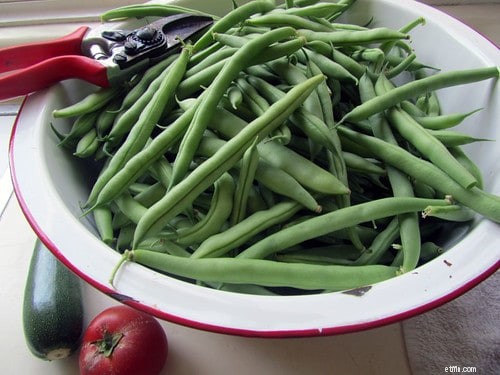
A harvest of beans
Still, we did begin to harvest many favorites, including nearly four kilograms (or nine pounds) of green beans! Our harvest for August included:
That’s a total of $89.45 worth of food harvested from our yard, and that doesn’t include the stuff we gave to others or that we harvested from elsewhere.
For instance, Kris and her friends picked apples at the house next door. We ended up with about 50 pounds of fruit, enough to can three gallons of juice and four pints of apple butter. Plus, Kris picked enough roadside blackberries to make two batches of jam. Yum!
Speaking of canning, Kris has been hard at work storing up the food from our yard (and from the local produce stand). She’s canned zucchini bread-and-butter pickles, dill pickles, ginger pickled beans, and a variety of jams. She entered some of last year’s goods in the county fair, and came away with prizes for her plum jam, bread-and-butter pickles, and pickled carrots. Plus, her sour cherry jam won a special award. (It’s just that good!)
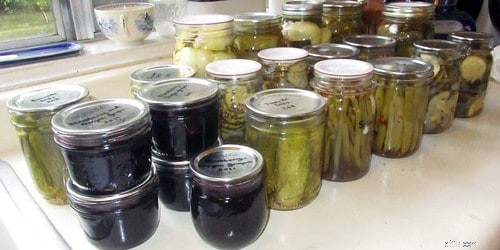
The products of a single canning session
We’re looking forward to a big harvest in September. The forecast is for hot, clear days, which should keep our garden producing. Our fruit trees are laden with apples, plums, and pears, and there are still blackberries to be picked. Plus, by the end of the month (or perhaps early in October), we’ll start to harvest grapes.
It’s a wonderful time of year to be a gardener.
This month, the cats weeds got out of control. As you’ll recall, we used to have four cats weeds but one died last February. We were doing fine with three, but when my mother had to move out of her home, we adopted her two cats weeds, giving us five. That’s a lot of weeds.
To make things more interesting, if you follow my personal blog, you know that we’re dealing with a new weed over the past ten days. A rabbit appeared in our yard one morning and adopted us (and our cats) as his own.

Two new weeds in our garden:Silver and Blackberry
Nobody in the neighborhood claims this rabbit weed, nor have our attempts to find his owners on-line come to fruition, so Blackberry (as we call him) is living on our property for now. He’s a cute little sucker, as this video demonstrates:
That’s enough weeds for now, though. We don’t have room for any others!
We had no expenses during August, and we worked very little in the garden. Our only time was spent harvesting.
Our late summer this year meant that our crops were delayed, but when the sunshine came, it came on strong! I was very busy in the kitchen in September, but not so busy in the garden itself.
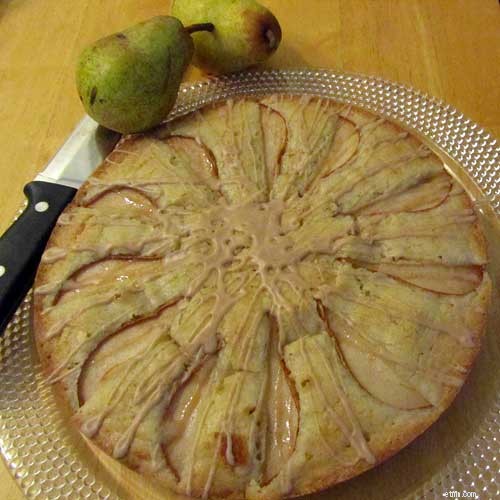
An almond-pear tart
My records show that since the beginning of the month, I’ve preserved 126 pints of food for pantry and freezer, bringing my year-to-date total to over 263 pints (131 quarts). Not included in those numbers are the dried pears and plums I’ve been able to make from this year’s bumper plum crop from our tree and some of the 50 pounds of Bartletts shared by our neighbor, Roberta. And the fresh fruits and vegetables have meant I’ve purchased only lemons, limes, and onions at the store over the last month; of course, we all know J.D. has purchased pineapple, blueberries, and watermelon!
My pantry is now stocked with jars of applesauce, spiced pear sauce, and apple juice, apple butter, pear butter, pear-vanilla preserves, and plum-anise jam. The freezer has nine quarts of herbed tomato and onion pasta sauce and four pints of oven-roasted tomatoes with olive oil and sea salt. Added to the many pickled items and jams from earlier in the summer, we’re in good shape for the cold and gloomy Oregon winter months ahead! I’ve also made a good number of jams to give to friends for this year’s holiday gifts.
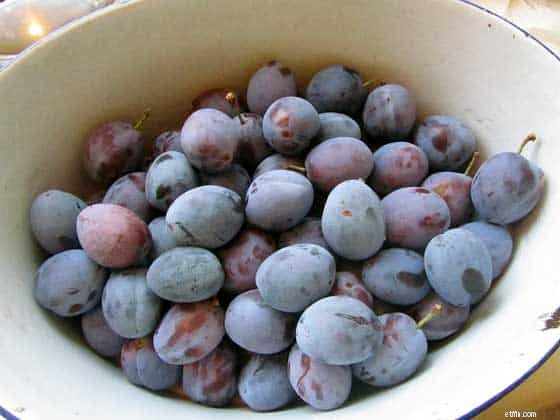
Italian prune plums from our tree
On one of our last sunny September days, I tore out the bean bushes and cucumber vines. They probably would have produced a bit more (the beans were still flowering), but I was in a mood to clean. Out came the smaller of the two zucchini plants, the dried pea vines, and the gourd vine once I had harvested this year’s gourd crop. Other than that work, the only labor for the month was the time spent harvesting — about 5 hours total.
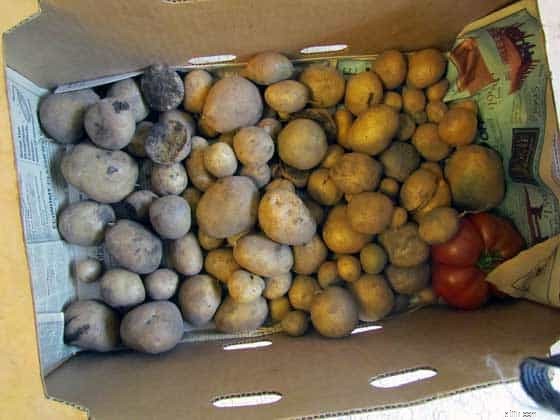
Potatoes from our garden
I’ve only collected about half the potatoes and will dig the rest in October. There are still tomatoes on the vines, but our recent rains may make them split and rot before they ripen. And time will tell about the Concord grape crop as well. I’d love to make some Concord grape juice and jelly — we’re out of both — but without J.D.’s help to harvest it, it will be quite a project. And there are still a number of jalapenos and habaneros turning bright colors on my plants—waiting to be picked and turned in to something much too spicy for me to eat myself!
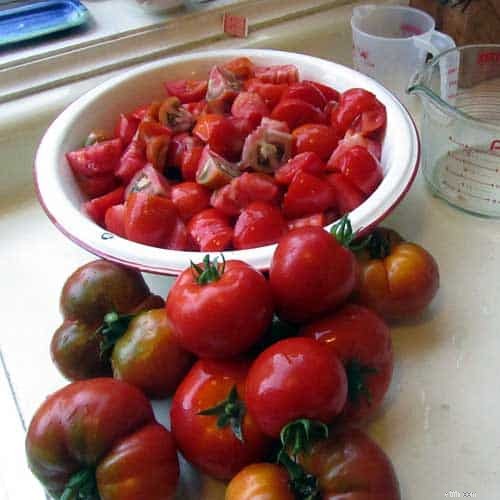
Tomato sauce, step one
After spending so many hours over a hot canning pot in September, I’m ready for the gardening season to end and the enjoying season to begin. Here’s our total harvest for the month:
That’s a grand total of $332.68 worth of produce in September! That’s a record harvest for any single month, and doesn’t include the 20 pounds of apples and 50 pounds of pears we picked up from friends. Maybe that’ll help make up for the slow year we’ve had so far. Let’s look at the annual totals.
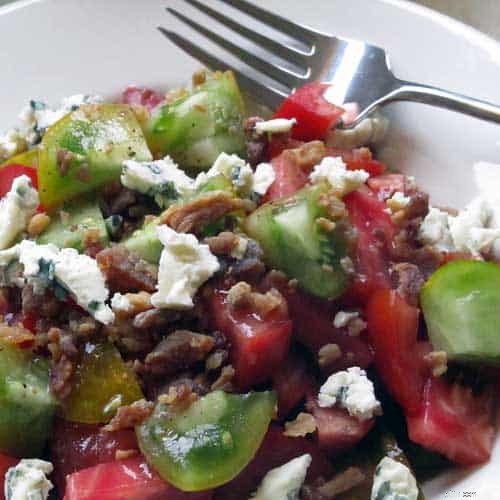
Lunch – a bacon-tomato salad
Our gardening season is complete for 2011. After an initial burst of cold and rain, our October weather was surprisingly pleasant. The garden plot has been cleared and is ready for us to rake leaves over it for the winter. The birds are enjoying the dried sunflower heads, and I’m waiting for a hard frost to cut back the asparagus ferns.
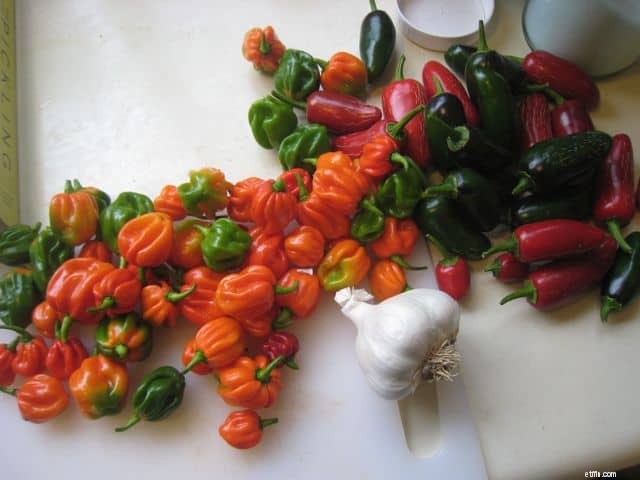
Habaneros and jalapenos—made a garlic chili relish for the people who like things HOT!
October means grapes around here, as well as the end of the apples and tomatoes. I made final harvests of our chili peppers and potatoes, and I’ve been carefully meting out my precious remaining plums and last batch of fresh salsa from the fridge. It will be many long months before we have any fresh produce from our own yard.
Final tally for food put-up to date:333.5 pints! That’s a lot of jars, and the pantry under the stairs is stacked high — more boxes are stored in the basement. That also includes the preserves that will be part of this year’s holiday gifts to our friends — we love our tradition of exchanging homemade treasures. I look forward each year to planning what I will make to share. As my friends are increasingly good at humoring me by returning my jars, and the fruits/vegetables are generally free, the cost of these gifts “boil down” to sugar and pectin! (Ha — that’s a canning pun!)
The pantry under the stairs
Oregon’s many wineries are worried about a poor harvest this year, but our grapes had their best year ever. In addition to harvesting from our own vines, I was able to pick about 30 pounds of Concord grapes from our neighbor (the millionaire next door) and made J.D.’s favorite juice and jelly to welcome him home.
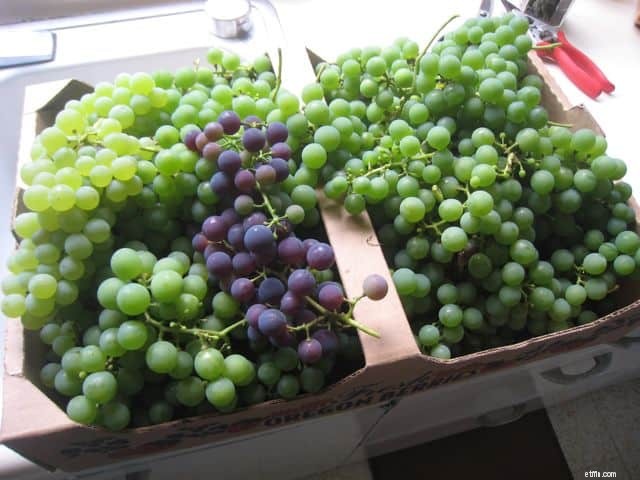
One part of the grape harvest—that’s about 10 pounds
Garden clean-up and harvesting totaled about six hours of labor for the month. Here are the numbers:
That’s a total harvest worth $161.66 in October with no out-of-pocket expenses.
Some of our crops this year were small (currants, blackberries), bringing our annual harvest value down. But despite that, this year’s overall profit is higher than for the other years we’ve tracked our progress.なぜ? First of all, our costs were very low this year — we’ve got the main garden infrastructure established and didn’t need to purchase many items. In addition, I was very selective in my choice of seeds and plant starts this spring. And perhaps even more importantly, our maturing plants are producing substantial crops of asparagus, apples, plums, and grapes.
I look forward to next year’s crops from these perennial plants, as J.D. and I have been discussing taking a year off from the vegetable garden of annuals in 2012. I’ll turn my attention to the somewhat neglected flower beds instead and we’ll enjoy eating the pantry down. I think I may have enough jam to last us until 2018!
Here are this year’s totals through the end of October.
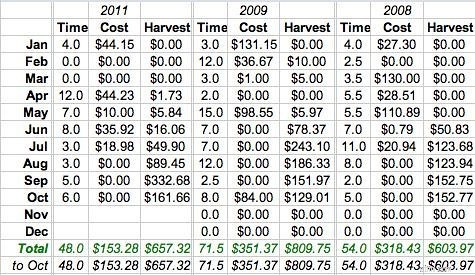
Share your progress! I’d love to hear about other people’s gardens. Especially if this is your first time growing your own food, please chime in with what you’re doing and what you’re learning.
This garden project is not a formal experiment. Kris and I are long-time hobby gardeners, and we have set ways that we do things. This year, we’re trying to incorporate some new ideas from GRS readers, but most of the time we’ll do things the way we have for more than 15 years.
We’re not trying to be 100% organic (though we are mostly organic through our normal practices). Nor are we trying to be 100% frugal. Instead, we’re trying to see just what our garden costs and produces based on our normal habits. We hope the results of this experiment will help us find new ways to economize and to improve our crops.