

開示: この投稿は、アフィリエイト パートナーシップを通じてリストされているパートナーから無料で報酬を受け取る場合があります。これは当社の評価には影響せず、意見は当社独自のものです。詳細については、 ここをご覧ください。
Seeking Alpha の徹底的かつ詳細なレビューが必要な場合は、ここが適切な場所です。
まず、Seeking Alpha とは何か、Seeking Alpha があなたとあなたの投資にどのようなメリットをもたらすのかを理解してから、次のような詳細を説明します。
無料で Seeking Alpha の基本メンバーになるか、Seeking Alpha のプレミアム プラン (私が使用しているプラン) に登録するか、プロ プランを使用することができます。
Seeking Alpha があなたにとって最適な投資調査プラットフォームかどうかを確認する準備はできましたか?
早速見ていきましょう。
総合評価:
5 点中 4.8 の評価
カスタマイズされたツール
高品質のコンテンツ
詳細な株価分析
中毒になる可能性があります
複雑なインターフェース
圧倒的かもしれない
Seeking Alpha は、コスト効率が高く、公平かつ定量的な情報を求める中級から上級の投資家向けに設計された投資リサーチ プラットフォームです。
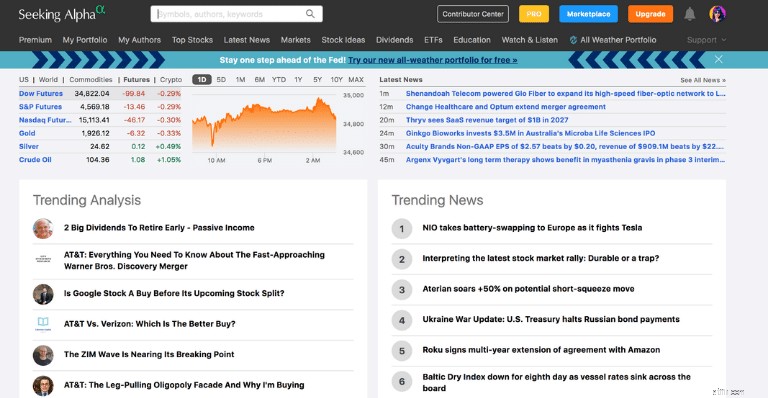
Seeking Alpha にサインアップすると、利用を開始できるツールがいくつかあります。 、
Seeking Alpha は 2004 年の開始以来、このプラットフォームには月間 2,000 万人を超えるユーザーが集まりました。
Seeking Alpha の名前について、あなたが知らなかったかもしれない気の利いた点を以下に示します。
「アルファ」という用語は、ギリシャ語のアルファベットの最初の文字であるだけでなく、ギリシャ人によって数字の 1 を表すためにも使用されました。
「アルファ」という用語は、実際には金融用語でもあり、次の記号で表されます。
財務用語における「アルファ」という用語の意味は次のとおりです。
ポートフォリオのアルファは通常、正の数、負の数、または 0 のいずれかで表されます。
これらの数字の意味は次のとおりです。
2%
ポートフォリオは市場を 2% 上回りました
0%
ポートフォリオは市場に合わせて実行されます
-2%
ポートフォリオは市場を 2% アンダーパフォームしました
つまり、実際のところ、Seeking Alpha プラットフォームには、そのタイトルに非常に巧妙な言葉遊びが込められています。
Seeking Alpha は、市場を上回るパフォーマンスを発揮できるポートフォリオを構築したいという私たちの願望を表しています。
Seeking Alpha の最終目標は、ファンダメンタルズ投資家がプラットフォーム上で同じ考えを持つ投資家と情報やアイデアを共有できるようにすることです。
サインアップして Seeking Alpha メンバーになると、経験と資格のあるファンダメンタルズ投資家が執筆した記事やニュースレターに独占的にアクセスできるようになります。

(おそらく博士号は別として)誰かが取得できる投資関連の最高の資格は CFA 認定資格です。
すべての著者が CFA の認定を受けているわけではありませんが、それはまったく問題ありませんが、CFA の認定を受けている著者も、学ぶべき素晴らしい候補者です。
Seeking Alpha の無料プランを利用している場合でも、以下にアクセスできます:
毎日公開される多数の記事のほんの一部をご覧ください。
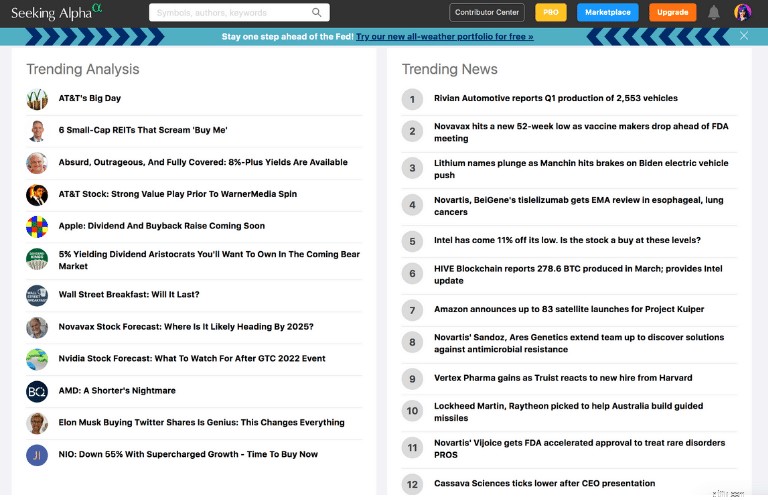
実際、Seeking Alpha には、毎月 10,000 件を超える詳細なレビューを発行する 7,000 人を超える現役の経験豊富な著者が所属しています。
これらの著者は株式を深く掘り下げています。 、各企業の財務状況を確認し、その株式が次のとおりであるべきかどうかについて独自の意見を提供します。
Seeking Alpha では、プロの投資仲間から各銘柄について学ぶだけでなく、自分でリサーチする機会も得られます。
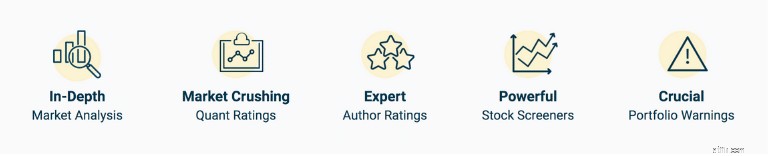
プレミアム メンバーとプロ メンバーがアクセスできる優れたリサーチ ツールには次のものがあります。
これらのツールについては、この記事の後半で詳しく説明します (読み続けてください!)。
ここでの主な考え方は、Seeking Alpha が両方の長所を提供するということです。つまり、投資調査に関しては、仲間から学び、交流するだけでなく、実践的な経験も得ることができます。
Seeking Alpha の長所と短所 (有料オプションの場合) を大局的に見てみましょう。
広告は最小限またはまったくありません
カジュアルな投資家にとっては高価
毎日の限定ニュースレター、インタビュー、記事へのアクセス
他の分野に比べて暗号通貨に関する報道が少ない
洞察力に富んだ株式の定量分析
投資調査に重点を置いており、自分自身の投資を自動化することはありません
在庫アラートをカスタマイズします (プッシュ通知を受け取ります)
使いやすさやインターフェースがわかりにくい場合がある
クラウドソーシングされた記事では、著者と直接対話する機会が得られます
ほとんどの記事と株式は主に米国 (場合によってはカナダ) に焦点を当てています。
Seeking Alpha ツールの多くはカスタマイズできます
あなたがパッシブ投資家(デイトレードをしない)の場合は複雑になる可能性があります
さらに読む前に、次の 6 つのカテゴリごとに私の評価を確認してください。
投資に関する洞察
⭐️⭐️⭐️⭐️⭐️
投資ツール
⭐️⭐️⭐️⭐️⭐️
カスタマーサービス
⭐️⭐️⭐️⭐️⭐️
使いやすさ
⭐️⭐️⭐️⭐️⭐️
コスト
⭐️⭐️⭐️⭐️
私の評価の理由をもう少し詳しく説明するには、以下の内訳をご覧ください。
今のところ、Seeking Alpha にはかなり感銘を受けています。
Seeking Alpha は、2004 年に David Jackson によって設立されました。
デビッドは、ハイテクバブル時代にモルガン・スタンレーで株式およびテクノロジーの調査アナリストとして働き、株式を調査し、その結果をまとめました。
この頃、大手投資銀行が特定の投資商品に関する調査結果を公表した場合、特に大手銀行がこれらの投資商品を販売した場合、本質的に利益相反が存在することにデイビッドは気づきました。
なぜ大手投資銀行が、自らが販売する水準以下の商品に関する研究論文を発表するのでしょうか?
こうして Seeking Alpha が誕生しました。
Seeking Alpha について知っておくべき詳細情報をいくつか紹介します。
設立年
2004 年
本社の所在地
ラアナナ、イスラエル
月間ユーザー
2,000 万以上
月間視聴者
4,000 万以上
月間アクティブ著者
7,000+
毎月発行される記事
10,000+
月額費用
– 制限付きアクセス =$0
– プレミアム =$19.99
– プロ =$199.99
Seeking Alpha を使用すべき人
– 中間投資家
– 上級投資家
– デイトレーダー
コンテンツタイプ
– 電子メール
– ポッドキャスト
– ビデオコンテンツ
– 書かれた内容
際立った機能
– 財務諸表
– 収益通話の記録
– カスタマイズされた在庫通知
– 専門家による詳細な分析
– 透明性のある株式評価システム
– 株価パフォーマンス比較チャート
可用性
– iPad
– デスクトップ
– アンドロイド
– iPod touch
– iPhone (iOS 12.2以降)
カスタマーサービス
– 電子メール
– 電話
– フォーラム
カスタマーサービス時間
月曜から金曜の午前 8 時から午後 4 時(EST)
利用可能な国
インターナショナル
Seeking Alpha は世界中のユーザーが利用できますが、このプラットフォームの主な投資調査の焦点は米国とカナダにあることに注意してください。
私は Seeking Alpha の Web サイト インターフェイスの大ファンです。
個人的には、Seeking Alpha は非常にユーザーフレンドリーで直観的であり、情報を整理して表示する機能も優れていると思います。
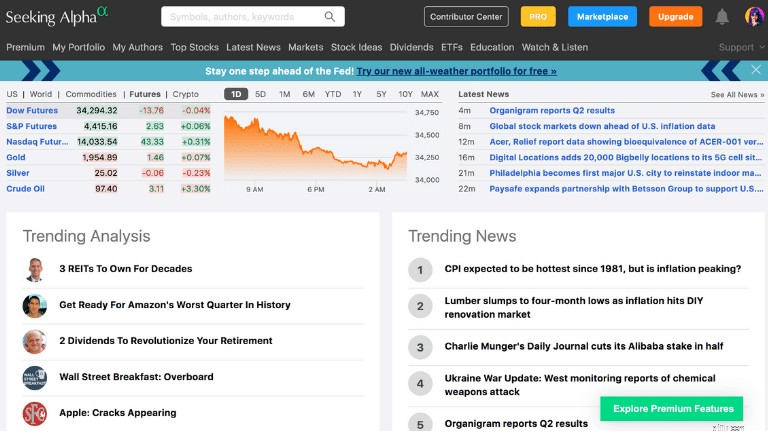
さて、私が得る唯一の建設的なフィードバックは、初心者の投資家にとって、さらには中級者にとっても、Seeking Alpha に関する情報が必ずしも直感的に見つけられるとは限らないということです。
たとえば、新興市場のトップ ETF を探している場合、おそらくどこを探せばよいのかわからないでしょう。
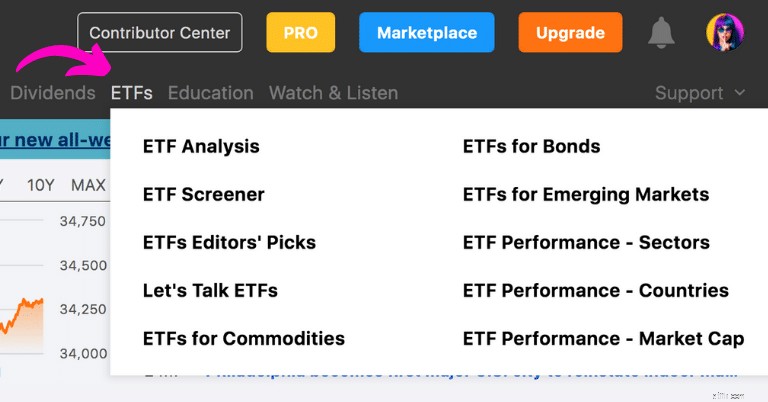
私が新興市場 ETF を探す唯一の論理的な場所は [ETF] タブの下です。しかし、新興市場 ETF に関するさらなる情報はまだありません。
実際には、トップの新興市場 ETF を見つけるには、「ETF スクリーナー」と「ETF パフォーマンス - セクター」をクリックする必要があります。
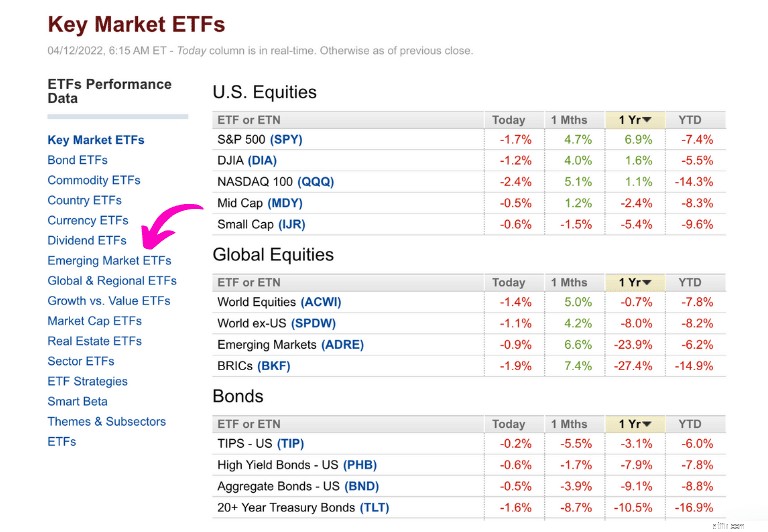
そこから、左側のツールバーをクリックして、探している ETF カテゴリ (この場合は新興市場) を実際に並べ替える必要があります。
全体として、Seeking Alpha はあらゆる投資家向けに素晴らしい基礎研究プラットフォームを構築しました。
おそらく、プラットフォームとその機能に完全に慣れるまで、少し学習する必要があるでしょう。
Seeking Alpha には 3 つのプランがあり、そのうち 2 つは有料バージョンです。
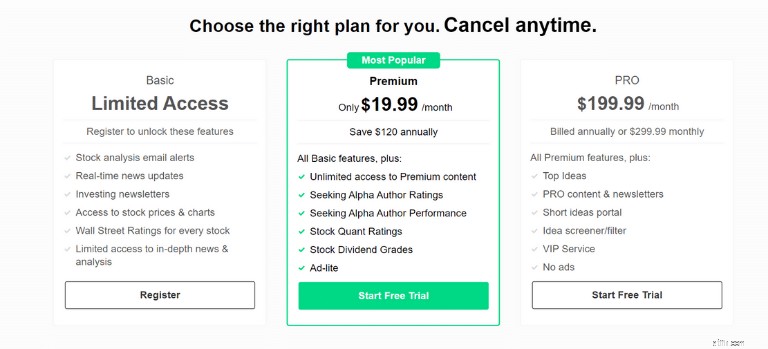
私はプレミアムプランを使用していますが、その機能と機能に非常に満足しています。
Seeking Alpha でアカウントを開設すると、次のことが期待できます:
最小コスト
$0 [制限付きアクセス プラン]
最大コスト
$199.99/月 [プロ プラン]
支払い方法
– ペイパル
– クレジットカード
プレミアム (またはプロ プラン) は、19.99 ドル (プレミアム) または 199.99 ドル (プロ) の月額費用を回収するために毎年請求されることに注意してください。
それ以外の場合は、月額 29.99 ドル (プレミアム) と月額 299.99 ドル (プロ) を支払うことになります。
Seeking Alpha の各サブスクリプションで得られるものの概要は次のとおりです。
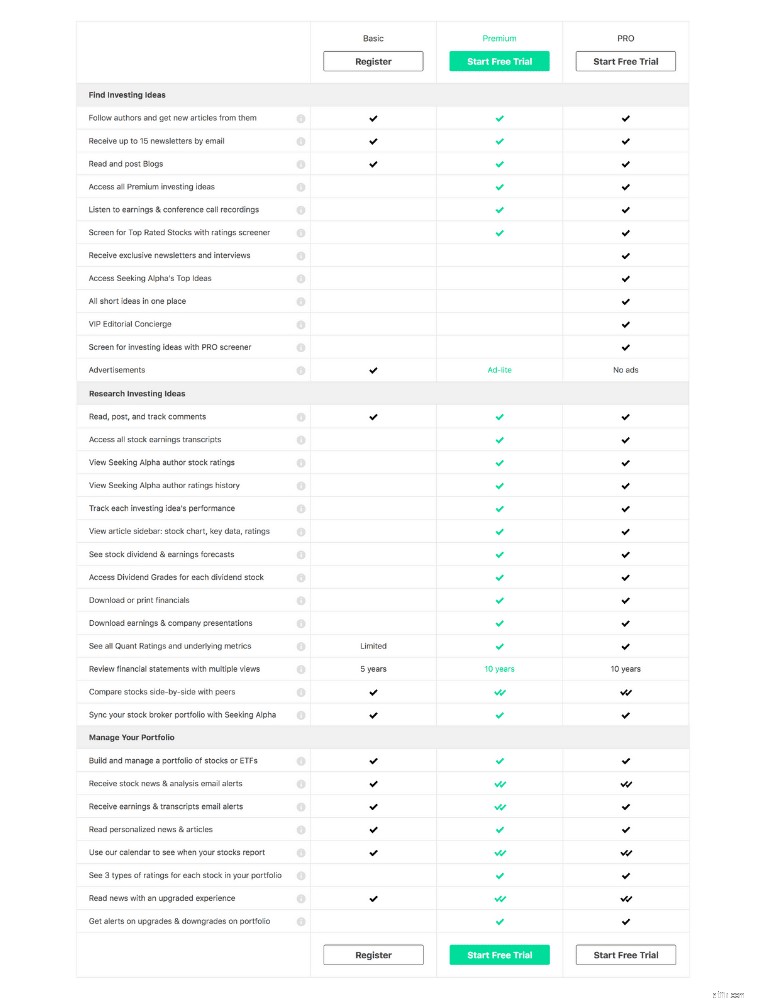
嬉しいことに、プレミアム プランやプロ プランでも 14 日間の無料トライアルを開始できるということです。
通常、試用期間が終了する数日前にリマインダーのメールが届くはずですが、試用期間が終了する直前にクレジット カードに請求が行われたという苦情をいくつか読みました。
各サービスとその料金で得られるものについて詳しく説明しますので、次の文章を読み続けてください。
Seeking Alpha プランがコストに見合う価値があるかどうかは、実際にはあなたとあなたの目標によって決まります。
以下に、次のような場合にどのプランが最適であるかを示す簡単なグラフを示します。
毎日記事を読む
✔️
✔️
著者と対話する
✔️
✔️
電子メールアラート
✔️
✔️
広告なし
✔️
分析をお楽しみください
✔️
✔️
VIP サービスを希望
✔️
独占的なコンテンツが欲しい
✔️
デイトレーダーです
✔️
✔️
お金の心配はありません
✔️
個人的には、プレミアム プランは次のようなことを望む普通の人に最適だと思います。
あなたが本当にデイトレーダーであるか、自分で中小企業を経営しており、さらに特別なタッチが必要でない限り、費やしている金額を考慮すると、おそらくプレミアム プランが最も価値があると思います。
市場を常に上回ることはほぼ不可能ですが、Seeking Alpha を使用すると、市場を上回るパフォーマンスを得ることができるという利点が確実に得られます。
実際、2010 年以来、Seeking Alpha の定量的アルゴリズムは S&P 500 を大幅に上回り、10 回中 9 回上回っています。
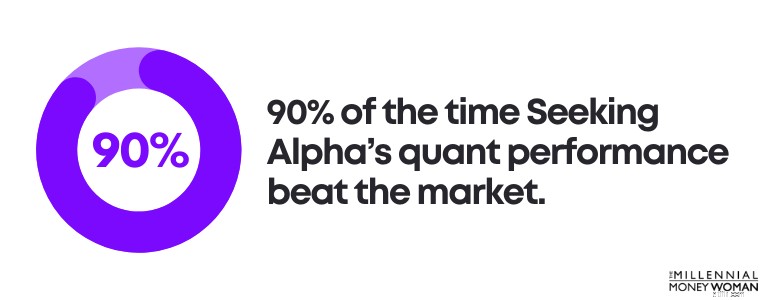
「非常に強気」株のリターンは 1,754% でしたが、S&P 500 のリターンはわずか 385% でした。
では、市場でアウトパフォームする確率を劇的に高めるツールにどうやってアクセスできるのでしょうか?
Seeking Alpha プレミアム パッケージにサインアップすると、 .
次のように考えてください:
過去のパフォーマンスが必ずしも将来のパフォーマンスを示すわけではないことに注意してください。
Seeking Alpha にお金をかける準備ができておらず、無料プランにサインアップしたいだけの場合は、制限付きアクセス プランに特化したこのセクションを確認してください。
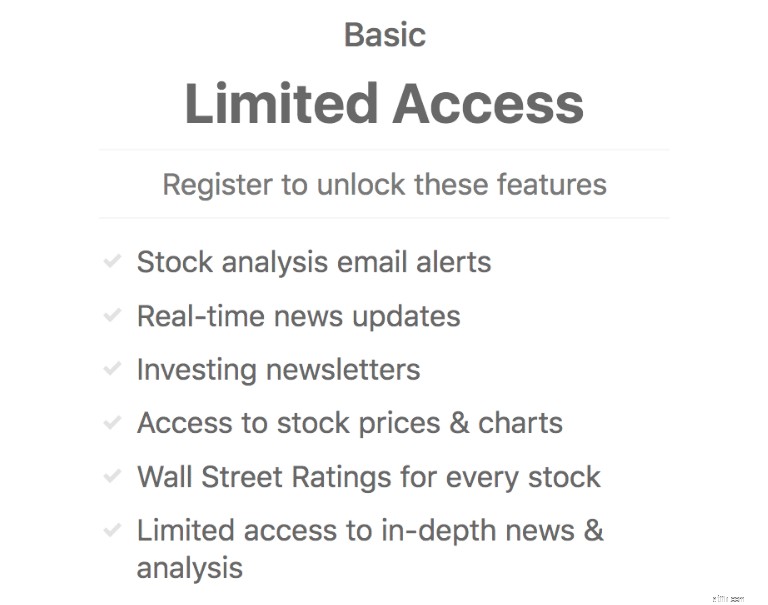
制限付きアクセス プランでは、次のようなことができるようになります。
制限付きアクセス プランには次のような欠点があります。
興味があり、もっと知りたい場合は、Seeking Alpha の有料プランのいずれかに登録することを検討してください。 (プレミアムまたはプロ)。
Seeking Alpha プレミアム (およびプロ) プランの優れた点は、金銭的にコミットする前に、14 日間の無料トライアル期間を開始してプランをテストできることです。
試用期間はいつでもキャンセルして、全額請求されないようにすることができます (試用期間が終了する前にキャンセルしなければ、Seeking Alpha でキャンセルできます)。
プレミアム プランの試用期間を楽しんだ場合は、次の 3 つの方法でプレミアム プランの料金を支払うことができます。
月額プラン
$29.99/月
年間計画
$239 (または広告どおり月額 $19.99)
3 年計画
$540 (または $14.99/月)
Seeking Alpha のデフォルトのケースでは、1 年分の保険料を前払いするようです (つまり、プレミアム プランの場合は 239 ドル)。
限定アクセス プランよりもプレミアム プランにサインアップする最大の利点の 1 つは、投資家コミュニティへの独占的なアクセス権が得られることで、次のことができることです。
私はプレミアム プランのユーザーですが、最も気に入っているのは、次の投資について同僚と文字通りアイデアをブレインストーミングできることです。
このセクションでは、私のお気に入りのプレミアム プラン機能のいくつかと、それぞれのメリットについて詳しく説明します。
Seeking Alpha Premium の機能の概要は次のとおりです。
<オル>これらの機能について詳しく知りたい場合は、読み続けてください。
多くの広告が含まれる制限付きアクセス プランとは異なり、プレミアム プランは「広告の少ない」ユーザー エクスペリエンスを提供します。
たとえば、ブラウジング中に次のようなバナー広告が表示される場合があります。
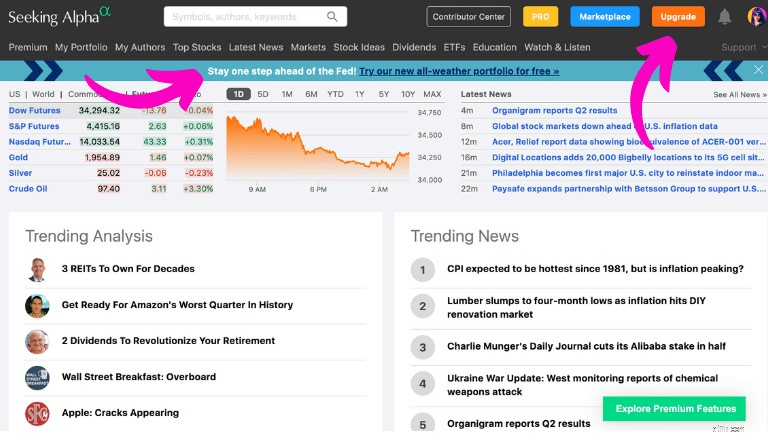
私のプレミアム サブスクリプションを見ればわかるように、Seeking Alpha は一部の製品 (この場合は Pro パッケージ) を宣伝しています。
正直に言うと、私はこれらの広告はあまり気にしていませんし、広告によって私の経験が損なわれるとも思いません。
株が過大評価されているのか、過小評価されているのか気になりますか?
その銘柄のウォール街の評価を確認し、「目標株価」セクションまでスクロールします。
この場合、例として Google を使用したので、Google の目標株価を見てみましょう (2022 年 4 月の時点で、Google は 2,595.93 ドルで取引されています)。
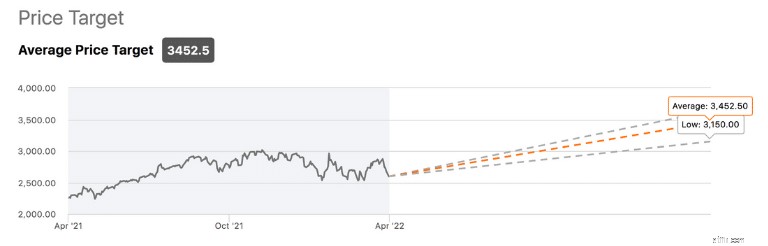
言い換えれば、目標株価(3,452.50ドル)と実際の株価(2,595.93ドル)に基づくと、Google株は実際には過小評価されているということになります。
おそらくこれが、ウォール街評価部門のアナリストの 98% が Google を「買い」または「強い買い」と評価している理由でしょう。
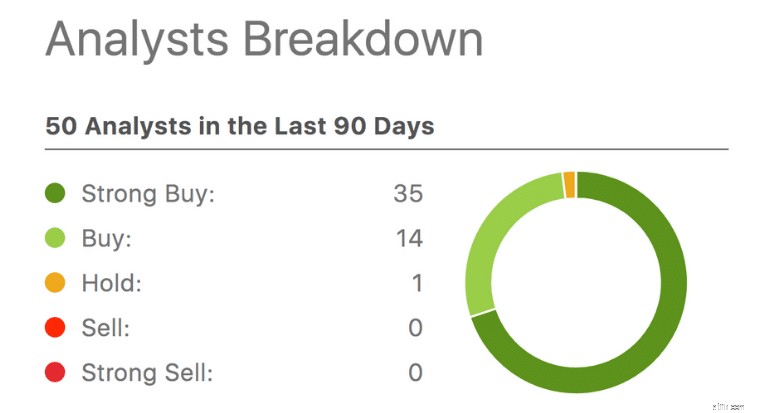
以下のグラフは、目標価格関数のもう 1 つの優れた例です。
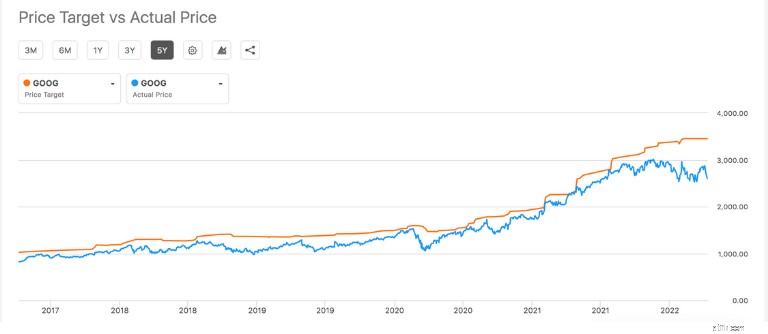
目標価格と実際の価格のグラフでは、ほとんどの場合、目標価格 (赤色) が Google の実際の価格 (青色) よりも若干高くなっていることがわかります。
つまり、 あなたがバリュー投資家であれば、 現在過小評価されている株を購入したい場合は、投資対象として Google を検討するとよいでしょう。
さて、2021年初めに起きたゲームストップ($GME)の大失敗も覚えているかもしれない。レディットのトレーダーらが破綻した$GME株に資金をつぎ込み、ヘッジファンドやロビンフッドのような投資プラットフォームに大きな財務上のハードルを引き起こした。
確かに、この短命の物語でお金を稼いだ人もいるかもしれませんが、おそらくお金を失った人もいるでしょう。
以下の目標株価グラフを見てください。合理的な投資家であれば、これが $GME に資金をつぎ込む危険な行動であることがわかるでしょう。
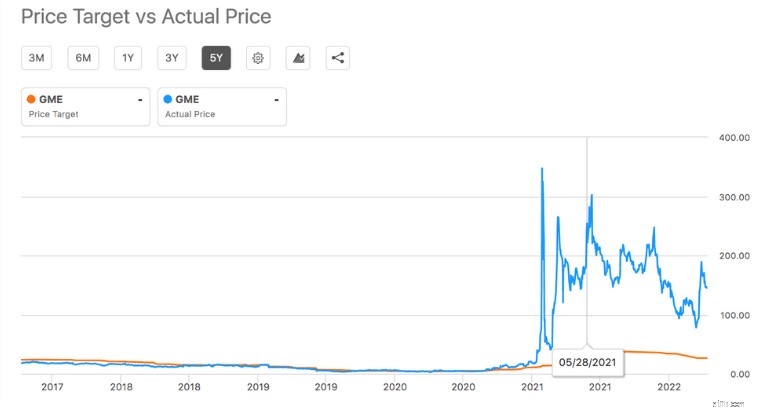
ご覧のとおり、目標株価 (赤色) は一貫して数ドル付近で推移していますが、GME の実際の価格は一時 300 ドルを超えました。
目標株価など、たった 1 つのデータ ポイントだけに注目することが、株を買うか売るかの決定要因となるべきではないことに注意してください。目標価格は、他の情報と組み合わせて検討する必要がある単なるガイドです。
新しい投資アイデアのブレインストーミングを検討している中級投資家であれば、Seeking Alpha の Notable Calls を購読するとよいでしょう。
Notable Calls に登録すると、世界中の企業から総合され、要約されたアイデアを受け取ることができます。
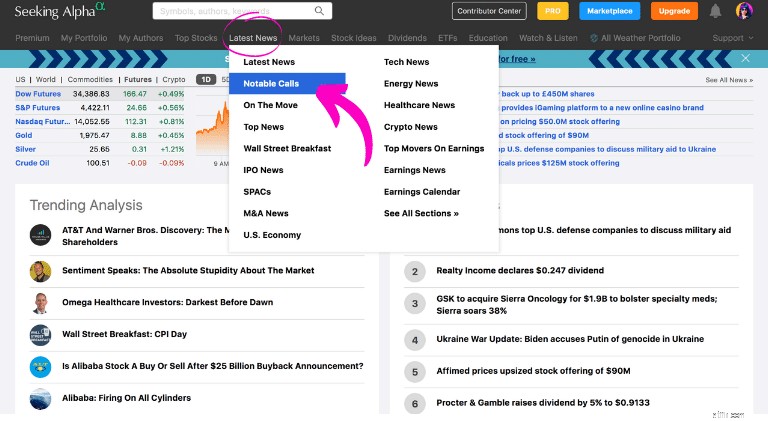
「最新ニュース」をクリックし、「注目すべき通話」をクリックすると、「注目すべき通話」セクションを読むことができます。
[注目すべき通話] セクションに移動すると、さまざまなトピック (光ファイバーからリーバイ ストラウスなどの衣料品ブランドに至るまで、あらゆるトピック) を探索できます。
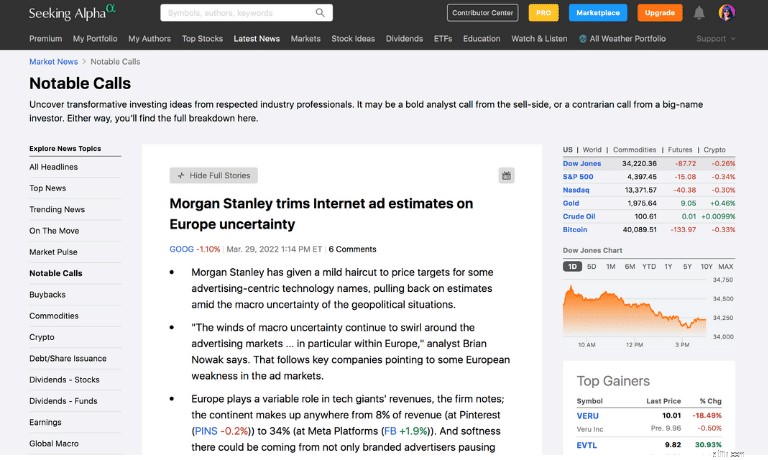
注目すべき通話は毎日公開されるわけではありません。場合によっては、「注目すべき通話」セクションに新しい情報が表示されるまでに 1 か月かかる場合もあります。
Notable Calls の記事は一貫して公開されるわけではないため、Seeking Alpha の専門執筆者による寄稿記事を引き続き読み、より多くの投資アイデアを収集してください。
Seeking Alpha はクラウドソーシング プラットフォームであるため、各銘柄に Seeking Alpha の著者評価が付いているのは当然のことです。
たとえば、AT&T Inc. の概要ページを見ると、$T 株の格付けがカテゴリ別に分類されていることがわかります。
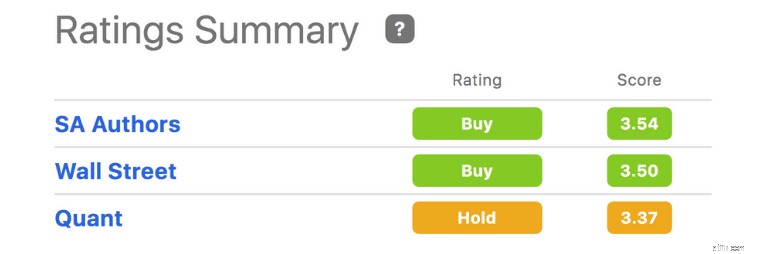
Seeking Alpha 著者の評価の詳細については、青色の「SA 著者」ハイパーリンクをクリックしてください。
ここでは、株式の Seeking Alpha 著者評価が次のように表示されます。
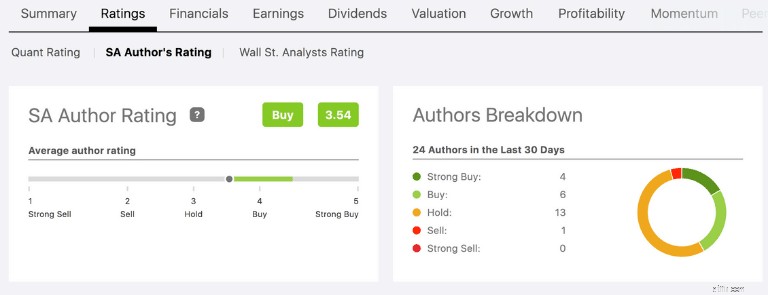
他の要素の中でも、Seeking Alpha 著者評価の評価と各評価の著者の内訳が表示されます。
AT&T の場合、著者 24 人中 10 人が株を買うか強く買うことを推奨しました (約 42%)。
さらに、過去数年間の著者評価の実績を確認することもできます。
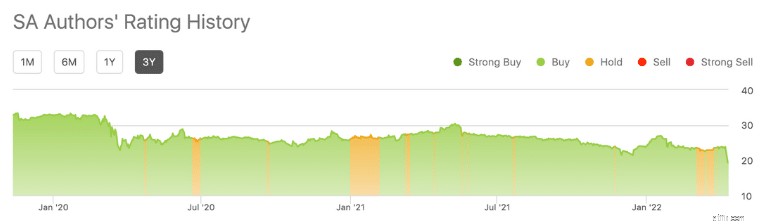
このグラフに基づいて、Seeking Alpha の著者は、過去 3 年間、一般的に AT&T を「買い」または「強く買う」ことを推奨してきました。
著者らが購入ではなく「保有」することを提案したのはつい最近のことです。
最後に、著者ごとの評価履歴を表示することも選択できます。
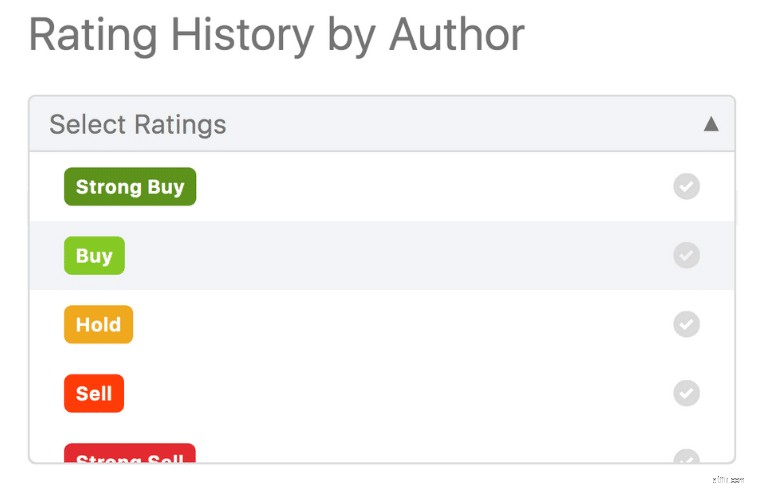
したがって、たとえば、どの著者が AT&T を「買い」と「売り」の提案として評価したのか知りたい場合は、ここがそのための場所です。
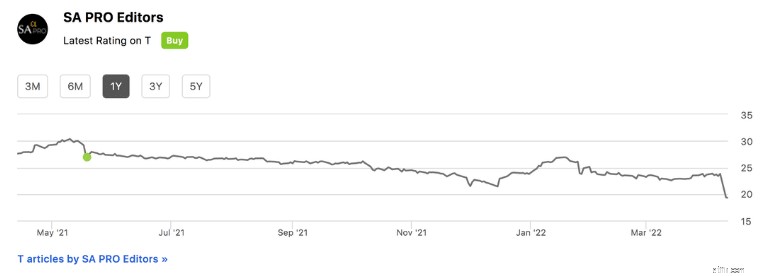
上は、AT&T 株の購入を推奨した著者のスクリーンショットです。
著者がなぜそうすることを推奨したのか疑問に思う場合は、青色のハイパーリンクをクリックして、著者の AT&T 記事を読むことができます。
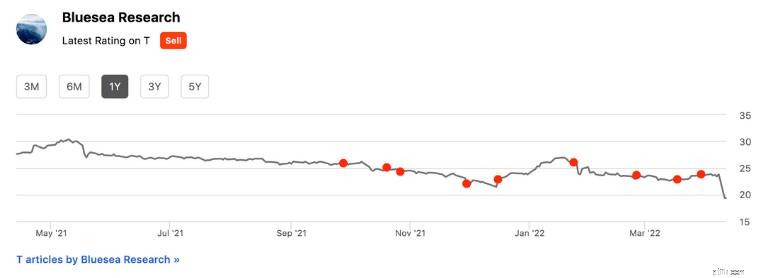
同様に、$T 株を売却することを提案した著者を見つけた場合は、その著者がいつそうすることを提案したかを知ることができます ($T 株のパフォーマンスと比較したグラフ上の赤い点を参照してください)。
繰り返しますが、著者の販売チャートの下にある青いハイパーリンクをクリックすると、AT&T でその著者による記事を読むことができます。
あなたが配当投資家なら 、これは最も優れた機能の 1 つである、配当等級ツールです。
つまり、配当グレード ツールは、投資家が配当が安全かどうか、また配当収入が安定するか、増加するか、あるいは減少する可能性があるかを判断できるように設計されています。
4 つの異なる配当グレードがあり、以下で説明します。
配当の安全性
配当の収益性と安定性を測定します
配当の成長
過去の成長率と推定成長率 (収益、キャッシュ フロー、利益などを含む) を使用して、配当の成長可能性を測定します。
配当利回り
配当金の過去の利回りを測定し、その利回りを同じ業界の他の株式と比較して、配当金の将来の利回りを決定します
配当の一貫性
企業の配当支払いと増配の一貫性を測定します
投資家、特にパッシブ投資家が配当を好む理由の 1 つは、 配当が不労所得の一種であるためです。 。
そして、より多くの高配当株を購入すればするほど、時間が経つにつれて、高配当株だけで実際にお金を稼ぐことができるようになります。
AT&T の現在の配当グレード (2022 年 4 月現在) をご覧ください。
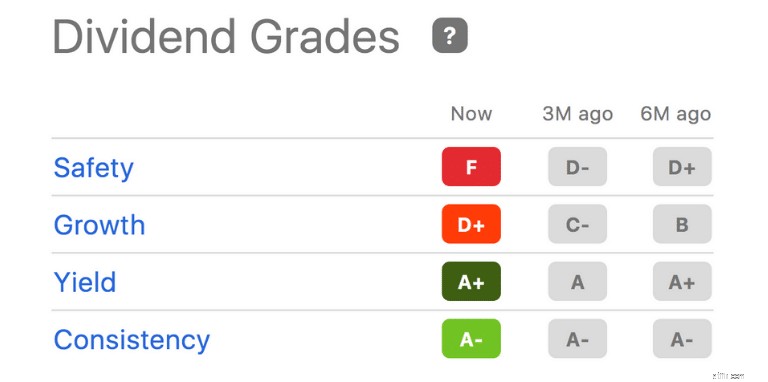
配当グレードの気に入っている点は、現在のグレードを 3 か月前、さらには 6 か月前のものと比較して確認できることです。
AT&T の配当の安全性が危険にさらされていることは明らかです。これは、AT&Tが配当を減額、あるいは廃止する可能性があることを意味する。
それは本当です。検索バーに $T と入力すると、赤い警告バナーが表示されます。
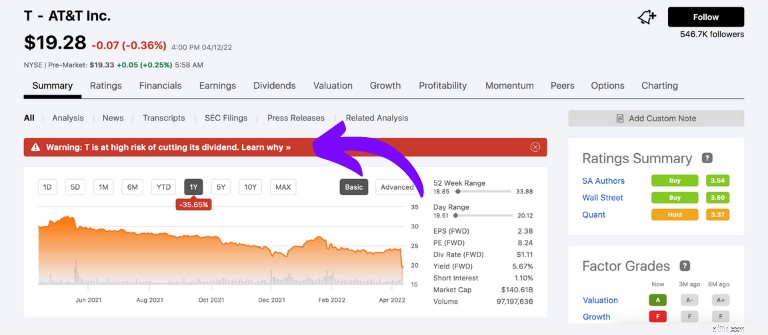
配当等級を見るまでもなく、AT&T が減配する可能性があることがすぐにわかりました。
さらに詳しく知りたい場合は、バナーをクリックしてください。
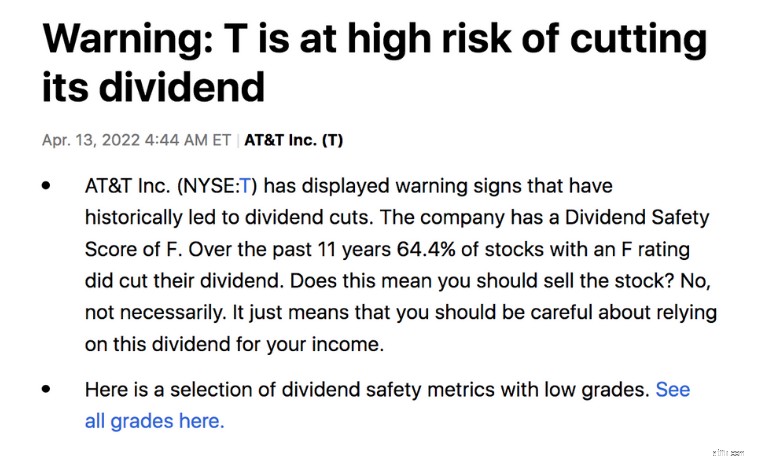
AT&T が近い将来に配当を削減する可能性がある理由についてさらに詳しく分析した記事にリダイレクトされます。
ここで、個々の配当グレードについてさらに詳しく知りたい場合は、各配当グレードの青いハイパーリンクをクリックするだけです。
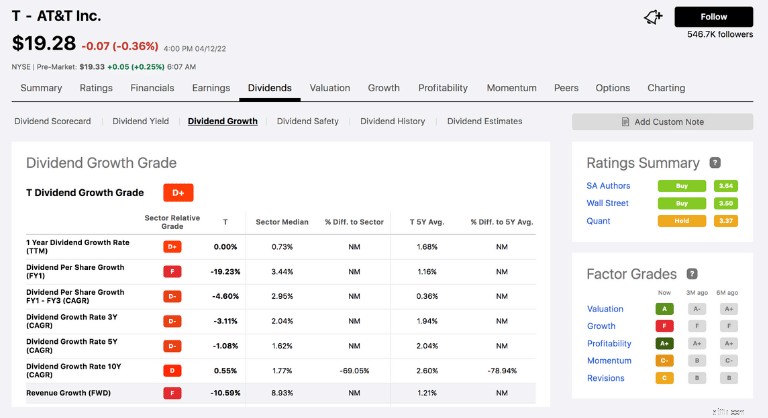
たとえば、上のスクリーンショットでは、配当成長グレードについて読むだけでどれほど深く理解できるかがわかります。
私は、次のような [配当履歴] タブをチェックすることを好みます。
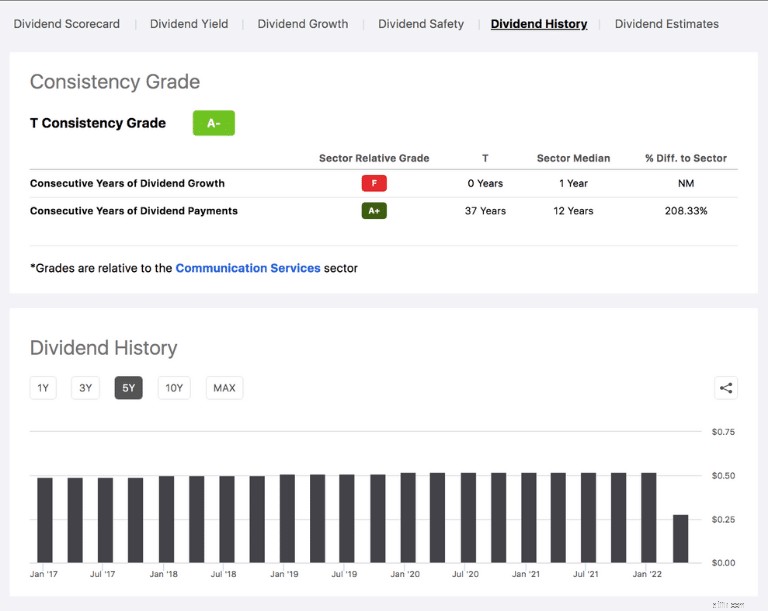
ご覧のとおり、AT&T は過去 5 年間、非常に一貫した配当履歴を持っています。しかし、2022 年 4 月 12 日の時点で、配当は 0.52 ドルから 0.28 ドルに減少しました。
これは非常に大幅な削減であり、通常は投資家に懸念を示しています。
最後に、将来の配当予想 (元の 4 つの配当グレードの一部ではありません) について詳しく知りたい場合は、対応するタブをクリックしてください。
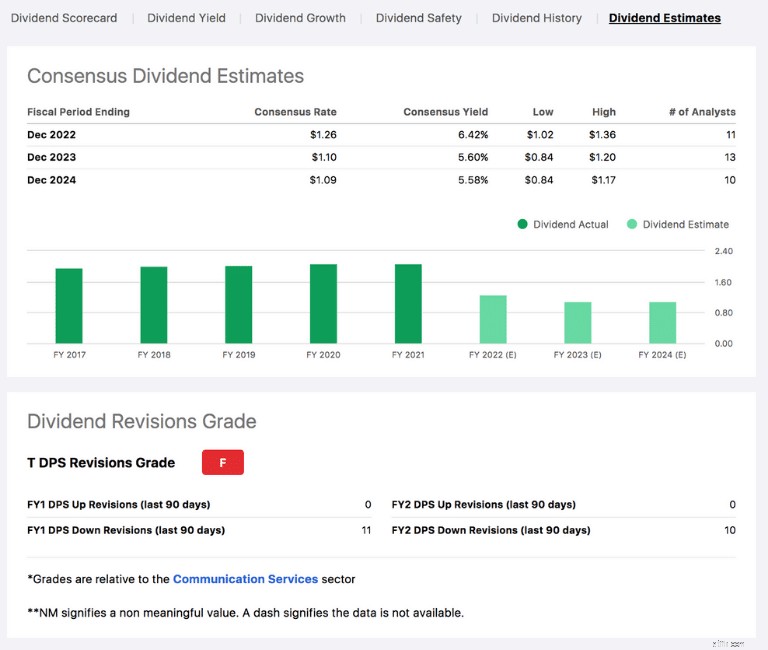
ご覧のとおり、配当成長予測では、少なくとも今後数年間は配当利回りが AT&T の元の水準に戻るとは予測されていません。
核心には触れずに、最も重要かつ差し迫った株式ニュースだけを読みたい場合は、ニュース ダッシュボードを使用してください。
「最新ニュース」タブをクリックすると、ニュース ダッシュボードにアクセスできます。
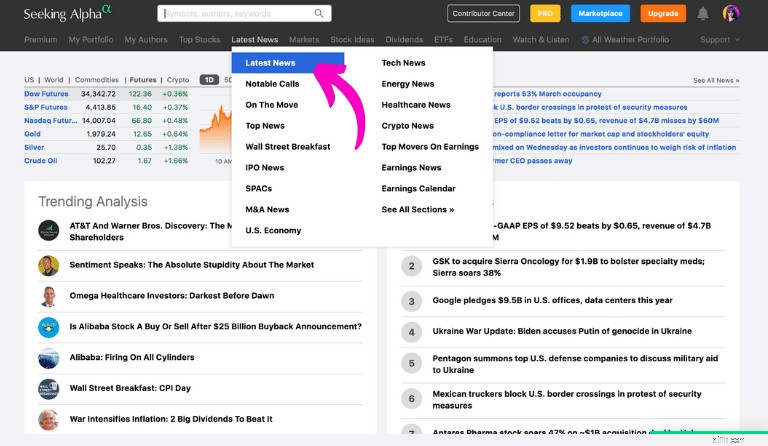
「最新ニュース」タブをクリックすると、「マーケット ニュース」というタイトルのページにリダイレクトされます。
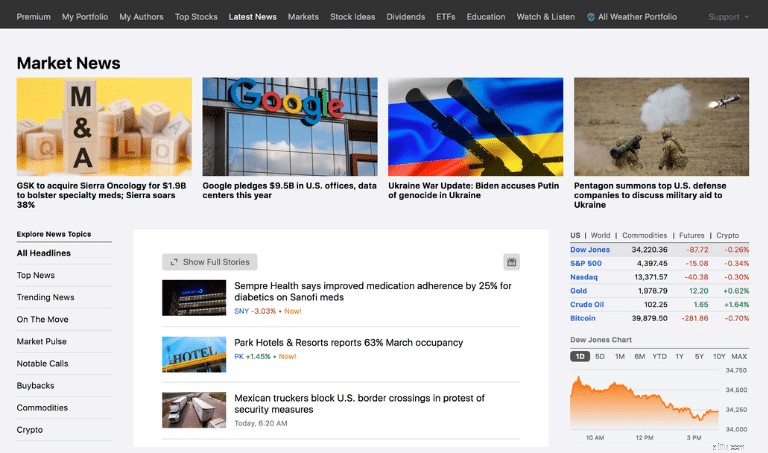
このダッシュボードから、フィルタ (左側) を使用して、自分に関連するトピックを探索できます。
日付範囲を設定して、特定の期間に集中して測定することもできます。
配当グレードと同様に、Seeking Alpha でファクター スコアカードと呼ばれるものも表示されます。
言い換えれば、スコアカードは、投資基準に基づいて、銘柄を検討するか除外するかを迅速に決定するのに役立つツールです。
因子スコアカードでは、次の 5 つの因子が使用されます。
Gamestop として知られる $GME のファクター スコアカードを見てみましょう。
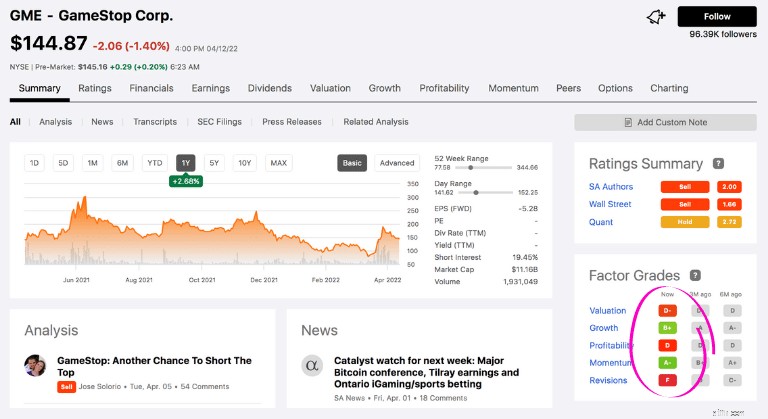
[因子グレード] ボックスは、前述した 5 つのカテゴリに分類されます。
各カテゴリの成績は、3 か月前および 6 か月前の前回の成績と比較されます。
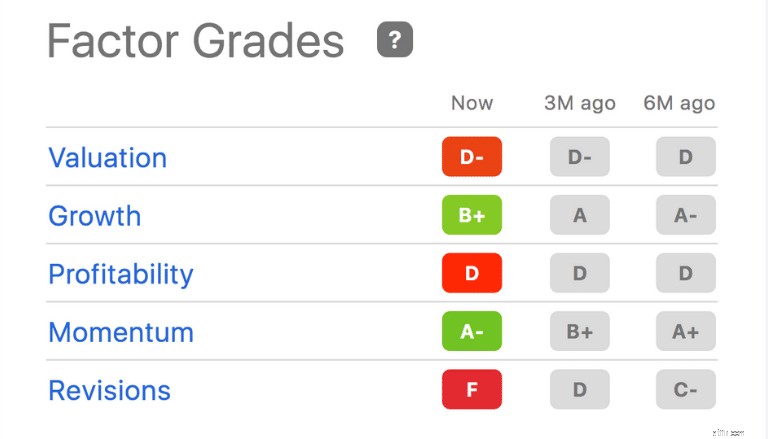
明らかに、Gamestop のファクター グレードはかなり水準を下回っています。これは、かなり不安定な株でリスクを取ることに抵抗がない限り、ゲームストップはおそらく最良の投資先ではないことを意味します。
個々の因子グレードについてさらに詳しく知りたい場合は、各グレードの青色のハイパーリンクをクリックするだけです。
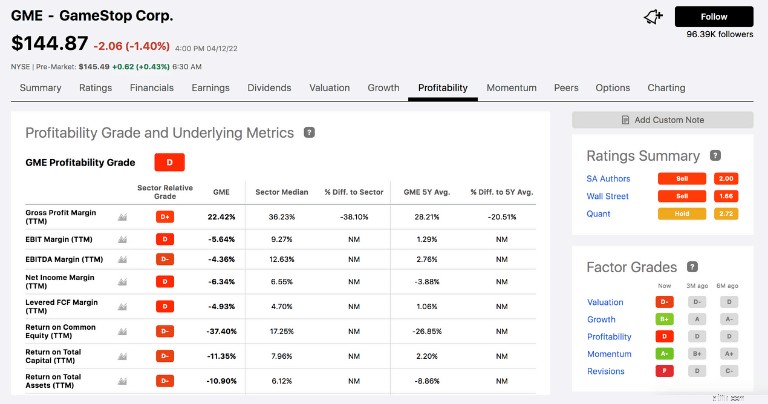
たとえば、上のスクリーンショットでは、Gamestop の収益性について読むだけでどれほど深く理解できるかがわかります。
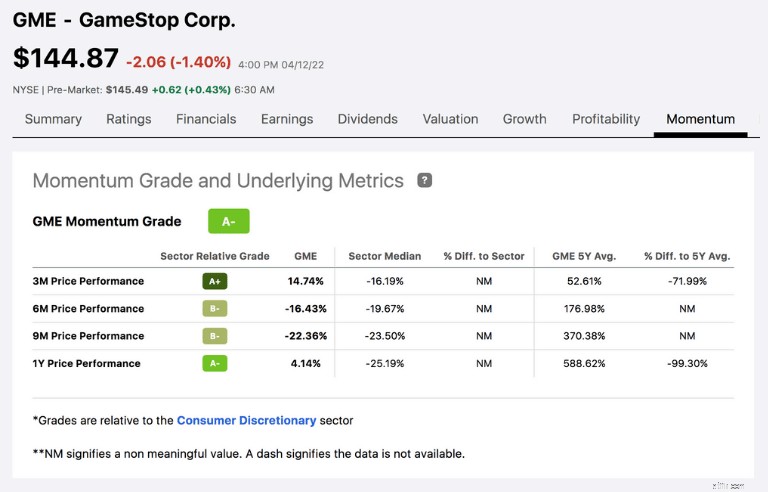
また、[モメンタム] タブを見て、過去のパフォーマンスや、S&P 500 などの他のベンチマークと比較した $GME のパフォーマンスをチェックするのも好きです。
以下は、同分野の他の企業と比較した Gamestop の過去のパフォーマンスのスナップショットです。
特定のベンチマークと比較した Gamestop の価格パフォーマンスをチェックすることもできます。
以下のスクリーンショットでは、S&P 500 がベンチマークとして使用されています。
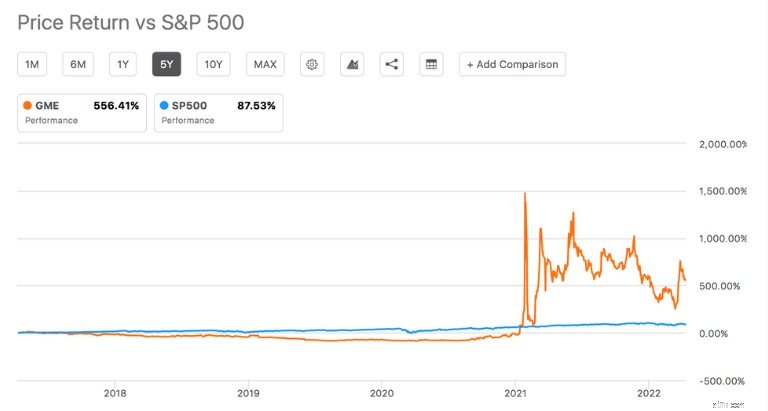
この価格収益率チャートがすべてを物語っています。
2021 年初頭にゲームストップの物語が始まるまで、ゲームストップが S&P 500 と比較して一貫してアンダーパフォームしていたことがわかります。
Since early 2021, the Gamestop prices have relatively outperformed the S&P 500 – but is it really a solid investment?
That’s where Seeking Alpha’s tools like the Factor Scorecard can really come into play and help guide you to an answer.
Let’s say you’re thinking about buying Tesla, but you’re not 100% convinced that it’s the right addition to your portfolio.
That’s where the Peer Comparisons come in.
The Peer Comparison tool is customizable, so you can change the stock types that you’re comparing.
Here’s an example:First, search your desired stock (in this case, Tesla):
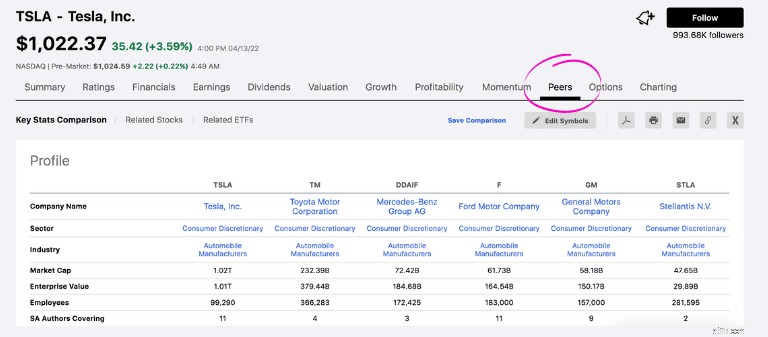
Make sure you click on the “Peers” tab.
Once you’re on the “Peers” tab, you can see that Seeking Alpha already defaults to several peer stocks with which you can compare Tesla.
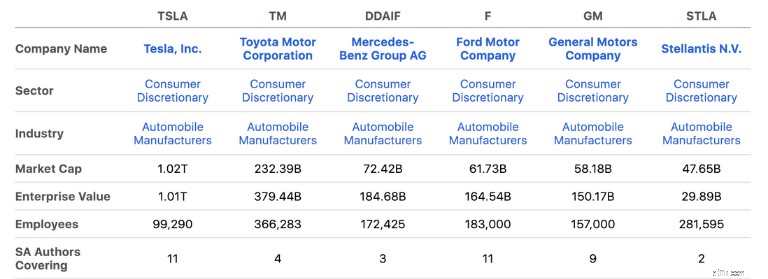
However, if you want to customize the peer comparisons or even reduce the number of peers you’re comparing to, then just click on the “Edit Symbols” button.
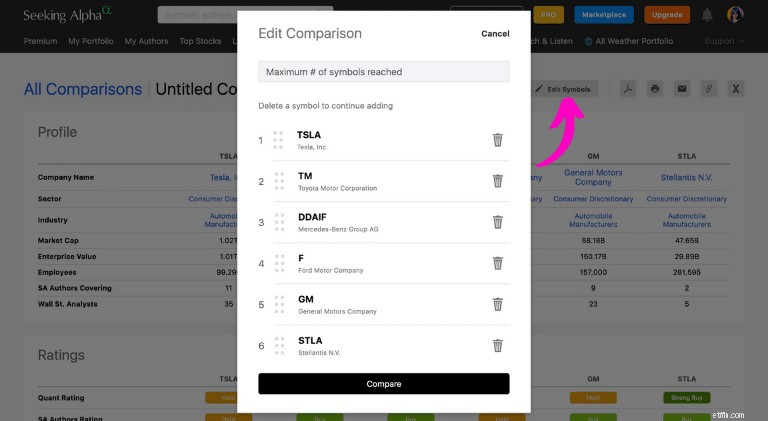
This is where you can customize all peer comparisons.
If you really like a stock and want to receive alerts whenever news about that stock is released, you can customize your own email alerts.
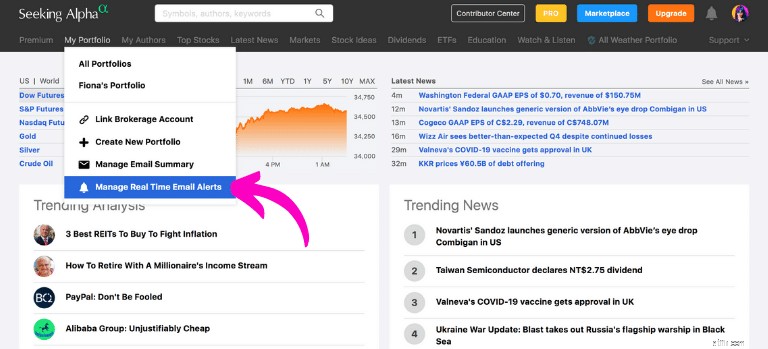
You do this by hovering over the “My Portfolio” tab and then clicking on “Manage Real Time Email Alerts.”
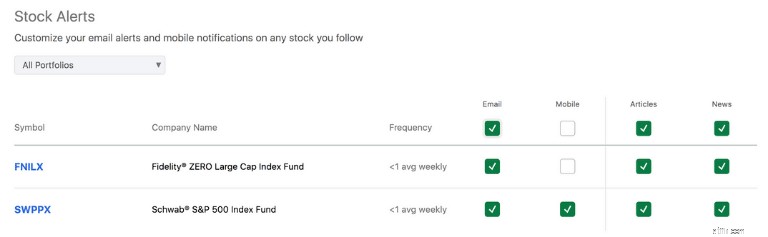
You’ll see a snapshot of your favorite stocks, which you can then select to follow.
The next thing you need to do, is:
I’m a big fan of this alert customization option.
One of the key features when evaluating a stock on Seeking Alpha should be the Quant Ratings section.
Quant Ratings are based on a computer algorithm with the goal to find the best stocks.
As with the previous Ratings (Wall Street and SA Authors), the Quant Ratings compare the stock to other stocks in the same industry.
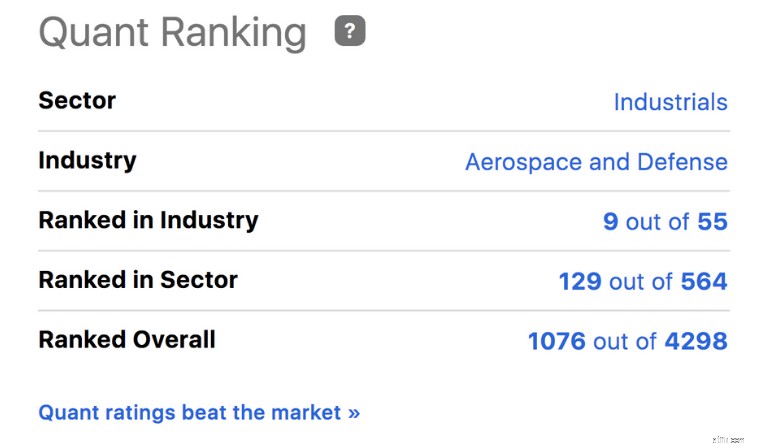
The Quant Rankings use historical information to determine the numbers, as shown in the above screenshot (this case, for Lockheed Martin).
If the Quant Rankings deem a stock to be a top pick, then that stock would be marked as “Strong Buy.”
In Lockheed Martin’s case, the Quant Rankings determined the stock to be a “Hold” for now.
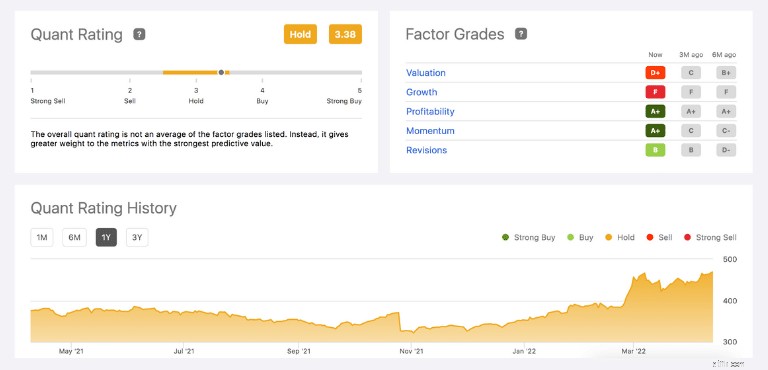
The Quant Ratings and the Factor Grades are both designed and managed by Steve Cress , who has had extensive experience in investment research, hedge funds, and the likes.
The Quant Ratings is what you are looking for – that’s because they can help boost your portfolio performance.
In fact, Seeking Alpha claims that stocks rated as a 4.5 or higher have beat the S&P 500 4x.
On the other hand, stocks rated as 1.5 or lower underperformed the S&P 500, returning roughly 33% of the S&P 500.
Clearly, the Quant Ratings are very helpful.
As you can see, Quant Ratings are a very powerful tool when evaluating the strength of a stock.
But what if you want to view the top-rated stock, using the Quant tools?
Enter the Stock Screener.
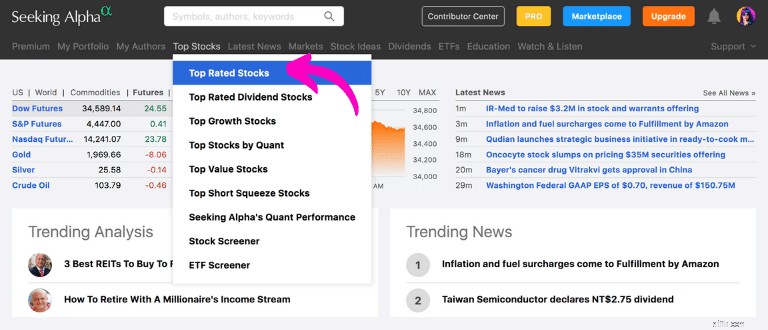
You’ll find the Stock Screener by clicking on the “Top Stocks” tab and then clicking on “Top Rated Stocks.”
From there, you’ll see a summary of the top rated stocks, and typically the highest Quant Rating is 4.99:
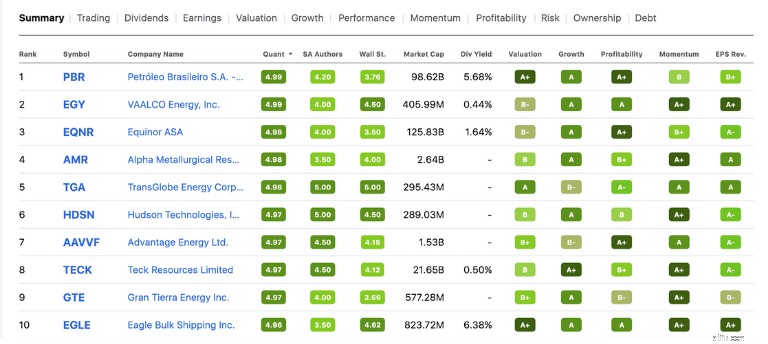
Remember what was said in the previous Quant Ratings section:
Stocks given a Quant Rating of 4.5 or higher have typically outperformed the S&P 500 by up to 4x!
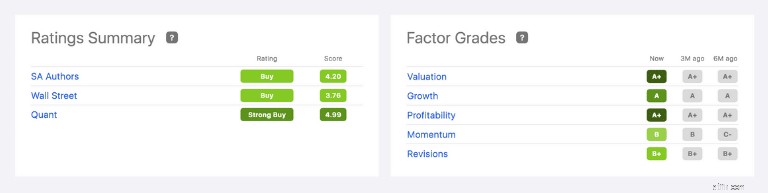
And it’s true that across the board PBR, also known as Petrobas, (in this case the top Quant rated stock) is considered a “Buy” to “Strong Buy” across the board:
This stock screener is a feature that is currently available to Premium users.
Another neat trick with the Stock Screener?
You can customize your own stocks by using up to 100 different filters!
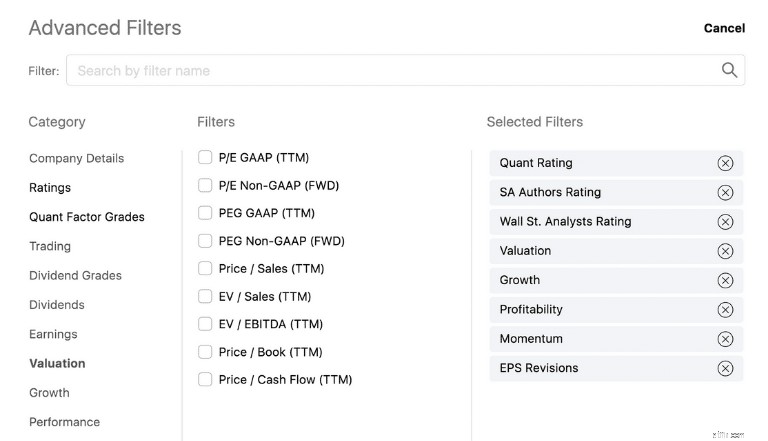
Above is just an example of the many different filter applications you can use to customize your stock screener.
Based on historical performance, stocks ranked as 1.5 or lower drastically underperformed the S&P 500.
If you want to follow what sell-side analysts have to say in terms of buying, holding, or selling a stock, then check out the Wall Street Ratings.
Instead, Seeking Alpha collects data from the Wall Street analysts to determine whether a stock is rated as:
The reason why Wall Street Ratings can be helpful for people like you and me is that these rankings should (in theory) be objective and neutral.
To review the Wall Street Ratings of a certain company, just type in the company name or ticker symbol in the “Search” bar on the top, and then look at the information on the right of the screen.
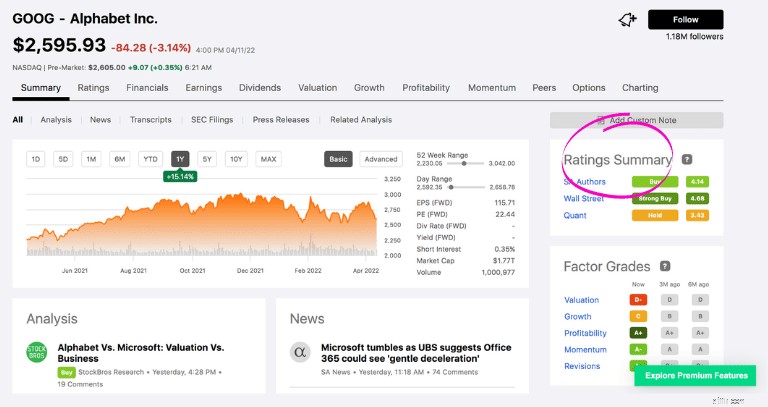
When you look at the right-hand side, you’ll see the “Ratings Summary” outline, with 3 titles:
To learn more about the Wall Street rating, click on the “Wall Street” blue hyperlink.
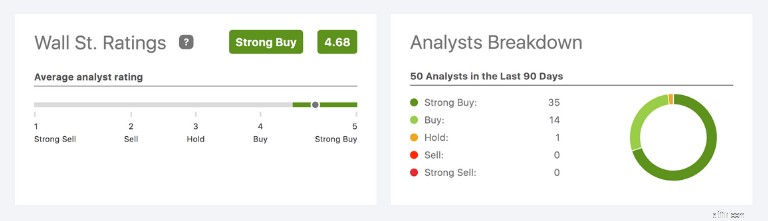
Among other factors, you’ll see the Wall Street average analyst rating and the Analyst Breakdown for each rating.
In Google’s case, 49 out of 50 Wall Street analysts recommended to Buy or Strongly Buy the stock (that’s 98% of analysts!).
Furthermore, you can also review the Wall Street Ratings’ track record for the past few years:
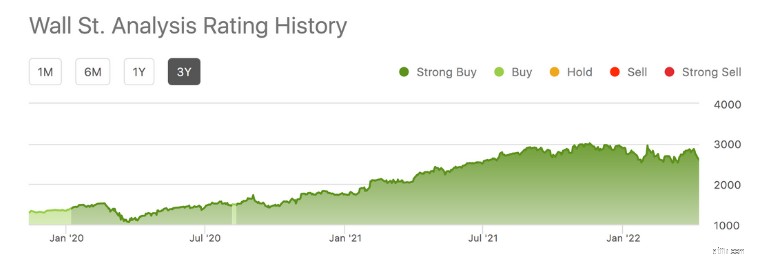
Based on this graph, Wall Street analysts have recommended to Buy or Strongly Buy Google over the past 3 years.
Lastly, you can also see how the Wall Street analysts’ opinions have changed over time with the Recommendations Chart (found at the bottom of the page):
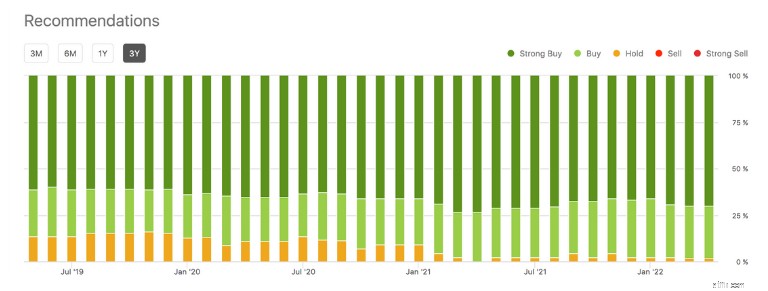
It appears that in 2019 and early 2020 more analysts recommended to hold Google, while starting in 2021, virtually all analysts recommended to buy Google.
Since I’m a very visual person, one of my favorite features on Seeking Alpha is the data visualization of the charts.
In fact, Seeking Alpha has a specific tab named “Charting” that you can access to view the data in an aesthetically pleasing manner:

Once you click on the “Charting” tab, you can even customize the data you want to view.
For example, you can compare one stock’s performance (in the case, Gamestop) to another stock or benchmark like the S&P 500:
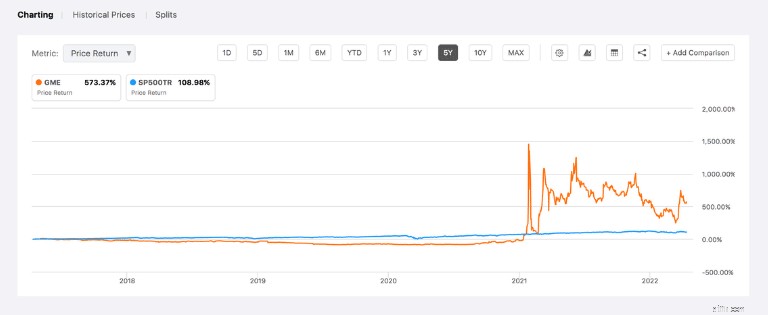
In this custom comparison, you can see that the S&P 500 has typically outperformed Gamestop until early 2021.
If you want to add additional stocks or funds to compare, you can do so, as well:
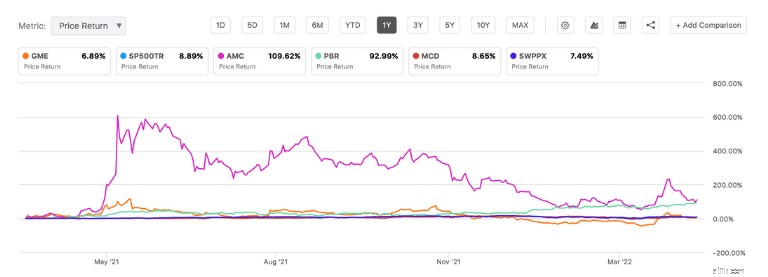
Another neat way to customize your data is changing the format of the data presentation – you can select:

If you’re happy with the data visualization chart you created, you can also copy to clipboard, download, or copy the link to your chart for future reference.
If you’re a Seeking Alpha member, you have exclusive access to earnings calls transcripts.
In most cases, you can expect to have an earnings call at the end of the first 3 quarters.
At the end of the 4th quarter, you’ll receive both an annual report as well as a quarterly report.
If you’re busy at the time of the actual earnings call, you can always count on Seeking Alpha to have a transcript available – both audio and written versions.
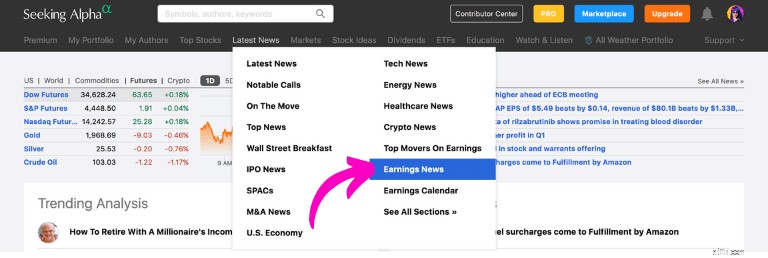
You can access the earnings reports of any publicly-traded company by hovering over “Latest News” and then clicking on the “Earnings News” button.
You can also access a schedule of the upcoming earnings calls by clicking on the “Earnings Calendar.”
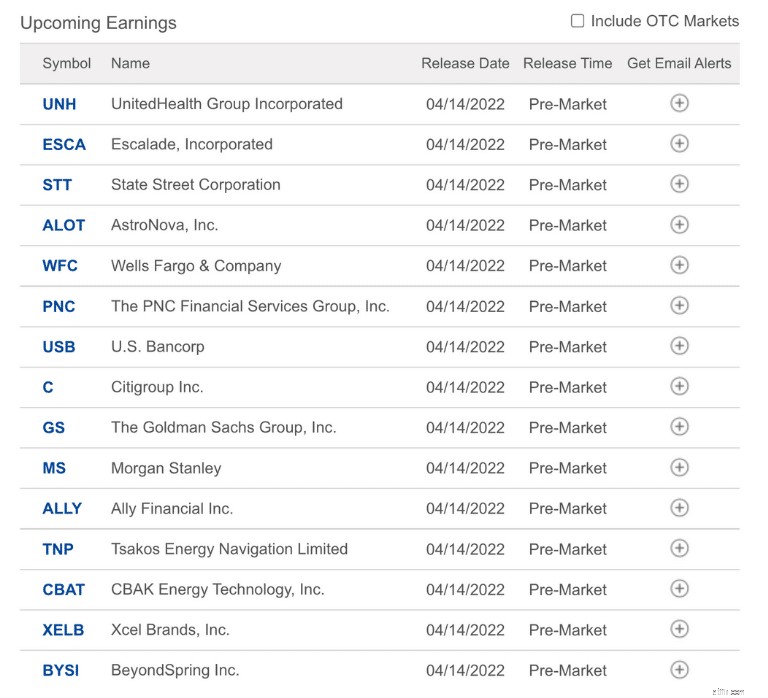
Once in the Upcoming Earnings tab, you can select which company you want to listen to and you can even sign-up for custom email alerts by clicking on the “+” sign.
If you’re looking up one of your favorite companies, let’s call it Amazon, then you just have to click on the “Earnings” tab for that stock:

From there, you can click on the “Transcripts” tab and look at all previous transcripts:
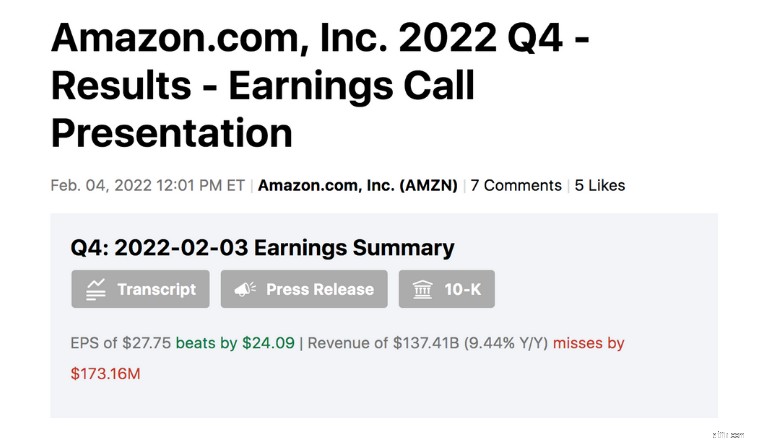
Depending on the company you review, you can also access a PDF file with slides that highlight the company’s key points.
With the Premium (and of course Pro) memberships, you also have unlimited access to exclusive articles written by industry professionals.
Since there is so much information, you can filter out the articles in several different ways.
First, you can simply access your home page and review the “Trending Analysis” of the day or the “Trending News” of the day.
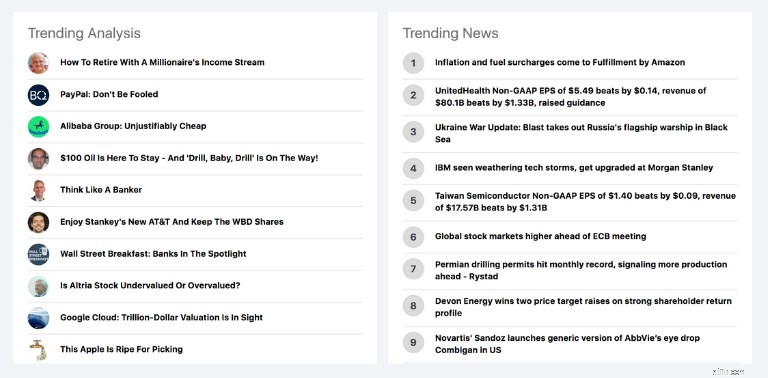
If you want to review articles written by various authors about just 1 particular stock or fund, then just type in the stock name or ticker symbol into the Search Bar.
From there, click on “Summary” and then on “Analysis” so you can see the various articles offered by authors on that stock.
Here’s an example of articles written about the Tesla stock:
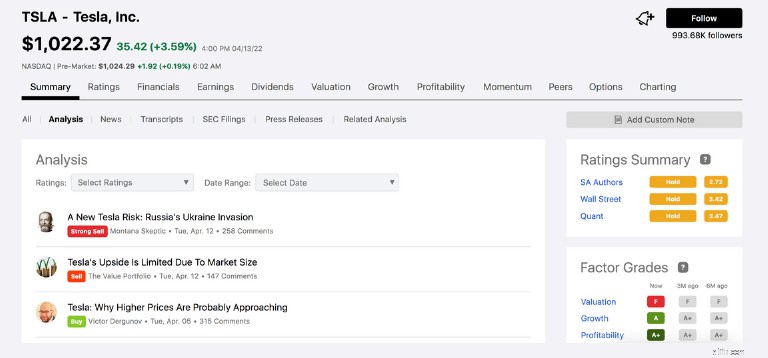
If you want to read articles from authors who advocate buying, selling, or holding, you can customize your ratings by clicking on the “Select Ratings” drop down box.
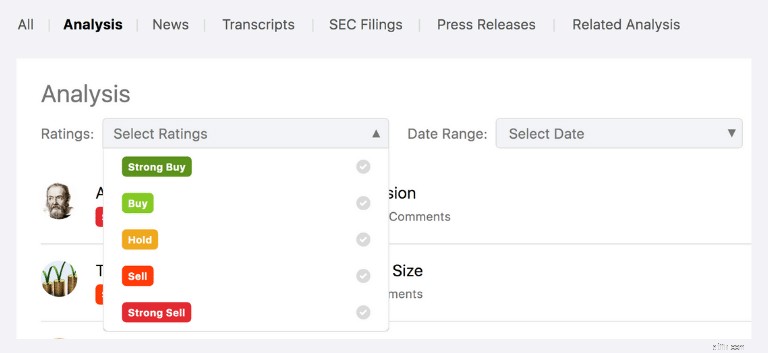
While most articles do focus on US-based public companies, there are some articles that also focus on alternative investments as well as international companies.
As a Premium Seeking Alpha user, I’m a very big fan of creating your own portfolio in Seeking Alpha.
If you’re dedicated to kickstarting your kids’ financial future, then you may also want to check out the Greenlight Debit Card , which can do wonders.
You can set up your own mock portfolio in Seeking Alpha by hovering over “My Portfolio” and then clicking on “All Portfolios.”
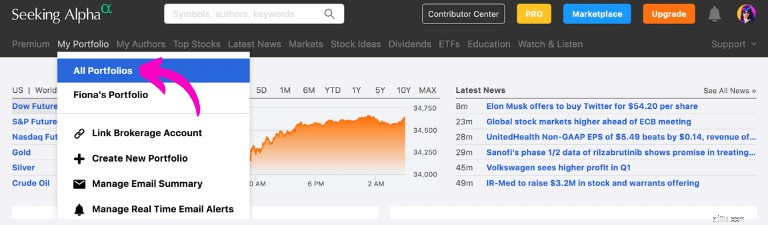
From there, you can click the button titled “+ New Portfolio.”

This will allow you to add a new, mock portfolio while using the Seeking Alpha platform.
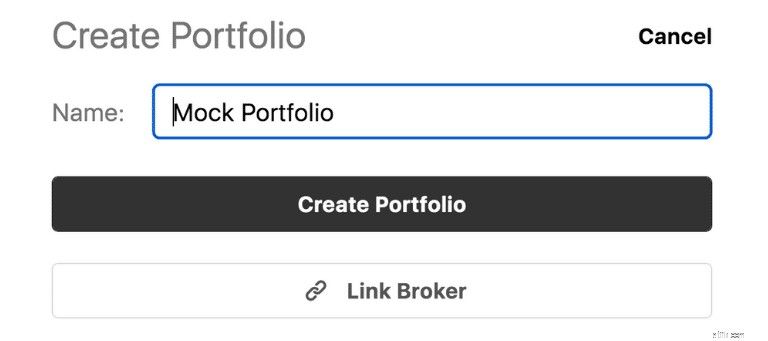
You can give that portfolio a title and then you can either link your outside brokerage account to this portfolio or add your own stocks to the portfolio.
For the purpose of this section, we’re going to click on “Create Portfolio.”
Once you’ve created your portfolio, you can start adding ticker symbols to complete your portfolio.
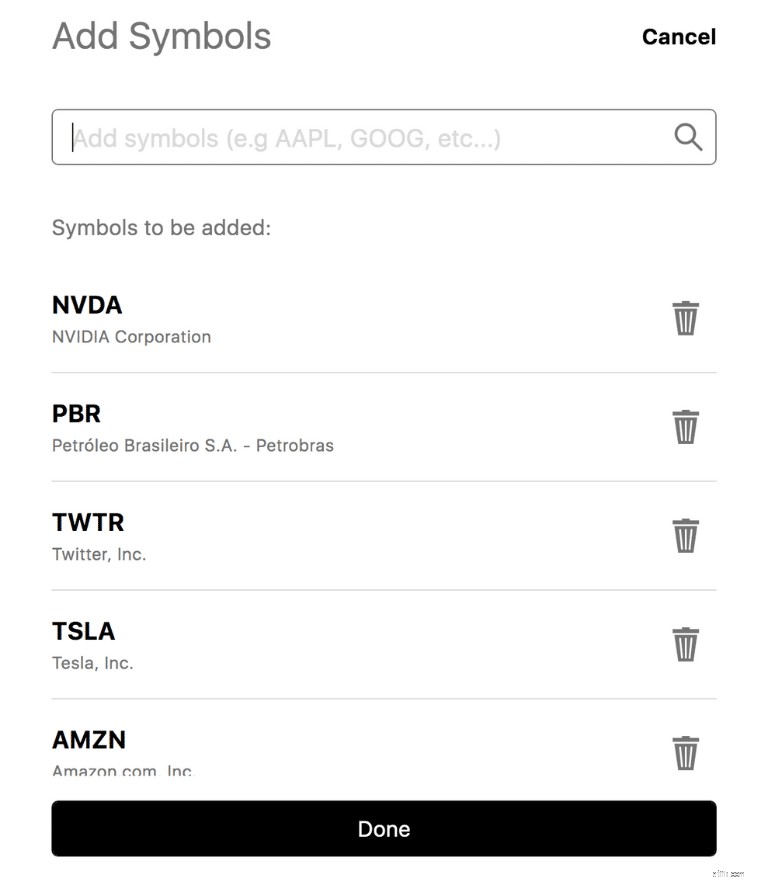
Once you’re happy with your portfolio construction, you can click “Done.”
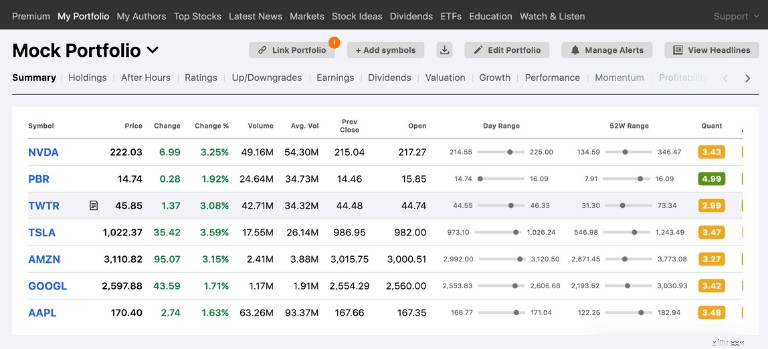
Seeking Alpha does a fantastic job breaking down each stock in your mock portfolio by using multiple different factors.
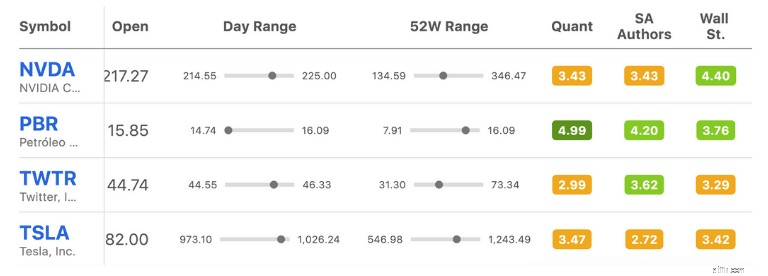
You can even compare the Quant, SA Authors, and Wall Street ratings to each other:
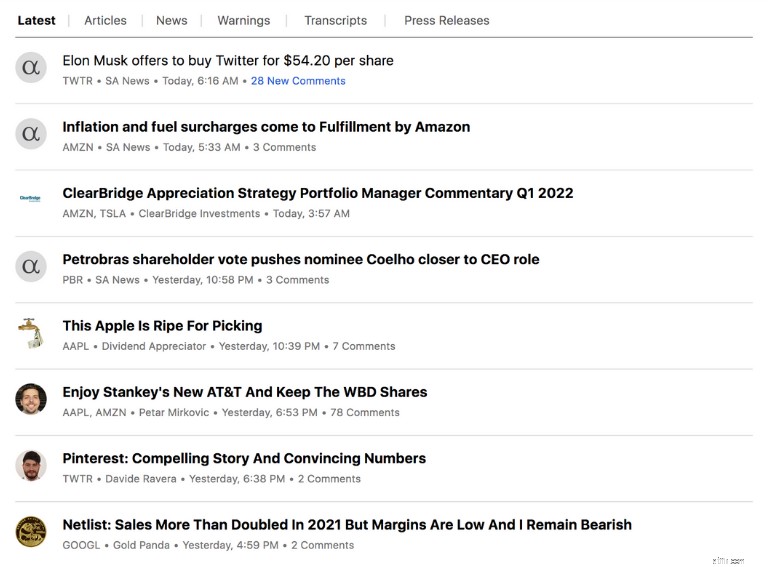
If you click on the “View Headlines” button in your portfolio, you’ll see an assortment of articles written just for your specific stocks in your portfolio:
Finally, one of the other notable features of your Mock Portfolio is the custom alert and notification button.
When you click on “Manage Alerts” you can customize your alerts based on:
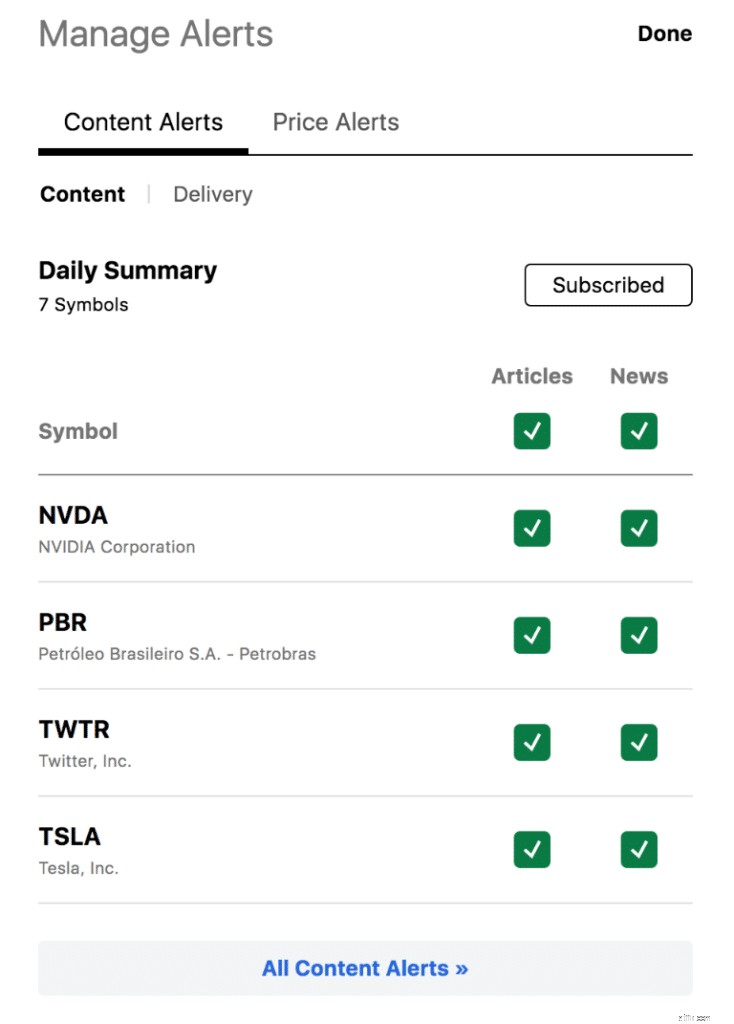
So, if there is an update on a stock like Twitter for example, you’ll receive real-life notifications to your email or phone – depending on the delivery method that you select.
You can also manage your price alerts, which I will review in a separate section here.
If you’ve already created your mock portfolio through Seeking Alpha (or even if you’ve already connected your outside brokerage account with Seeking Alpha), you can set custom price alerts.
For example, if you own shares of Twitter and the current price Quant Rating is 2.99, which is nearing a sell territory, then you may want to filter for other stocks that might be deemed a “Strong Buy.”
Here’s how (this is assuming you’ve already set up your own portfolio in Seeking Alpha. If not, then please reference the previous feature):
First, access your portfolio and click on “Manage Alerts.”
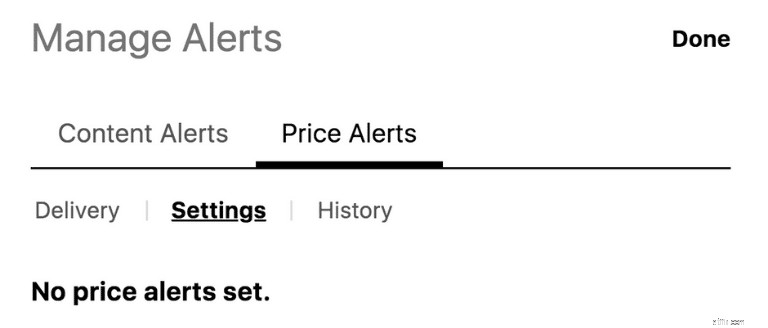
Then, click on “Price Alerts” and then on “Settings.”
From there, you’ll want to click on “All Price Alerts,” which you’ll find at the bottom of the dialogue box.
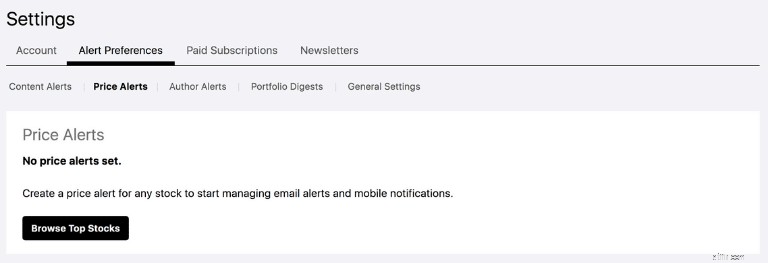
From there, click on the “Browse Top Stocks” button.
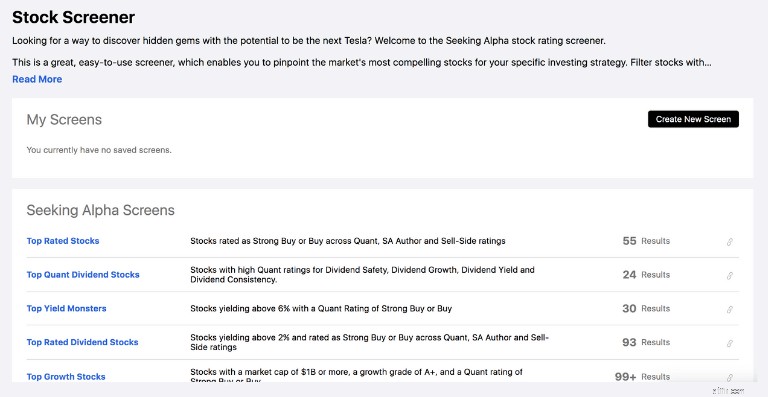
You can either continue using the Seeking Alpha Screens (and there are many) or you can create your own, custom screen.
If you create your own custom screen, you’ll be brought to a window like the one below:
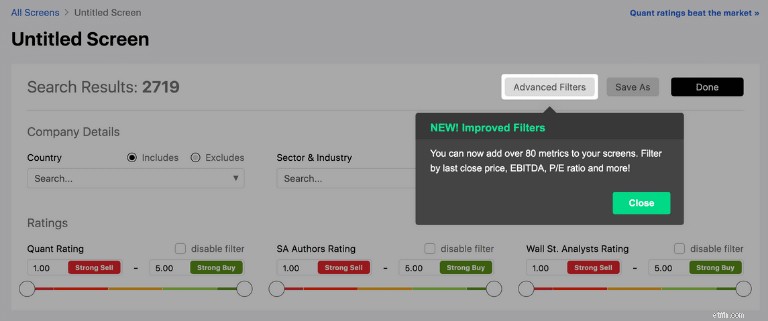
You can customize your stock screener by adding up to 80 different filters.
For example, if you want to screen for all stocks that are assigned a 4.00 out of 5.00 rating for the Quant, SA Authors, and Wall St. Analysts, this is the place to do so.
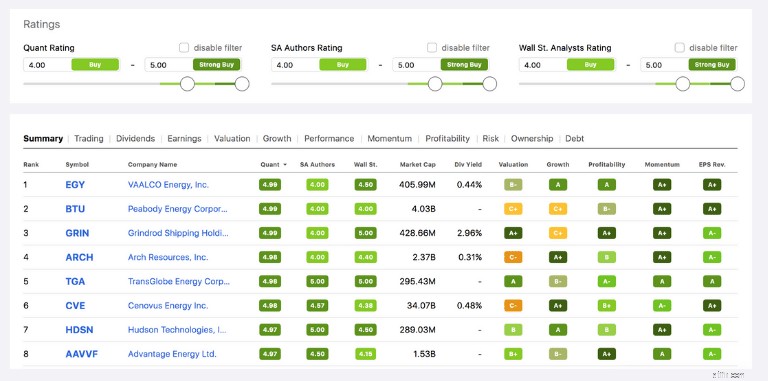
Take some time to experiment with the screening tool, because there is just so much information.
However, if you’re ever wondering why or how to filter for the best stocks for your portfolio (or your child’s portfolio), this is probably the tool you’ll want to use.
If you’re an investor who really enjoys digging deep into the financials for each company before trading its stock, you’ll be happy to know that the Premium tier also comes with downloadable financial statements 。
In fact, you can access up to 10 years worth of financial statements to download, review, and analyze.
Just search your favorite company and click on the “Financials” tab.
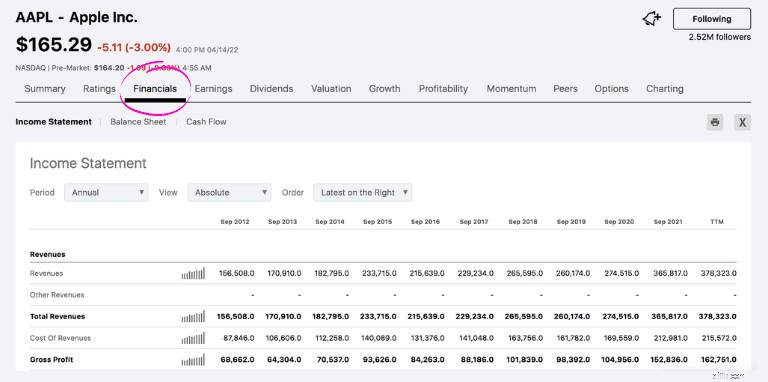
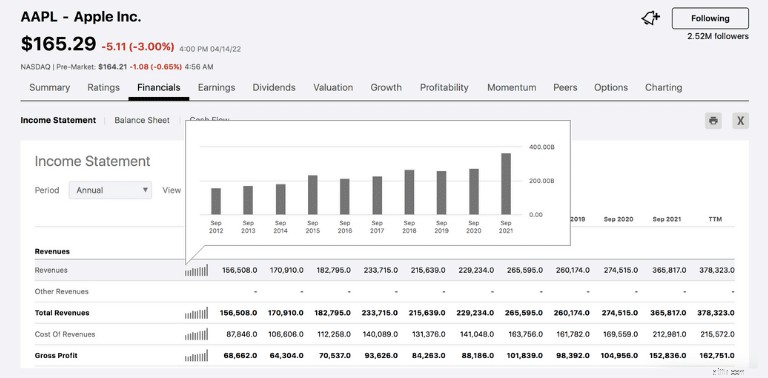
From there, you can either review the numbers or for a more visual approach, just hover over the line graph for each data set:
If you want to review the numbers in even more depth, you can click on the print icon or the “X” icon at the top, right of your screen to either print to PDF or download via Excel.
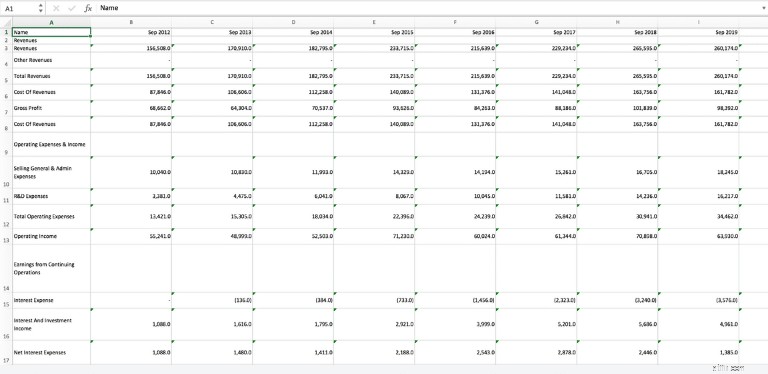
So depending on how in-depth you want to go, Seeking Alpha really gives you a lot of options to analyze your stocks.
Ever wonder how your current stocks compare to other stocks in the marketplace?
Take a look at the Stock Performance Comparison Tool – which is one of my favorite tools.
Just search your favorite stock and then click on the “Charting” tab.
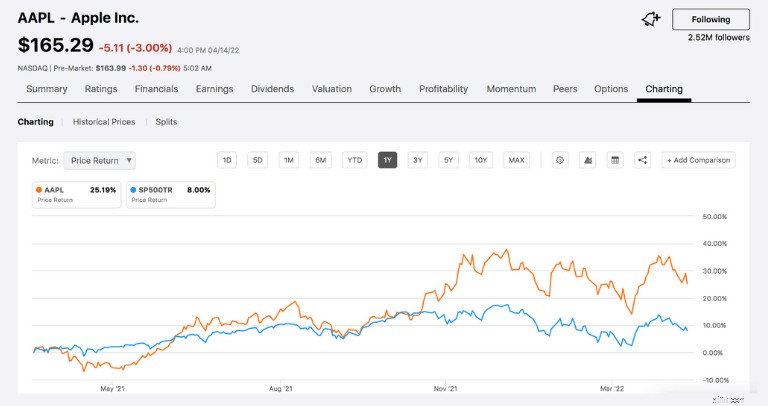
The default comparison is your stock (in this case, Apple) and the S&P 500.
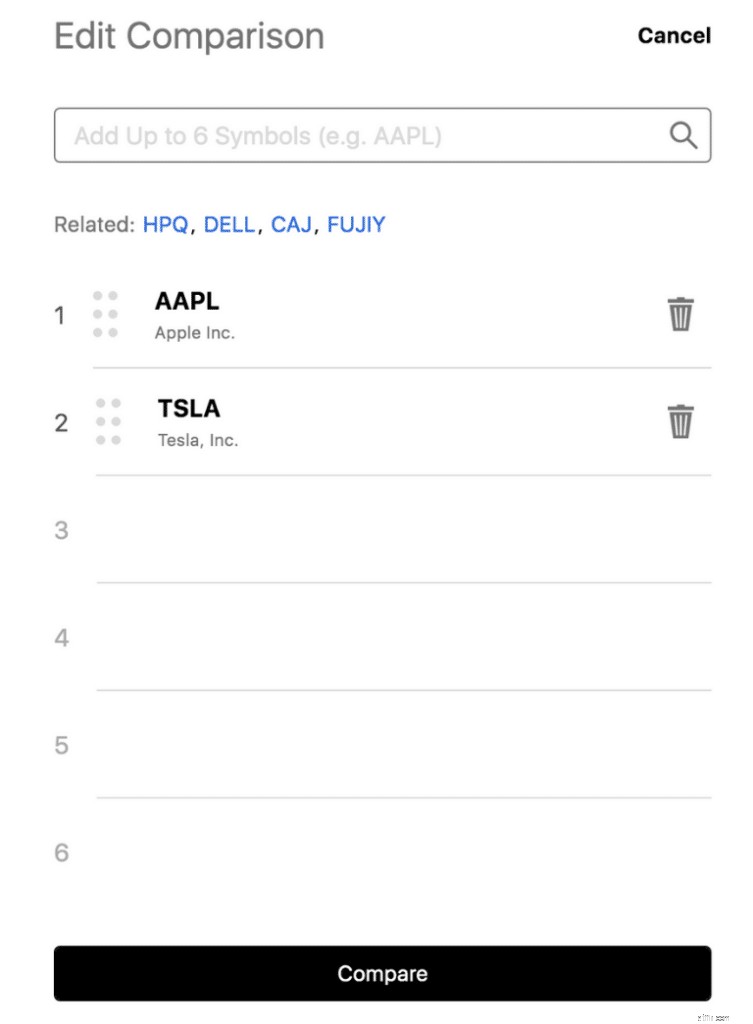
However, if you want to know how apple is doing compared to another individual stock in the tech or a similar sector (like Tesla), then just click on the “+ Add Comparison” button and add your favorite stock:
Now take a look at the comparison of Apple stock versus Tesla stock over the past 3 years:
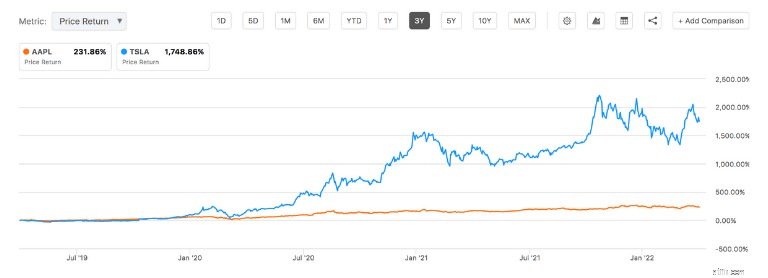
While this stock performance comparison chart shouldn’t be the only tool you should use to determine whether a stock is worth a purchase, it can certainly be a helpful guide.
Lastly – but certainly not least – another cool feature with the Premium Tier is that you can link your outside investment accounts to your Seeking Alpha account.
Remember that you’ll receive access to Seeking Alpha’s quant comparison tool, the Wall St. Analyst ratings, and the SA Author rankings – along with customizing real-life alerts for each of the stocks you hold.
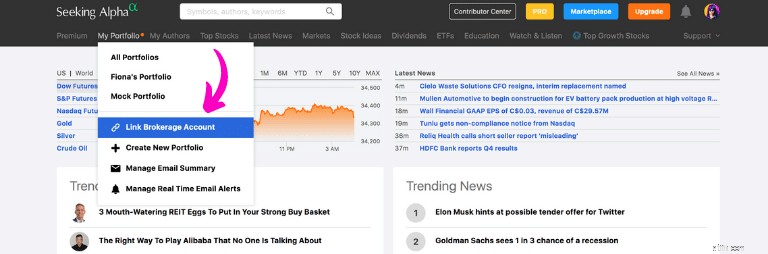
To start linking your outside accounts, just navigate to your main menu, hover over “My Portfolio” and then click on “Link Brokerage Account.”
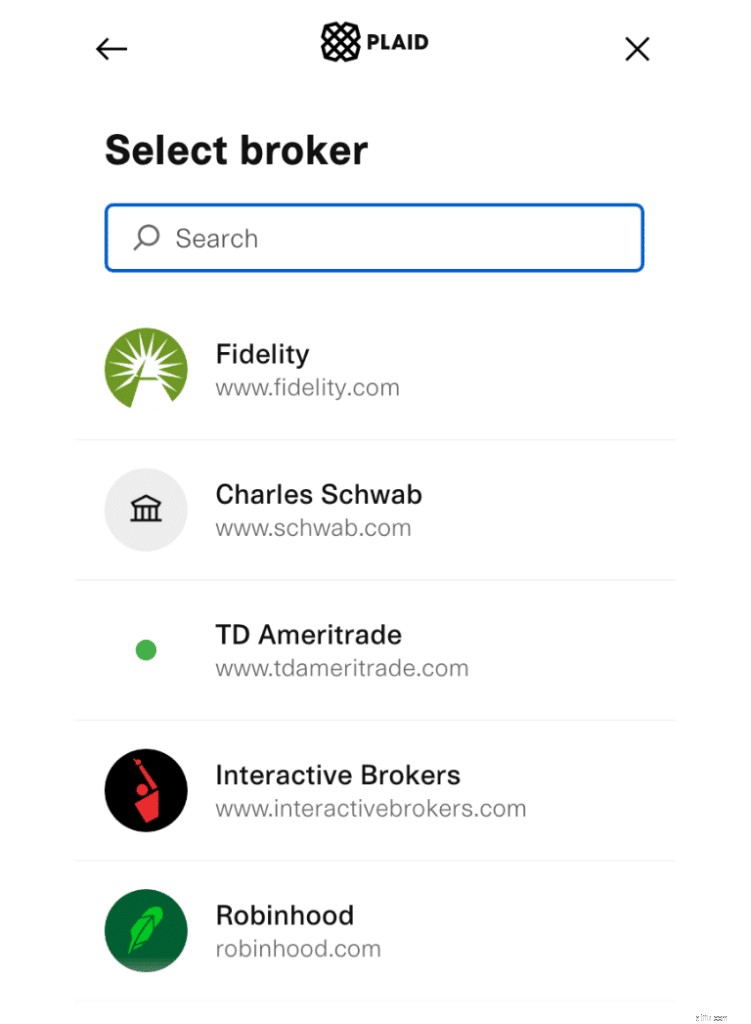
Any outside brokerage accounts that you link will be connected using the secured encryption software, known as Plaid.
You can select a number of different brokers, such as:
Even if you don’t see your brokerage firm immediately, you can either search for your brokerage firm or sometimes even input the information manually.
Once you’ve established a link to your brokerage account, you can do the following:
Keep in mind that Seeking Alpha is an informational platform only – you cannot place investment trades on Seeking Alpha.
So to buy or sell stocks in your linked brokerage account, you’ll actually have to sign in to your own investment account.
Recommended Reading:Best Investment Apps
Seeking Alpha Premium could be right for you if you:
Being a Premium Plan member myself, my favorite part is that you can use the Premium tier for as much or as little research as you want.
For example, if you’re thinking about adding Build-A-Bear Workshop, Inc. (BBW) to your portfolio, and you want some additional advice from industry experts.
In this case, just check out the BBW stock rankings in the Ratings Summary section.
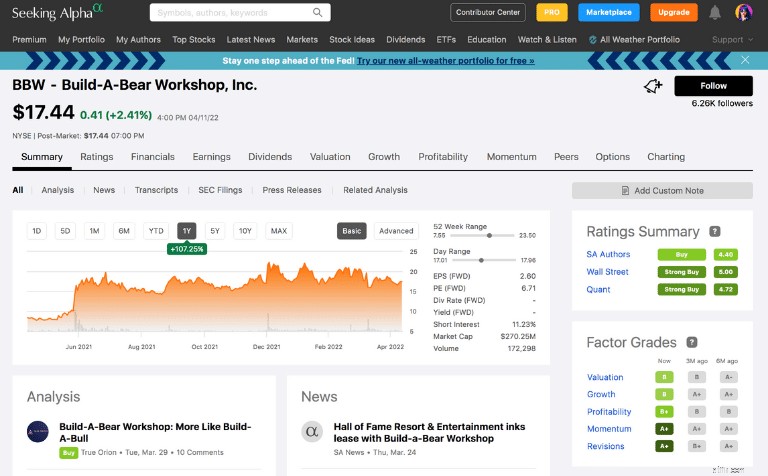
You’ll see that on 3 different instances, the BBW stock is considered a Buy to a Strong Buy opportunity:
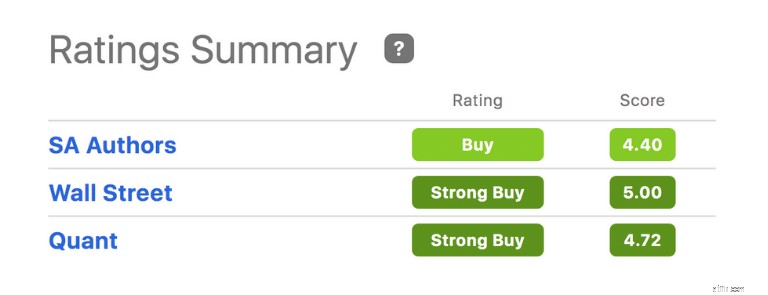
Now, if that’s all the reassurance you were looking for, you can move on and not look back.
However, if you want to drill into more depth with the Build-A-Bear Workshop, Inc. stock, Seeking Alpha lets you do as much fundamental analysis as you want.

The Bottom Line:
The Premium Plan gives intermediate investors the best of both worlds:Reassurance on which stocks to buy, hold, or sell while also going into as much analytical depth as possible.
Just like the Premium Plan, you can also start a 14-day free trial period with the Seeking Alpha Pro Plan .
If you enjoyed the Pro Plan trial period, then you can pay for the Pro Plan in 2 ways:
Monthly Plan
$299.99/month
Annual Plan
$2,400 (or $199.99/month, as advertised)
It appears that the default case for Seeking Alpha is charging the full year’s worth of premiums upfront (so $2,400 in this case).
One of the best benefits to the Pro Plan is that you receive VIP access and Editorial Concierge, customized to your needs.
Keep reading to find out more about the key features of the Pro Plan.
In this section, I’ll explain in detail some of the top Pro Plan features and how you can benefit from each (keep in mind that the Pro Plan already comes with the Premium Plan features).
Below is an overview of the additional Seeking Alpha Pro Plan features:
<オル>
With the Seeking Alpha Pro Plan, your entire user experience will be ad-free.
Remember that the Limited Access version does come with ads and the Premium version offers an ad-lite user experience.
The Seeking Alpha Pro platform gives you the chance to be as specific as possible when filtering your investments.
You can filter your investments by:
If you know what you’re doing and if you know what you’re looking for, then this investment screener can be used to your advantage.
If you want the bells, the whistles, and the exclusive VIP treatment, then you should consider the Pro Plan.
The editorial team works directly with Pro level subscribers to filter out and pinpoint ideas that fit to your investing needs, style, and preferences.
If you want daily short summaries of the top 1% of the Seeking Alpha content, then your Seeking Alpha Pro level subscription will give you that VIP treatment.
As a Pro member, you’ll have Seeking Alpha’s industry experts send you a weekly list of their hand-picked top investment ideas from Seeking Alpha contributors.
Seeking Alpha Pro could be right for you if you:
Another neat feature is that you could also contribute to the Seeking Alpha community by writing an article with your research and opinion.
The Bottom Line:
The Pro Plan gives advanced investors and industry professionals an in-depth and resourceful experience when researching and analyzing stocks, funds, and ETFs.
I’ve personally reached out to Seeking Alpha’s customer service on 3 different occasions to evaluate their:
…And I must say that Seeking Alpha passed my test with flying colors.
Below is my evaluation:
Knowledge
⭐️⭐️⭐️⭐️⭐️
Friendliness
⭐️⭐️⭐️⭐️⭐️
経験
⭐️⭐️⭐️⭐️⭐️
I’m drawing from my own personal experience from speaking with 3 different Seeking Alpha personal representatives.
The good news is that you can contact Seeking Alpha in 4 main ways:
電子メール
contactus@seekingalpha.com
Social Media
– YouTube
Navigation Bar
Support Button
Phone Call
347-509-6837
Phone Support Center Hours
Monday to Friday 8am to 4pm EST (holiday hours may apply)
It’s reassuring for me to see the different ways you can contact Seeking Alpha.
While Seeking Alpha is not accredited with the BBB, I was still shocked to see the “F” rating on the BBB website:
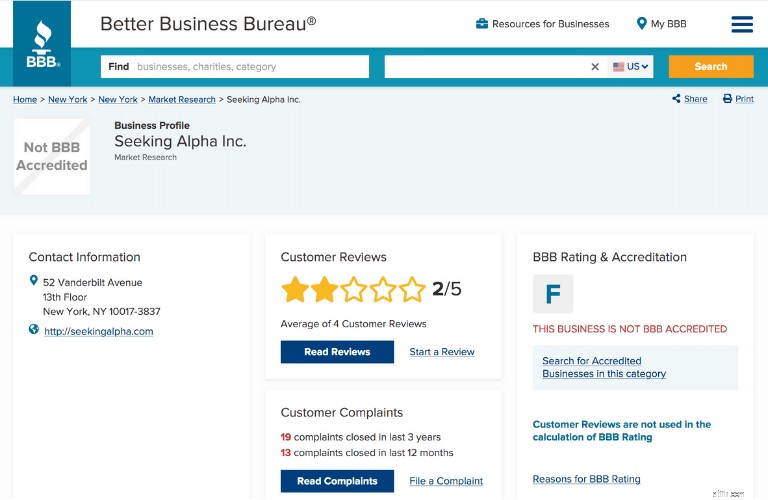
I even double-checked to see if I had the right Seeking Alpha company pulled up on my screen – and I did.
The common complaints appear to only apply to subscribers looking for the “free trial” period:
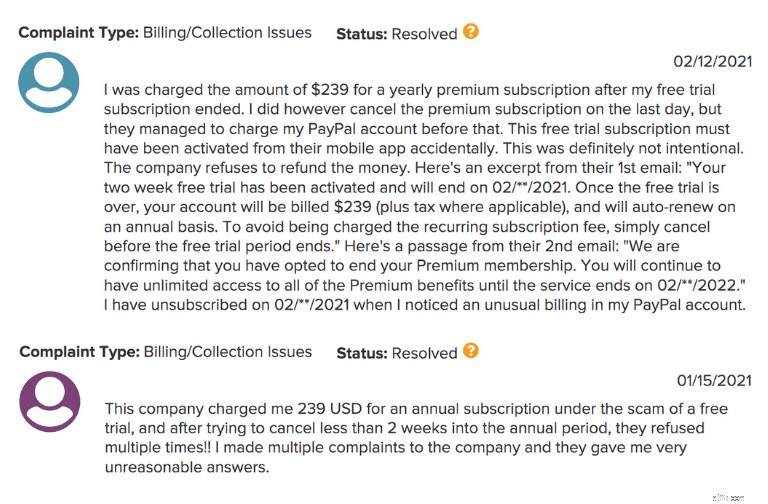
Based on these complaints (which are somewhat recent), it looks like many customers who signed up with the free trial period were charged after the period ended.
Based on this information, if I were signing up to the free trial period, I would probably triple check to read all of the fine print and possibly even cancel before the trial period is over (assuming you’re not happy with the platform).
Now that you have an idea of what people are unhappy about, let’s take a closer look at the ratings on TrustPilot, which is another customer review website.
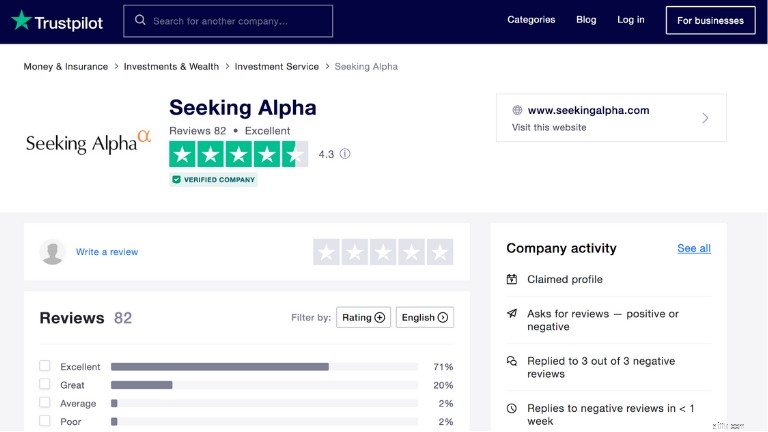
Now, this Trust Pilot customer review is more in line with what I was expecting to see.
On TrustPilot, a solid 93% of respondents rated Seeking Alpha average to excellent.
Some reviews are below:
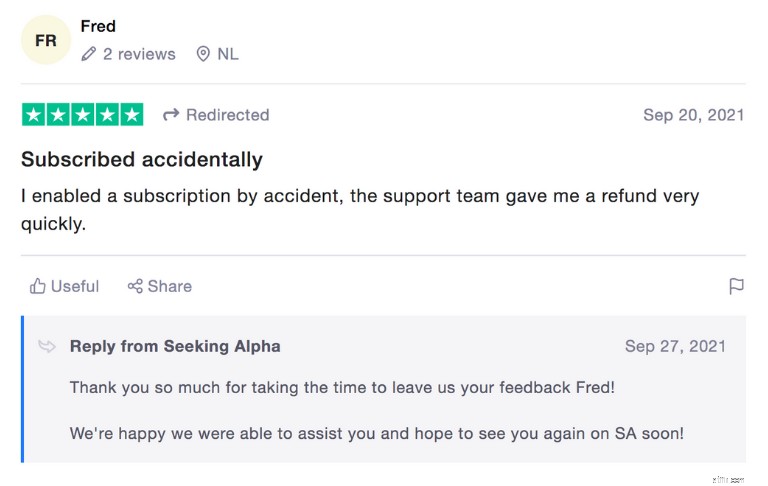
This review virtually contradicts the reviews from the BBB, which said Seeking Alpha did not offer a refund.
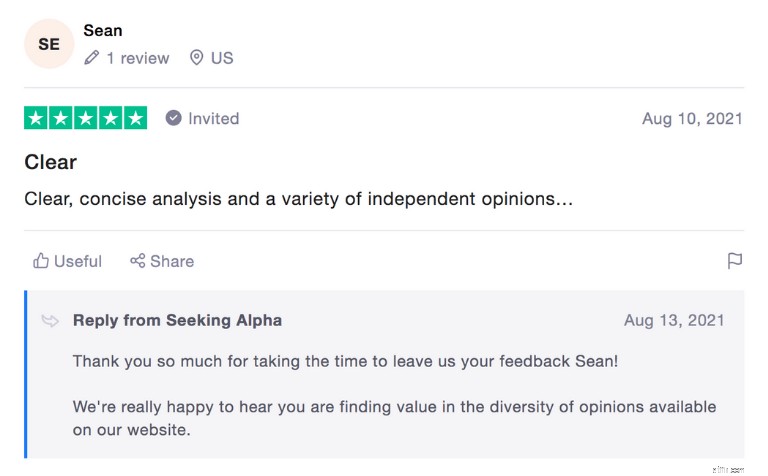
Above is another positive review about the accuracy and impartiality (no bias) of the authors that provide information on Seeking Alpha.
Of the 2 negative reviews that were posted from the 82 total reviews, the complaints were the following:
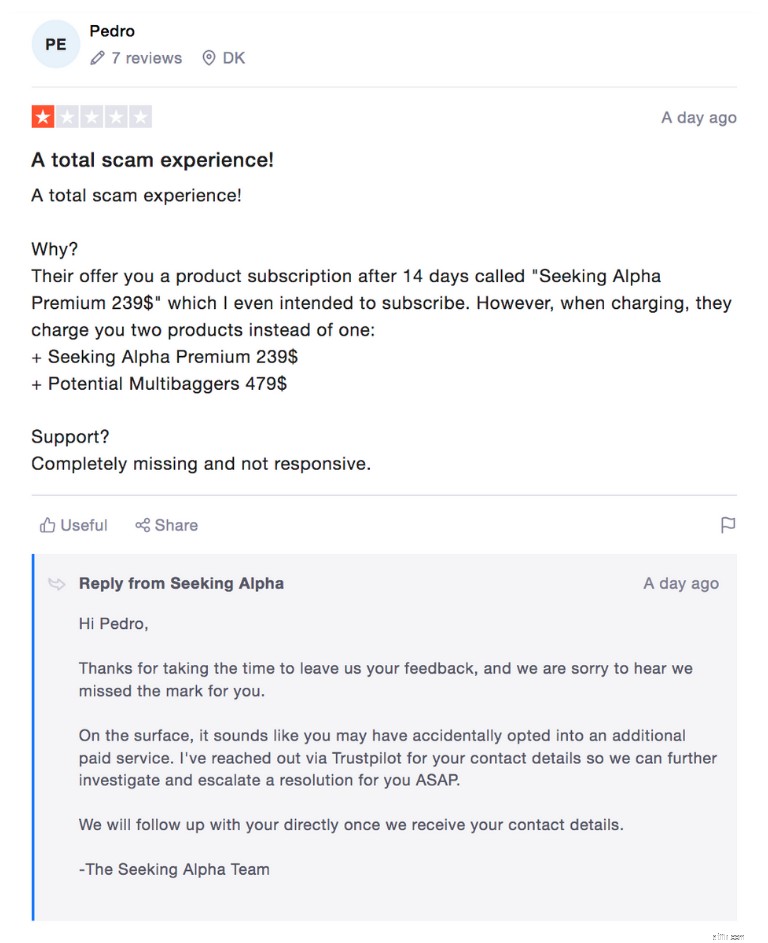
Take a look at the response time of when the negative review was posted (1 day ago) versus the reply from Seeking Alpha (also 1 day ago).
I thought that was impressive.
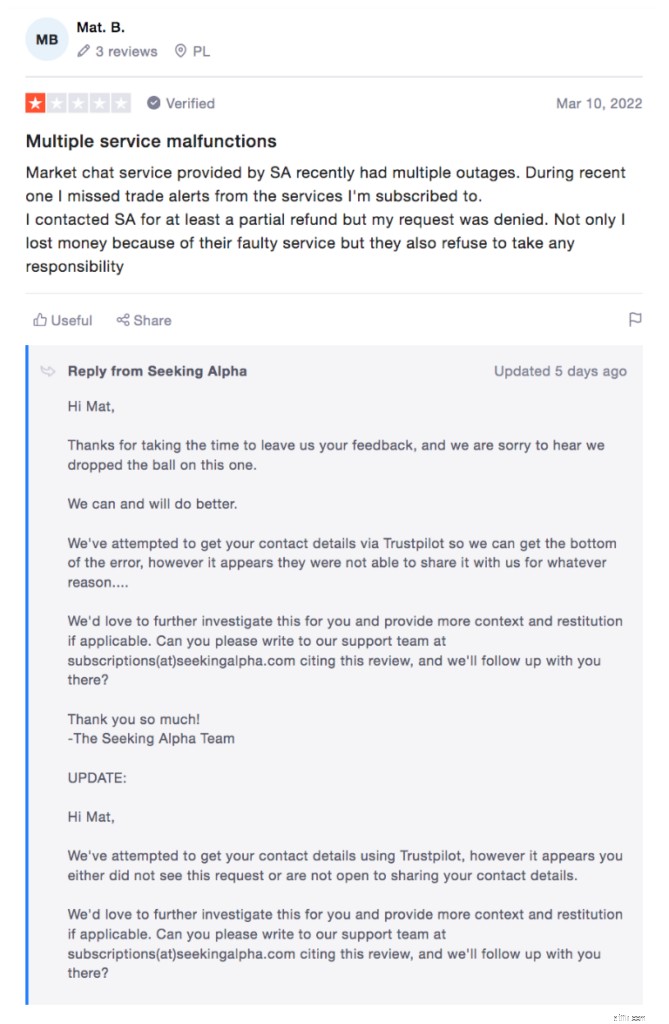
As you can see, there will always be good and bad reviews, and you’ll have to take the reviews with a grain of salt (seriously).
Personally, I like checking back into the customer service review platforms every few months, just to read updates.
The Bottom Line:
Most of the “Bad” Seeking Alpha reviews involve the free subscription service. According to the complaints, immediately after the free trial period ends, the consumer credit card will be charged the annual amount for a paid subscription (likely the Premium subscription).
Now it might sound daunting that Seeking Alpha offers works from 7,000 active monthly authors.
You might even be concerned about the quality of the information if there are so many contributors.
Their team has a pretty quick article turnaround time as well, which typically ranges between 1 hour to a few business days.
Do you have industry expertise and want to contribute?
Below are 9 of the most important requirements to pass the rigorous Seeking Alpha editorial review process:
Market-Oriented
Write about stocks, sectors, ETFs, or other actionable themes for US-based investors
High-Quality
Articles must be convincing, well-presented, and actionable
Fundamental Analysis
Articles must address factors such as a company’s competitors, products, management, corporate strategy, etc.
Originality
Always bring a new perspective to a topic
Compelling Title
Your title shouldn’t overpromise and underdeliver
Market Cap
Articles mentioning stocks trading at less than $1 or companies with market caps less than $100 million will receive extra scrutiny
Clean
You must proofread your article before submission
No Promotional Content
No promotional content in articles
Human Factor
Editors work closely with contributors and maintain a constructive dialogue
As you can see, there are a lot of requirements that go into the making and the publication of a Seeking Alpha article, so chances are that you’ll get the high quality you want.
And with each month, over 10,000 articles are published on Seeking Alpha!
Another neat thing is that you can view a contributor’s past track record of stock predictions.
Another trick to finding information from top ranked authors is just simply clicking on the “Top Authors” button.
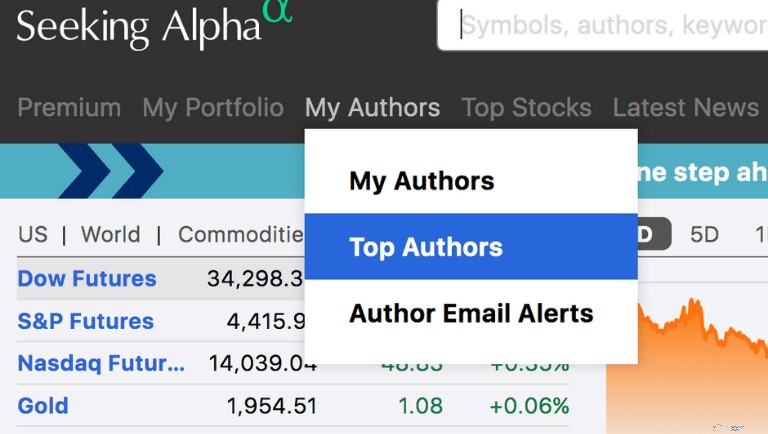
Once in the Top Authors section, you’ll receive a long list of author suggestions, based on their specialty (such as value investing, growth investing, oil &gas investing, etc.).
Another reason why I’m a big fan of Seeking Alpha is because of the abundance of educational resources this platform offers its users:
Investment Videos
Access top investment news videos by clicking on the tab “Watch &Listen” and then clicking on “Videos”
Investment Podcasts
Learn more about the latest investment news by accessing 8 Seeking Alpha podcasts. Click on “Watch &Listen” and then on “Podcasts”
Financial Planning Education
Seeking Alpha knows that investing is just a part of the financial planning process. When you click on the “Education” tab, you’ll gain access to a variety of different financial planning topics, ranging from cryptocurrency to 401(k) management
Seeking Alpha Knowledge Base
Type any question into the search box and you’ll probably find an answer. The Knowledge Base can be accessed by clicking on the “Support” icon and then “Knowledge Base”
Feedback Forum
If you ever have trouble with the Seeking Alpha desktop website or the mobile app, this is the place to share your concerns, feedback, and interact with other users. Access the forum by clicking on the “Support” icon and then “Feedback Forum”
As you can see, Seeking Alpha does not keep you in the dark – when it comes to investing or financial planning-related matters.
One of my favorite learning sections on Seeking Alpha is the “Education” section, where Seeking Alpha users can learn about more than just investing.
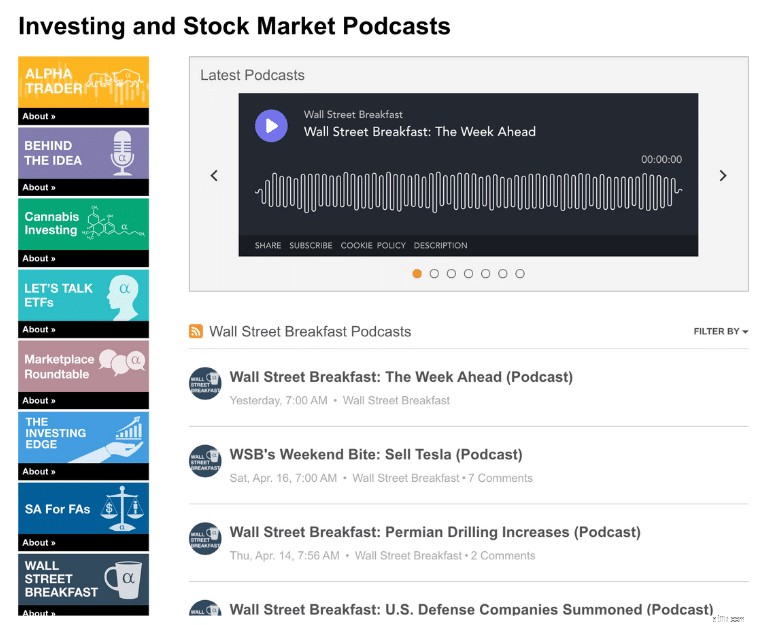
Under the education tab, you access articles about other topics that may not be covered in-depth by the Seeking Alpha Authors.
Some of these topics include:
I’m also a fan of the “Watch &Listen” section, which offers Seeking Alpha readers access to investment podcasts and videos.
If I’m ever stuck in traffic, I listen to one of the podcasts (I like the Wall Street Breakfast podcast).
The good news is that Seeking Alpha offers so much variety from which to choose – you’ll never be left without ideas.
Ready to open an account with Seeking Alpha?
Believe it or not, it’s actually a very fast and simple process.
First, head to the Seeking Alpha website and click “Subscribe.”
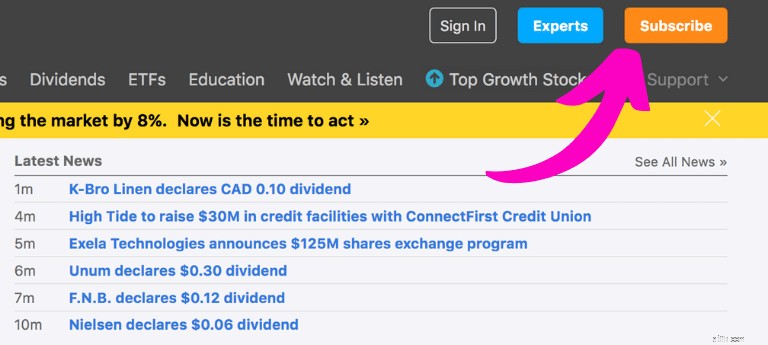
After you click the subscribe button, you can choose to either start a free trial or register immediately with one of the 3 plans (Limited Access, Premium, or Pro).
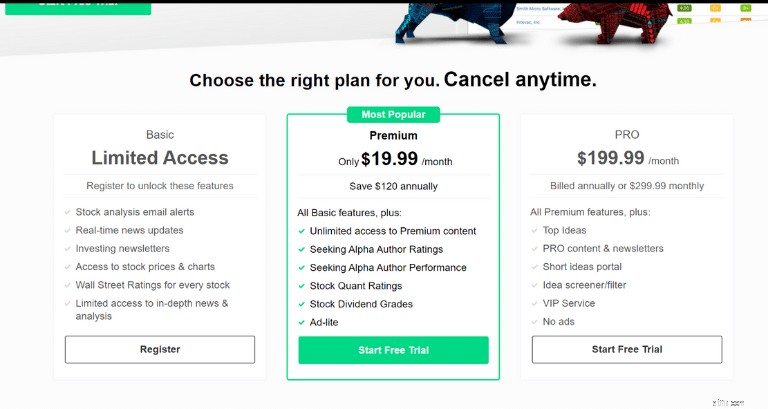
Now, if you’re ready to register and pay for your subscription, then select your plan preference.
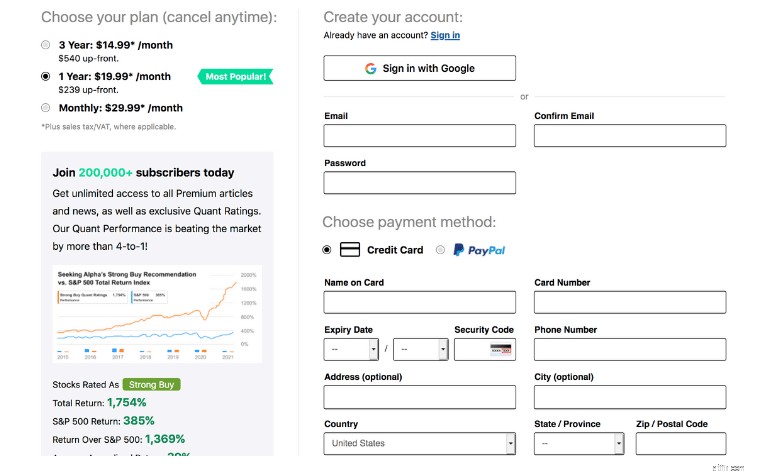
Payment methods are either via credit card or PayPal.
In my opinion, if you’re an investor who really wants to understand more about your investment holdings, then Seeking Alpha is probably a great platform for you.
Yes, Seeking Alpha is worth the cost if you do your own investment research and want to interact with experienced investors. For $19.99 per month, you get access to exclusive content from over 7,000 experienced investment authors, custom stock performance charts, and portfolio monitoring tools.
If you sign up to the Premium Platform, you can access the Seeking Alpha Quant Ratings, which have outperformed the market since 2010.
The Quant Ratings marked as “Very Bullish” for stocks were up 1,754% versus the market’s 385% gain.
On the other hand, the stocks that were rated as “Very Bearish” by Seeking Alpha really did underperform, being up by only 156% versus the market’s overall 385%.
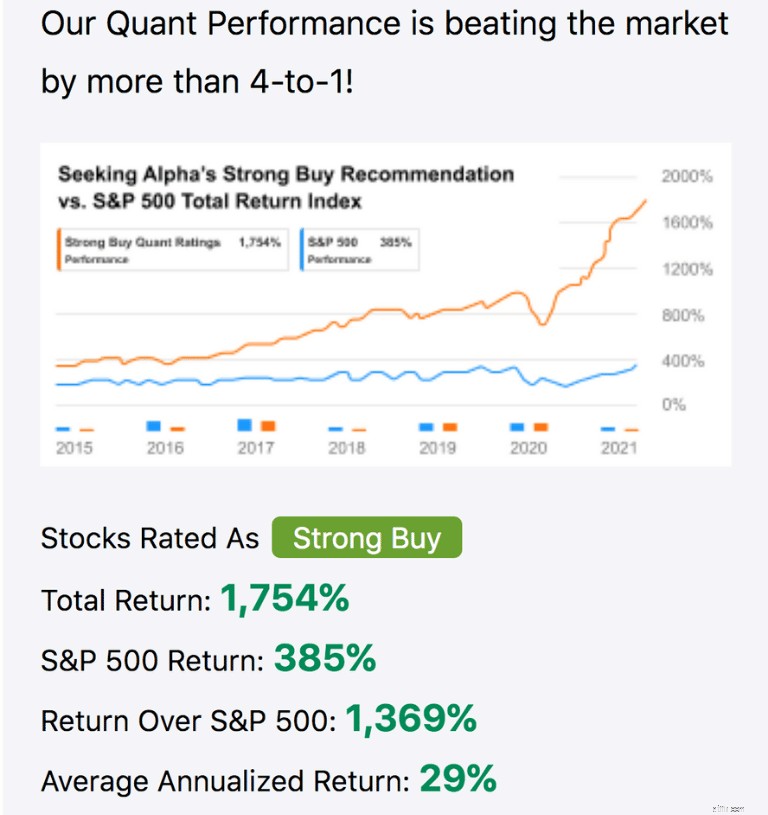
While I’m not a fan of day trading and stock picking, if I am looking to buy or sell a stock or fund in my portfolio, Seeing Alpha would be my first stop before hitting that “trade” button.
Seeking Alpha might not be for everyone.
If you’re an active investor and just don’t like the investment research platform, then you may want to check out platforms like the Motley Fool’s Stock Advisor.
While the cost is certainly lower for new members ($99 per year), you also don’t get access to the customization, the tools, and the crowdsourcing that Seeking Alpha uses.
You can always sign up to the free version of each platform first before committing financially.
Based on Seeking Alpha’s track record, yes, Seeking Alpha is reliable. As an example, Seeking Alpha’s “Very Bullish” stock evaluation ratings have outperformed the market since 2010, up 1,754% versus the market’s 385% gain.
Seeking Alpha’s Premium membership is absolutely worth the cost if you want to conduct your own investment research and interact with experienced investors.
You pay $19.99 per month in exchange for exclusive access to content from over 7,000 experienced investment authors, custom stock performance charts, and portfolio monitoring tools.
Yes, Seeking Alpha’s Premium membership is worth the cost if you do your own investment research and want to interact with experienced investors. For $19.99 per month, you get access to exclusive from over 7,000 experienced investment authors, custom stock performance charts, and portfolio monitoring tools.
You can still use Seeking Alpha as a free user under the Limited Access plan. However, you can unlock only 5 articles per month before being prompted to sign-up as a paying Premium member. The Premium membership costs $19.99 per month as of early 2022.
Seeking Alpha is probably one of the best tools for day traders, active investors, and even swing traders. If you want to do your own investment research and learn from industry experts, then Seeking Alpha really is a good fit.
If you aren’t a day trader or someone who enjoys researching and picking stocks for their portfolio, then Seeking Alpha is probably not for you. For example, passive investors who use mutual funds, index funds, or even ETFs probably won’t find too much value from the Seeking Alpha platform.
Seeking Alpha was founded by David Jackson in 2004. Jackson is a graduate of Oxford University (undergraduate) and The London School of Economics (graduate).
He worked as a technology research analyst at Morgan Stanley, where Jackson saw a problem (the conflict of interest stemming from investment banks publishing information about the products they sell) and developed a solution with the unbiased Seeking Alpha platform.
Seeking Alpha is likely one of the best platforms if you want to:
In my opinion, the biggest benefit you get from Seeking Alpha is the unbiased research.
For example, you won’t find research articles about funds written by the very company that sells the same fund.
There is no conflict of interest with Seeking Alpha, just pure authenticity and knowledge shared by industry experts.
You can access Seeking Alpha through 3 plans:
If you’re really planning to use Seeking Alpha as a way to evaluate your portfolio, research stocks, and learn (and interact) with investment industry experts, then you’ll probably want to sign up with the Premium Plan 。
The Premium Plan offers the following features:
The list really does keep going, but you get my point.
The Premium Seeking Alpha plan offers a lot of benefits, and that’s the plan that I’m using myself right now.
The Bottom Line:
What I really like about Seeking Alpha is that this investment research platform truly is a democratized platform that shares quality ideas and insights from industry experts.
Now I’d like to hear from you:
What are your thoughts on Seeking Alpha?
Would you consider opening an account with this platform?
Let me know in the comments section below.